November 21, 2026 / Studio Practice
Best game art outsourcing: a practical selection guide
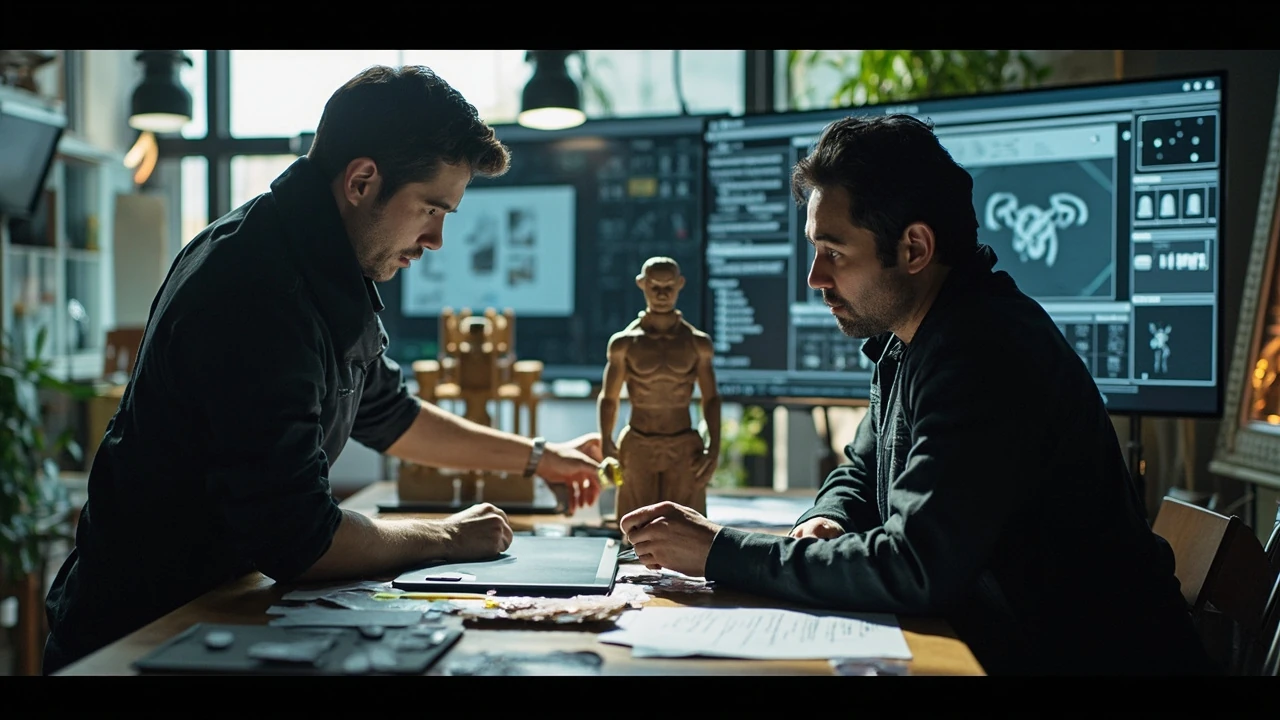
How to choose the best game art outsourcing partner
A polished portfolio can hide an awkward production process. A studio may create attractive character renders while struggling to deliver consistent assets on time, inside a poly budget, or in the naming and export format your engine team requires. The best game art outsourcing decision therefore depends on more than visual quality alone.
You need a partner whose art direction, technical pipeline, production capacity, and communication habits fit your project. A strong evaluation compares like with like, defines ownership at every stage, and tests the relationship with a representative pilot before either side commits to a large volume of work.
This guide provides a framework for comparing external art partners. It covers portfolio relevance, 2D and 3D capability, engine readiness, production control, commercial terms, and pilot evaluation. The goal is not to declare a universal winner. It is to identify which provider is genuinely the right fit for your game.
Separate art production from asset implementation
Game art outsourcing can mean very different things. One provider may create concept images and illustrations, another may produce finished real-time assets, and a third may embed specialists inside your broader production team. These services are related, but they solve different production problems.
Before comparing studios, write down the outcome you need. “More art capacity” is too broad to guide a procurement decision. “Twenty engine-ready modular environment kits delivered at a specified texture resolution, poly count, naming convention, and level-of-detail structure” gives a provider something it can price, schedule, and review.
| Outsourcing need | Typical deliverables | What the studio must demonstrate |
|---|---|---|
| Concept and visual development | Character concepts, mood boards, environment paintings, style frames | Interpretation of the brief, visual storytelling, revision control, and style consistency |
| 2D production art | Icons, illustrations, UI art, textures, animation frames, promotional images | Pixel or vector precision, layer discipline, export formats, and repeatable turnaround |
| 3D production art | Characters, props, weapons, vehicles, architecture, vegetation | Modeling, texturing, rigging, optimization, and adherence to asset specifications |
| Game-ready asset production | Real-time assets prepared for engine implementation | Technical compliance, collision support, LODs, naming, and import validation |
| Co-development support | Embedded art, animation, technical art, or pipeline support | Team integration, planning discipline, communication, and working knowledge of your project |
If the provider’s offer is broader than your need, ask which team will actually perform the work. Broad service descriptions do not guarantee that every listed discipline is handled in-house. Ask about the proposed team, the production lead, the specialists assigned to your asset type, and who will review the work.
Compare portfolios by production relevance
The strongest portfolio is the one that resembles the work you need. Style matching matters, but a beautiful environment does not prove that a studio can produce rigged creatures, modular architecture, or assets that meet a real-time budget.
Look for evidence of the full production chain, not only final images. A current comparison of 3D outsourcing providers notes that characters, environments, props, textures, rigs, animations, and game-ready assets often pass through specialized stages. That makes it important to determine which stages the candidate owns and which remain on your side.
For each relevant portfolio item, ask the following:
- Was the image created as a portfolio render, promotional composition, or actual in-game asset?
- Which stages were performed by the provider, including modeling, retopology, UV, texturing, rigging, animation, and optimization?
- What engine, platform, and technical target did the asset support?
- Could the same team sustain that quality across a larger batch?
- Is the style transferable to your project, or dependent on a specific subject or art director?
A provider can show range without being a fit for your project. Another provider may show fewer examples but demonstrate almost exactly the asset type, technical level, and visual language you need. Compare relevance before volume.
Published market overviews can help establish a shortlist. This For additional context, overview of 3D game art outsourcing studios in 2026 compares firms with different production models, including large-scale capacity, stylized production, co-development, and technical implementation support. Treat this as a map of candidates, not a substitute for checking current work and project fit.
Choose the right production model
Art outsourcing becomes easier to evaluate when the operating model is explicit. A studio can be excellent at one form of collaboration and unsuitable for another, even when both models produce 2D and 3D content.
| Model | How it usually works | Best fit | Main risk |
|---|---|---|---|
| Project-based asset production | A defined batch of assets is delivered against a brief and schedule | Teams that need a measurable increase in output | Scope drift or inconsistent quality across a large batch |
| Dedicated external team | A named group works within a shared roadmap and recurring capacity | Sustained production across several related asset types | Capacity may not flex quickly when priorities change |
| Co-development | External specialists integrate with an existing internal team | Projects needing close coordination across art and implementation | Higher management and communication overhead |
| Pipeline or pre-production support | The partner establishes guidelines, tools, and production standards | Studios formalizing a repeatable asset workflow | Documentation can fail to survive if internal ownership is unclear |
| Art-direction support | Specialists guide style development and review | Teams that need stronger visual direction or production standards | Decision rights can become unclear without explicit approval roles |
Ask who retains creative authority. Your internal art director should be able to define the visual target and approve milestones, but the external team still needs enough autonomy to solve routine production problems. Overly broad approval chains slow iteration; unclear authority creates avoidable disputes.
Also identify where the work sits. Some teams need an overflow producer to take complete assets. Others need a temporary technical artist to repair an existing pipeline. Another team may need concept artists to explore a mechanic before a production art style is stable. These are not interchangeable forms of support.
Test whether the provider can deliver engine-ready work
A finished model is not necessarily usable in a game. The distinction matters because visual quality and implementation readiness are evaluated in different ways. An engine-ready asset may require retopology, sensible UVs, texture compression, LODs, collision, material setup, rigging, naming, and export validation.
Give shortlisted providers a written asset specification. It should state the target engine and platform, poly limits, texture dimensions and format, material count, skeleton rules, bone naming, scale, origin and pivot, collision expectations, LOD structure, naming convention, export format, and review process. Include a reference asset if one exists, but explain which rules are negotiable.
- Ask the studio to import a test asset into the target engine and show the result.
- Confirm whether the provider performs the import or only prepares files for your team.
- Review the source file, not only a screenshot of the imported result.
- Check whether the asset can be updated later without breaking materials, skeletons, or references.
- Record which modifications are outside the original specification.
This is especially important for real-time production. Requirements differ sharply between a stylized mobile character, a cinematic creature, and a hero asset for a high-fidelity console game. A portfolio image without technical context cannot establish that the provider understands those differences.
Engine integration is also a team responsibility. Your studio should define the target and perform acceptance testing. The partner should own the parts explicitly assigned to it, including correction of noncompliant source files. A handoff process matters more than a claim that assets are “optimized.”
Define ownership before work begins
Outsourcing failures often begin as unclear expectations. A brief may name a deliverable without stating who owns the source files, who approves revisions, who provides reference material, or what happens when a production decision changes.
The production agreement should cover more than unit price. At minimum, it needs the asset list, technical requirements, review stages, revision limits, delivery schedule, acceptance criteria, payment schedule, intellectual property terms, source-file access, and termination or change-control provisions.
| Area | Question to settle before production | Acceptable evidence |
|---|---|---|
| Visual scope | Which reference defines the style, camera, lighting, and level of detail? | Approved concept, style frame, mood board, or annotated reference |
| Technical scope | Which engine, platform, budgets, naming, and file rules apply? | Versioned asset specification and a working reference asset |
| Source files | Which editable, native, and intermediate files will be delivered? | File manifest with formats and versions |
| Revisions | What counts as a defect versus a new requirement? | Review categories and agreed revision limits |
| Approval | Who can approve art, technical compliance, and schedule? | Named decision owners and response targets |
| Change control | How are added assets or changed specifications priced and scheduled? | Written change request and updated delivery plan |
Revision policy deserves particular care. A single feedback round sounds attractive, but it can be unrealistic for a complex character or environment. More useful is a classification system. Defects should be corrected without additional scope, while substantial changes to concept, silhouette, topology, animation, or technical limits should trigger a review of cost and schedule.
Evaluate capacity through a representative pilot
A pilot is the most reliable way to test communication, pipeline compatibility, and consistency. Select one asset that represents the actual work, including its technical complexity. A simple prop can hide rigging, material, or animation problems, while an unusually complex hero asset can turn a trial into an unrealistic mini-production.
The pilot should have defined acceptance criteria. Agree on the visual target, budget, file structure, milestone dates, communication channel, review audience, and required revisions before work starts. Then measure the process rather than judging only the final image.
- Brief the provider: Provide the visual reference, technical specification, dependencies, and expected delivery package.
- Confirm the plan: Ask the provider to identify assumptions, missing inputs, risks, and the production stages included in the quote.
- Review progress: Hold a short midpoint review so corrections do not wait until the final delivery.
- Run acceptance checks: Compare the asset with the approved visual, technical, and file-delivery criteria.
- Measure the collaboration: Note response clarity, question quality, schedule reliability, and the effort required to manage revisions.
- Decide deliberately: Scale, renegotiate, or decline rather than allowing a polished render to conceal process problems.
Ask whether the pilot fee is credited toward a larger engagement, but record the terms before accepting it. Also ask what evidence supports the provider’s availability for the proposed period. A pilot can demonstrate quality and compatibility, but it cannot guarantee future capacity unless staffing and scheduling are committed.
Compare pricing without comparing unlike quotes
Price is meaningful only when the scope is comparable. One quote may include concept development, modeling, texturing, rigging, animation, optimization, engine import, revisions, and source files. Another may cover only the visible model and materials. Comparing the total figures without reading the assumptions creates a false result.
Build a normalized scope sheet for each bid. List each deliverable, the number of revisions, the source files included, the review process, technical obligations, schedule, payment milestones, and any usage or licensing terms. Then compare the cost of the complete production package rather than a headline rate.
Some providers quote per asset, others per artist, by work package, or through a monthly capacity model. Each can work, but the unit must match. A monthly model is not automatically cheaper than a fixed asset batch, and a per-asset price says little if “asset” covers different levels of completion.
Cost also has a schedule dimension. A lower quote that misses a milestone can create more expense through idle internal teams, duplicated reviews, rushed substitutions, or delayed implementation. Evaluate the total coordination and delay cost where they are likely to affect the production.
Use references and production evidence to reduce risk
Client references can reveal how a studio behaves after the polished pitch. Ask for references that resemble your project in scale, platform, discipline, and collaboration model. A provider that performs well on a small mobile asset batch may not be the right reference for a console environment pipeline, and vice versa.
During a reference call, ask specific questions:
- What was the approximate asset volume and production duration?
- How did the external team receive art direction and technical feedback?
- Which files and disciplines did the provider own?
- What caused revisions or delays?
- How did the provider respond when a specification changed?
- Would the internal lead choose the partner again for the same type of work?
References should confirm process details, not replace a pilot. A studio can describe a strong past project yet still be a poor match for your current team, tools, or expectations.
Validate the provider’s legal and commercial position as well. Confirm the contracting entity, payment terms, invoicing requirements, tax treatment where relevant, confidentiality, ownership of work produced, rights to supplied references, and what happens to deliverables if the relationship ends. Contract advice should come from qualified legal counsel when the value or IP sensitivity warrants it.
How to run a structured evaluation
A weighted scorecard can make a complex decision easier, provided the weights reflect your production reality. Give more weight to the factors that would make a partnership fail. A perfect fit on style is of limited value if the provider cannot meet the engine specification or communicate predictably.
| Criterion | What to inspect | Evidence to request |
|---|---|---|
| Art-direction fit | Shape language, rendering, color, materials, and storytelling | Relevant portfolio pieces and a test frame |
| Technical fit | Topology, texture workflow, rigging, LODs, naming, and import | Source file and imported pilot asset |
| Production capacity | Staffing, specialist coverage, throughput, and schedule | Named team, milestone plan, and workload commitments |
| Pipeline compatibility | Version control, documentation, issue tracking, and communication | Workflow demonstration and sample documentation |
| Commercial clarity | Scope, revisions, payment, IP, and change control | Complete quote and proposed agreement |
| Risk | Delivery, dependency, reputational, and continuity exposure | References, recovery plan, and escalation process |
Score each criterion only after the evidence is available. Use a simple scale, define what each score means, and require written notes. A weighted total can reveal the preferred candidate, but the decision should still be reviewed for conditions that a score cannot capture, such as an unclear contract or an incompatible production tool.
Keep the scorecard separate from the portfolio debate. Art quality and technical readiness should both influence the result, but neither should obscure unanswered questions about ownership, schedule, or communication.
Know when a different external model is better
The best partner may not be a conventional outsourcing studio. A project may need a specialist animation team, a dedicated technical-art group, a concept artist working inside your existing process, or a co-development partner that can own a larger workstream. The selection framework remains useful because the same questions about scope, evidence, ownership, and risk still apply.
There are also cases where outsourcing is the wrong solution. If the art direction is still changing, a pilot may produce polished assets that become obsolete. If the internal team has no time to create references, review submissions, or run acceptance checks, the coordination cost may outweigh the added capacity. If the asset depends on tightly coupled gameplay code and rapid iteration, keeping ownership in-house may be more practical.
A short internal build can clarify those constraints before a commercial commitment. The purpose is not to avoid external help. It is to ensure that a brief, a benchmark, and a reviewer are ready before another team starts producing against assumptions.
Practical next step for a studio lead
Start with one representative asset and one representative production step. Write a brief that states the visual target, technical constraints, deliverables, review roles, schedule, and acceptance criteria. Ask shortlisted providers to identify missing information and risks, then compare their answers.
Make the final decision from evidence across the pilot, the source files, the production process, and the commercial terms. The strongest partner is not the studio with the largest portfolio or lowest quote. It is the one that can reproduce the required quality inside your project’s actual constraints.
Frequently asked questions
What does good game art outsourcing include?
Good outsourcing includes clearly scoped deliverables, appropriate source and exported files, agreed technical standards, scheduled reviews, defined revision limits, and clear ownership of the work. Depending on the engagement, the art provider may handle concept art, 2D assets, 3D modeling, texturing, rigging, animation, optimization, or some combination of these stages.
How do I choose between a large studio and a small specialist?
Choose a large studio when the project needs substantial parallel capacity, broad specialist coverage, and production across several asset categories. Choose a small specialist when the work requires a narrow discipline, rapid iteration, or a high level of direct attention. Confirm the proposed team and available capacity rather than relying on the provider’s overall size.
Should I run a pilot before outsourcing a full asset batch?
Yes, when the production value or technical complexity makes an early mismatch costly. A representative pilot can test style, file quality, communication, adherence to specifications, and revision effort. Agree on the pilot acceptance criteria and any credit toward the larger engagement before it begins.
What should a 3D art brief include?
The brief should define the visual reference, asset purpose, engine, platform, poly limits, texture specifications, UV requirements, material limits, scale, pivot and origin, naming, skeleton, rig, animation, collision, LOD, export, source-file, and review requirements. Include a working reference asset when possible, and identify which requirements are mandatory.
How many revisions should an outsourcing agreement allow?
The right number depends on the asset’s complexity and how mature the brief is. Define revisions by category instead. Correcting a technical defect, filename error, or mismatch with an approved reference should be treated differently from a new concept, animation, silhouette, or topology requirement. The agreement should state how additional changes affect cost and schedule.
Should outsourced assets be tested in our engine?
Yes. Importing a pilot or production batch into the target engine exposes problems that static files cannot, including material behavior, scale, skeleton compatibility, texture readability, collision, performance, and naming conflicts. Keep engine implementation and final acceptance with the internal team even if the provider prepares the files.
What information should remain confidential during evaluation?
Unreleased designs, production roadmaps, unreleased builds, gameplay code, confidential reference material, financial terms, and personal or licensed data may need protection. Share only what is necessary for accurate evaluation, use an appropriate confidentiality agreement, and restrict access to the specific project materials each reviewer needs.
How do I compare outsourcing quotes with different scopes?
Normalize each quote into a common scope sheet. Compare deliverables, source files, technical tasks, revision limits, schedule, review duties, licensing, payment milestones, and expected file formats. Then compare the complete cost of the same production outcome. A low headline price is not comparable if it excludes essential work.
What signs indicate that an art outsourcing partner is a poor fit?
Warning signs include generic answers about technical delivery, no relevant source-file evidence, unclear ownership of stages, reluctance to name the production team, vague revision terms, unrealistic promises about scale, and difficulty agreeing on acceptance criteria. These issues are easier to address during a pilot than after a large batch is underway.
When is it better to keep game art production in-house?
Keep the work in-house when art direction is still changing, the asset requires constant cross-disciplinary iteration, the internal team is better positioned to maintain the content, or no team is available to manage feedback and acceptance. Outsourcing can still help after the direction, reference, technical rules, and ownership are sufficiently clear.