September 13, 2026 / Studio Practice
Strawberry elephant in Roblox: meaning, origins, and how the meme shows up in-game
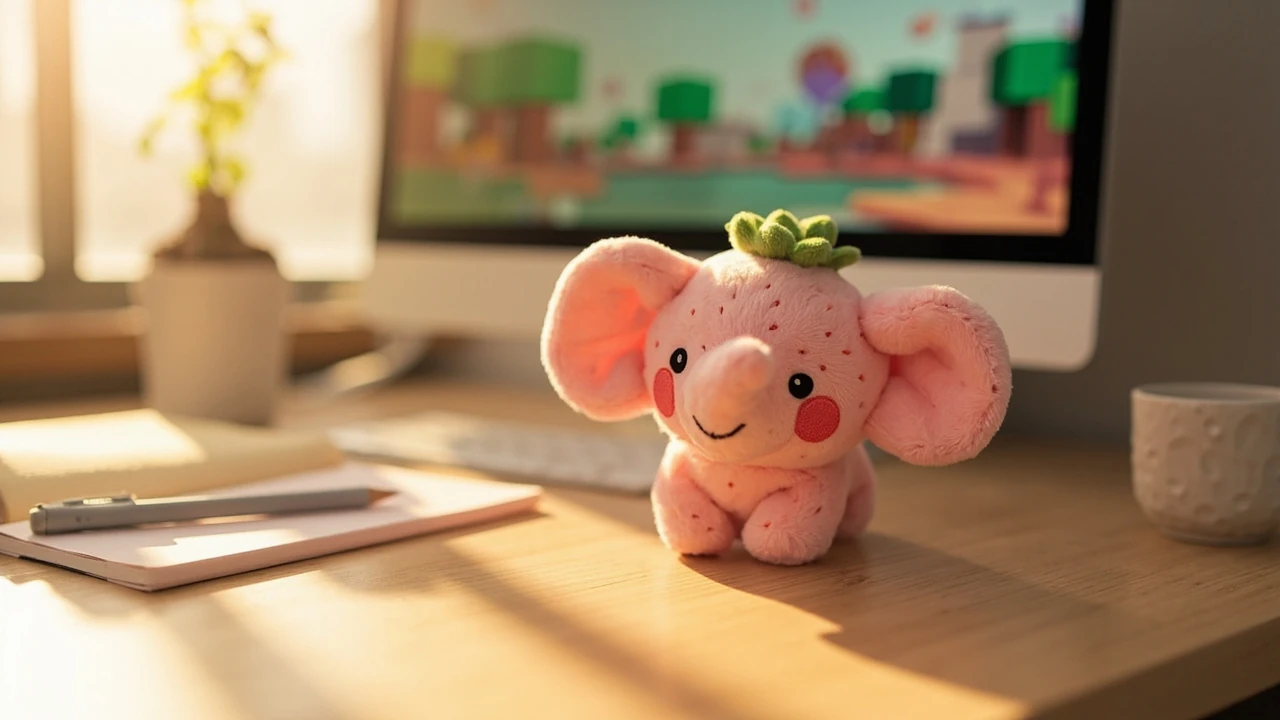
A pink elephant with strawberry coloring is a phrase most readers will recognize as an oddity, not a real animal. Inside Roblox, the same pairing has become a small piece of player culture that drifts between a meme, a cosmetic preference, and a recurring motif in user-generated experiences. The phrase “strawberry elephant” does not point to a single official item, avatar, or game. Instead, it describes a constellation of community references, avatar builds, and creator choices that share a common visual idea.
This article unpacks what players usually mean when they bring up a strawberry elephant in Roblox, where the visual idea comes from, how it shows up in actual games on the platform, and what a creator or studio should know before leaning into the same idea in their own experience. It is written for designers, technical artists, producers, and player-facing writers who need a clear read on a piece of player culture that keeps showing up in avatar screenshots, fan art, and small community events.
Strawberry elephant in Roblox: what the phrase actually refers to
When Roblox players say “strawberry elephant,” they are almost always describing one of three things. The first is a stylistic avatar: a character whose head, body, or accessory is recolored to look like a pink or red elephant with strawberry-like accents. The second is an in-game object or NPC: a friendly, deliberately absurd creature placed in a tycoon, obby, or roleplay experience as a recognizable visual gag. The third is a community meme that simply uses the imagery as shorthand for cute, surreal, or chaotic energy in a Roblox screenshot or video.
None of these are official platform terms. Roblox itself does not treat “strawberry elephant” as a catalog category, and there is no single canonical item by that name. The phrase lives in the space between avatar customization, creator content, and meme reuse, which is part of why it keeps reappearing without ever becoming a single product.
For a creator or studio trying to understand the term, the practical takeaway is that a strawberry elephant in Roblox is a visual idea, not a feature request. It can be executed in many different ways, and the success of any particular execution depends on how well the design fits the rest of the experience.
Where the visual idea comes from
The strawberry elephant visual is older than Roblox. Pink elephants have appeared in animation, advertising, and soft toy design for decades, and pairing that soft shape with the surface pattern of a strawberry is a common move in plush and character merchandise. The visual joke works because the two ideas pull in different directions: elephants are large and gray in the popular imagination, while strawberries are small, red, and dotted with seeds.
Inside Roblox, the same idea gets a second life for a few reasons that are specific to the platform.
- Avatar customization on Roblox is granular. Players can stack accessories, recolor body parts through limited layered clothing, and use face decals to push a base model in unusual directions. A pink elephant with strawberry highlights is achievable with off-the-shelf catalog items and a bit of layering work.
- User-generated content rewards recognizable, repeatable motifs. Creators who want a friendly mascot that reads instantly in a thumbnail often pick a small set of well-known visual ideas, and the pink elephant is one of those.
- The community is young and visually literate. Players share avatar builds, obby thumbnails, and pet screenshots at a high rate, so any cute, slightly absurd image has a chance to circulate as a meme.
The result is not a single origin story but a long tail of small contributions. A toy listing here, a fan art post there, an avatar video that gets clipped, and a tycoon that drops a strawberry elephant NPC into a loading area. Each one reinforces the others without any central coordination.
How players build a strawberry elephant avatar
Players do not usually need a single “strawberry elephant” item. They assemble the idea from a small kit of parts. The exact recipe depends on the catalog at any given time, but the structure tends to be similar.
Base body and color
Most strawberry elephant avatars start with a stock Roblox body that has a rounded head and simple limbs. The face is then covered or replaced with an elephant head accessory or a head model that has a trunk and large ears. Color choice is where the strawberry idea enters: the base body or the head accessory is set to a pink or red palette, often using layered clothing that supports tinting. Some players lean toward coral and bubblegum pinks to suggest the inside of a ripe strawberry, while others push the body toward a deeper red to read as the fruit’s skin.
Surface detail and accessories
The strawberry surface is the harder part. Players typically fake it rather than building a true strawberry texture, because catalog items are not easy to repaint freely. Common tricks include wearing a strawberry-patterned shirt or a face decal that includes small dot patterns, adding a green leafy hat or hair accessory to suggest the strawberry top, using shoulder or back accessories shaped like a small elephant head in pink to reinforce the species reading, and pairing the avatar with a known elephant pet or companion so the species is unambiguous in screenshots.
Pose, lighting, and screenshot framing
Because the meme depends on images, the framing matters as much as the avatar. Players tend to take screenshots in soft, warm lighting with simple backgrounds so the pink tones read clearly. Bright outdoor maps, sunset lighting, and pastel skyboxes tend to dominate the strawberry elephant screenshot aesthetic. A common composition places the character at a three-quarter angle with the trunk visible, which keeps the species reading clear while still showing the pink color story.
Why the build tends to be temporary
Most strawberry elephant avatars are seasonal rather than permanent. Players will wear the build for a few weeks, share screenshots during a strawberry season in their region, and then move on to a different combination. Studios who want to capture a screenshot-friendly moment with this kind of avatar need to plan their event window around these natural pulses rather than fight against them.
How creators use the idea inside Roblox experiences
From a creator’s perspective, the strawberry elephant is a useful prop because it costs almost nothing to add and players already understand it. Several common uses appear in real Roblox experiences, and they each carry different production implications.
Tycoon mascots and drop rewards
Some tycoons and simulator games place a pink elephant figure in a display area as a rare drop, a museum piece, or a joke reward. Because the figure is instantly readable, it works as a thumbnail anchor and a status symbol without needing an explanation in the UI. For studios, the trade-off is that the prop has to be modeled at the right polycount for the rest of the game and animated just enough to feel alive when the player walks past.
Obby decorations and themed worlds
Obbies and themed platformers often use the strawberry elephant as a level mascot. The creature might sit on a checkpoint island, peek out from behind a jump pad, or appear as a non-threatening enemy in a kids’ experience. In these cases, the design is usually very simple: a stock elephant model with a recolor and a small leafy hat, and a single idle animation.
Roleplay and social hangouts
Roleplay servers tend to use the strawberry elephant idea more loosely. A shop might sell plush versions, a cafe might theme its menu around strawberries, and NPCs might be named after the meme. The point is atmosphere rather than mechanics, and the design work is more about consistency with the world’s art direction than about modeling a single creature.
Events and limited-time content
Some experiences run short seasonal events where the strawberry elephant appears as a collectible. Because the imagery already carries a soft, friendly tone, it fits spring or summer events well. Studios who go this route usually combine the figure with a small quest line, a leaderboard, and a badge, then retire the content when the event ends.
Cross-experience tie-ins
A handful of multi-experience studios have used the strawberry elephant as a small connective thread between games, where the same creature appears as a guide in one title and as a vendor in another. The payoff is a feeling of continuity for players who move between experiences. The cost is a heavier coordination effort across teams, since the model, animation, and reward logic all need to stay in sync across multiple codebases.
Technical considerations for building a strawberry elephant in-engine
If a studio is building a strawberry elephant for a Roblox experience, the work splits into modeling, texturing, animation, and integration. Each step has a few decisions that are easy to get wrong on the first pass.
The strawberry elephant idea is one of many small recurring motifs in the wider Roblox ecosystem. To understand why it keeps reappearing, it helps to look at the platform as a whole. Roblox has long been defined by user-generated content, a young creator base, and a culture of remix and reuse, all of which reward images that are easy to recognize and easy to copy. The platform’s documentation, surfaced through the Roblox entry, describes it as a system built on user-created experiences, which is the underlying reason that small visual ideas like the strawberry elephant can travel so quickly through the community.
Modeling approach
Two paths dominate. The first is a stylized, low-poly model built directly in Blender or a similar tool, exported to Roblox using the standard plugin pipeline. This path gives the cleanest result and the best control over silhouette, but it requires a modeler familiar with the platform’s mesh format and joint requirements. The second path uses parts assembled inside Roblox Studio, which is faster and editable by other team members but tends to look more like a toy made of primitive shapes.
For a prop that lives mostly in the background, the second path is often enough. For a creature that needs to be readable at thumbnail size and feel like part of a premium experience, the first path is usually worth the extra time.
Texture and color strategy
The strawberry surface is what sells the joke, so texture work matters. A few practical points: keep the body silhouette read as an elephant first, because if the trunk and ears are lost the piece stops being a strawberry elephant and becomes a generic pink blob. Use a small set of strawberry details rather than a literal fruit texture, since seed-like dots and a green leafy top are usually enough. Limit the texture to a few body parts, because pink and red are high-saturation colors and a fully textured strawberry elephant in a pastel world can overpower the rest of the scene. If the experience is mobile-heavy, test the texture at thumbnail size on a small screen, since fine details that look great on a monitor can disappear on a phone.
Animation and idle behavior
Strawberry elephants in Roblox rarely need more than a small set of loops: an idle, a walk, and one playful reaction like a small hop or trunk raise. Studios often rig the model with the same humanoid skeleton used for player avatars, which makes animation sharing easier. If the creature is a player pet or follows the player, the follow behavior should be tested with the camera in first and third person, because pets that read fine in third person can clip into the camera in first person.
Integration and networking
For a prop NPC, integration is mostly a question of placement and collision. For a pet, a follower, or a quest item, integration touches replication. The standard advice applies: the visual state can be client-side, but any state that affects rewards, inventory, or progression has to be server-authoritative. A strawberry elephant that gives a badge or an item should never be implemented in a way that lets a client trigger the reward without server validation.
LOD and performance budget
Strawberry elephants tend to appear in groups, especially in tycoon lobbies and event hubs, so the level-of-detail budget matters more than it does for a single hero creature. A common approach is to ship two variants: a high-detail mesh for close encounters and a low-detail silhouette for the background crowd. Studios that skip this step often see a slow frame-rate drop when a lobby fills up and several of the creatures are visible at once.
Production planning: where a strawberry elephant fits in the schedule
It is easy to underestimate a small prop like this. Even when the model is simple, the time spent in review, animation, localization, and QA can be longer than the modeling itself. A realistic plan depends on which of the three roles the creature plays in the experience.
| Role in the experience | Typical team | Approximate effort | Main risks |
|---|---|---|---|
| Background prop or decoration | One 3D artist, one level designer | 1 to 3 working days | Visual noise, over-saturation, breaking art direction |
| Collectible, badge, or quest reward | 3D artist, animator, game designer, one backend or scripting developer | 1 to 2 weeks | Server replication mistakes, reward exploits, unclear UI |
| Pet, follower, or persistent companion | 3D artist, rigger, animator, networking or scripting developer, QA | 3 to 6 weeks | Pathfinding, camera clipping, ownership state, performance on low-end devices |
The effort estimate is only a starting point. A strawberry elephant that ties into an event, a limited store bundle, or a cross-experience promotion will pull in additional work for store pages, marketing screenshots, customer support documentation, and post-launch monitoring. Studios that have shipped several small mascots before can usually shave a day or two off the modeling step by reusing rig templates and material setups, but the QA and support cycles tend to stay the same length because they depend on player behavior rather than internal efficiency.
Community moderation and safety considerations
Roblox experiences with a young audience need to think about how a cute mascot can be misused. The strawberry elephant is friendly in tone, but it can still appear in screenshots that mix the prop with player-generated text, voice chat, or third-party links in ways the studio did not intend. A few practical points: set the prop’s collision so it cannot be used to trap other players or block critical paths, avoid tying rare versions of the creature to chat commands or display names because that can encourage name abuse, keep the visual style consistent with the rest of the experience so the prop does not look out of place in screenshot reviews, and if the creature is part of a paid bundle make sure the store description matches what the player actually receives because mismatches between marketing art and in-game behavior are a common source of refund requests.
None of this is unique to the strawberry elephant, but creators adopting meme imagery should expect the same level of scrutiny as any other content on the platform.
When the strawberry elephant idea does and does not fit a Roblox experience
The visual idea is flexible, but it is not a fit for every project. A short decision guide helps studios place it correctly.
| Project type | Fit | Why |
|---|---|---|
| Kid-friendly tycoon or simulator | Strong | Friendly tone, easy to read, fits pastel art direction common in the genre |
| Obby or platformer aimed at a young audience | Strong | Mascot-style decoration works well in level transitions and checkpoints |
| Social hangout or roleplay server | Moderate | Useful as atmosphere, less useful as a core mechanic |
| Competitive shooter or action game | Weak | Tone clashes with the rest of the experience, may feel out of place in a competitive setting |
| Serious narrative or documentary experience | Weak | The imagery is too playful and meme-adjacent for grounded storytelling |
| Brand-licensed or IP-driven experience | Case by case | Depends on the brand; some IPs welcome meme energy, others require a stricter tone |
Fit is not about whether the idea is popular. It is about whether the prop supports the rest of the design. A cute mascot in a serious game can pull the tone out of focus, no matter how well it is built.
How to track whether the idea is working after launch
Once a strawberry elephant creature is live, studios usually look at a small set of signals to decide whether the content is doing its job. None of these are unique to this prop, but together they tell a clear story.
- Screenshot and clip rate on social platforms. A high rate of player-generated screenshots is a strong signal that the visual reads well.
- Engagement with related badges, quests, or events. If the prop is part of a quest, completion rate and time-to-completion show whether the design is intuitive.
- Support tickets mentioning the prop. A spike in tickets about a specific creature usually points to a UX or replication bug rather than a popularity issue.
- Performance metrics on mobile and low-end devices. A prop that looks fine on PC can still cause frame drops on older hardware, especially when several are visible at once.
- Player sentiment in community channels. Sentiment is not a vanity metric here; it tells studios whether the prop landed as friendly or as awkward.
A studio should decide on these metrics before launch, so the data is comparable across updates. Without a baseline, post-launch numbers are hard to read. The most common mistake is launching the prop without setting up a dedicated analytics event, then trying to reconstruct interest from a generic playtime number, which usually understates the impact of a small piece of content because the creature is only relevant to a slice of the session.
Common mistakes when adopting the idea
Several patterns show up in experiences that try to use the strawberry elephant idea and miss the mark. None of them are fatal, but each one costs time and trust. Over-literal execution is the first, where a model that is too close to a real strawberry stops reading as an elephant, and keeping the silhouette recognizable is more important than adding surface detail. Tone mismatch is the second, where dropping a cute mascot into a tense PvP experience can confuse players about the design intent of the game. Unclear progression is the third, where a strawberry elephant that is supposed to be a reward needs a clear way for players to find it, and hidden collectibles are fine for some audiences but they need to be documented somewhere in the experience. Marketing mismatch is the fourth, where promotional art that shows a much more detailed creature than the in-game model will lead to disappointed players and refund requests. Assuming the meme is universal is the fifth, because some player regions will recognize the imagery instantly while others will read it as a generic pink elephant, and studios targeting multiple regions should not assume the joke lands everywhere.
Where the broader Roblox culture fits in
The strawberry elephant idea does not exist in isolation. It sits next to a long list of small recurring visual ideas that move through the platform at the same pace: pink cats with sunglasses, rainbow dogs, glitchy TV-headed avatars, fruit-themed pets, and pastel-themed NPCs. Each one has a similar life cycle: a small group of players adopts it, screenshots circulate, a few creators pick it up, and the idea either settles into a permanent corner of avatar culture or fades out within a season.
Studios who want to keep their experiences feeling current usually track this cycle in a simple internal document, noting which ideas are rising, which are stable, and which are cooling off. A strawberry elephant pitched today will land differently than the same idea pitched a year from now, and the difference is mostly about timing rather than the quality of the model.
Working with player culture without copying it
Studios that want to lean into meme imagery without sounding like they are chasing trends usually follow a few simple rules. They build around the idea rather than copying the exact reference, because a pink elephant with a leafy top in a stylized art direction is more durable than a near-identical replica of a community screenshot. They give the creature a role, since a mascot that appears in a clear context, such as a quest giver or a collectible, lives longer in player memory than a decorative prop that simply exists. They document the lore in the experience itself, where a short in-game note about the creature, even one or two sentences, helps players who arrive later understand the reference. They plan for retirement, because memes move on and a creature that felt current at launch can feel tired within a year, and building the prop so it can be removed or re-themed without rewriting the rest of the experience makes that retirement a planning decision rather than a fire drill.
These rules do not require a large budget. They require a clear decision about whether the idea is a centerpiece or a garnish.
A short checklist before shipping a strawberry elephant in Roblox
Before a creature like this goes live, a quick pass through a checklist helps catch the issues that always show up at the worst possible time. The silhouette should read as an elephant at thumbnail size and at normal play distance. The strawberry detail should be visible without overwhelming the rest of the scene. The model and texture should perform within budget on the lowest target device. Any reward or progression tied to the creature should be server-authoritative and tested against common exploit patterns. Marketing screenshots should match the in-game model and animation. The store or event page should describe what the player actually receives. Support documentation should cover the prop, including how to find it and what it does. Analytics events for the prop should be defined before launch so post-launch data is comparable across updates.
None of these steps are heavy on their own. Together they are the difference between a creature that feels like part of the experience and one that feels like an afterthought.
Frequently asked questions
Is there an official strawberry elephant item in Roblox?
No. Roblox does not publish an item with that exact name, and the phrase is not a catalog category. It is a community idea that lives across avatar builds, creator-made NPCs, and meme screenshots rather than a single product.
How do players actually make a strawberry elephant avatar?
Players layer a few catalog items to fake the idea: a pink or red elephant head accessory, a body in a strawberry-friendly color, a green leafy hat or hair to suggest the strawberry top, and often a face decal or shirt that adds strawberry-style surface detail. The exact recipe changes as the catalog changes, but the structure stays similar.
Can a studio sell a strawberry elephant bundle in the Roblox marketplace?
Yes, as long as the bundle meets the platform’s marketplace rules and the studio owns or has the rights to the assets used. The imagery itself is generic enough that it is usually not a copyright issue, but studios should still confirm the asset pipeline and make sure the store description matches the in-game result.
Does the strawberry elephant idea work in non-kid-friendly experiences?
It depends on the tone. The imagery is friendly and a little absurd, so it fits kid-friendly experiences well, fits social hangouts in moderation, and tends to feel out of place in serious or competitive games. Studios should test the prop in context rather than assume the tone will work everywhere.
Is the strawberry elephant a regional or global meme in Roblox?
It shows up across regions, but not evenly. English-language communities share the imagery most often, and other regions encounter it through shared screenshots and clips rather than local memes. Studios targeting a global audience should not assume every player will read the reference instantly.
How much does it cost to build a strawberry elephant for a Roblox experience?
The cost depends on the role. A simple background prop can be done in a few working days by a single 3D artist. A collectible with a quest, animation, and store listing usually takes one to two weeks with a small cross-discipline team. A persistent pet or follower with networking and QA can take several weeks. The numbers vary by studio, but the order of magnitude is a useful planning starting point.
What is the biggest risk when shipping a meme-based creature?
The biggest risk is a mismatch between the marketing art and the in-game result, because that mismatch drives most player disappointment and refund requests. The second-biggest risk is tying the creature to a reward without proper server validation, which can lead to exploit reports and support tickets.
Should studios retire the strawberry elephant idea after a while?
Yes, eventually. Memes move on, and a creature that felt current at launch can feel stale within a year. Building the prop so it can be removed or re-themed without rewriting the rest of the experience makes that retirement a planning decision rather than a fire drill.