August 4, 2026 / Web Design
Design within reach: a working guide to the brand and what it offers
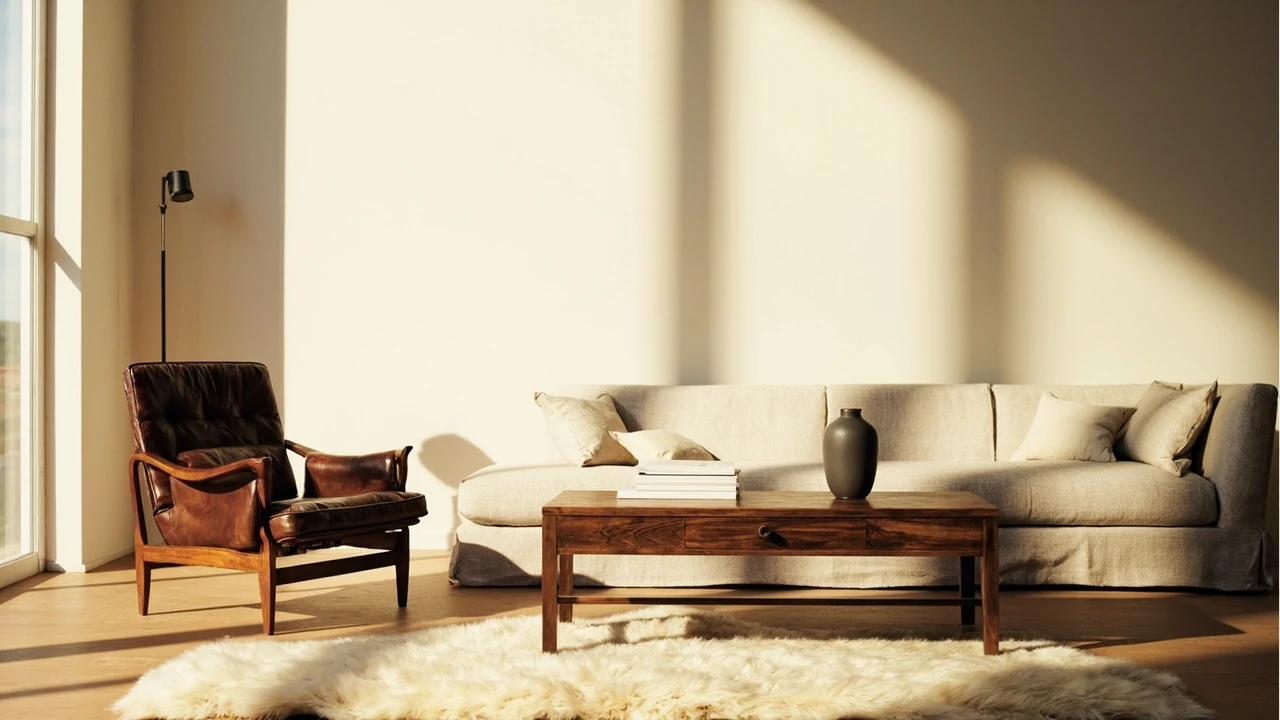
Design within reach is one of the most recognizable names in modern residential furniture, and the phrase itself has become a small piece of design history. It started in 1998 as a company with a simple idea: make the work of important twentieth-century designers available to customers who were not decorators, not developers, and not sitting on a museum budget. A homeowner in Cleveland could order the same Eames lounge that an architect had specified for a hotel lobby, and the price, while not cheap, was closer to a real household number than a gallery number.
That positioning is still the clearest way to understand the brand. The catalog is built around licensed reissues of mid-century and late-modern classics, plus a smaller layer of new designs made by contemporary studios. The pieces are heavy, the lead times are real, and the showroom experience is closer to a museum shop than to a big-box furniture store. None of that is accidental, and each of those decisions shapes how a buyer should approach the catalog.
This guide walks through what the brand actually is, how it works as a business, what kinds of products sit in the assortment, how the pricing compares to adjacent retailers, and what to think about before placing an order. The goal is to give a clear, practical picture of design within reach so a reader can decide whether the catalog is the right place to spend a design budget.
Design within reach: the origin of a modern furniture idea
The company began in 1998, founded by Rob Forbes. The original premise was direct and slightly editorial: the best modern furniture was being produced in such small quantities, or specified by such a narrow group of architects, that ordinary homeowners could not actually buy it. The early catalog mixed licensed reissues with pieces from independent makers, and the website let customers see and order work that previously required a trade account.
Within a few years the company had grown into a national retailer with its own showrooms and a strong mail-order business. In 2014 it was acquired by Herman Miller, the long-time North American manufacturer of many of the very pieces the retailer had been reselling. The combination made sense on paper: the manufacturer controlled the production of chairs, sofas, and storage systems that the retailer had helped popularize, and the retailer had a customer base and a brand voice that the manufacturer had not built on its own.
That history still shapes the brand today. The assortment leans heavily on twentieth-century names, and the language of the site is closer to a design publication than to a furniture warehouse. For a first-time buyer, that mix of museum tone and a checkout button can be confusing. The right frame is to treat the catalog as a curated shop with a real design point of view, not a department store with a modern aisle.
What the catalog actually contains
Walking through the site or a showroom, the assortment can be sorted into a few practical groups. Each group behaves differently in terms of price, lead time, and the kind of room it is meant for.
- Licensed mid-century reissues. Eames lounge chairs and ottomans, Womb chairs, Saarinen tables, Bertoia side chairs, and Nelson benches. These are the pieces most people associate with the brand.
- Late modern and postmodern pieces. Work by Ettore Sottsass, Shiro Kuramata, and a handful of Memphis-era designers, usually as smaller objects like lighting or occasional tables.
- Contemporary collections. New designs from in-house teams and outside studios, including outdoor furniture, modular sofas, and lighting aimed at a younger customer.
- Outdoor. A growing line of weather-resistant seating, dining tables, and umbrellas that borrow the same proportions and palettes as the indoor line.
- Textiles, lighting, and accessories. Rugs, table lamps, mirrors, ceramics, and storage objects that let a buyer coordinate a room around a single statement piece.
The category breakdown matters because the price distribution is uneven. The licensed reissues of iconic chairs tend to sit at the top of the price ladder. The contemporary collections and the outdoor line tend to be more accessible, with several seating options priced for a first apartment. Rugs, lighting, and accessories are the entry points and the easiest items to add to an existing room without a full redecorating project.
How the company makes a design statement without owning a factory
Design within reach does not produce most of its own furniture. The licensed mid-century pieces are made by the same manufacturers that have held the rights for decades, often under contracts that the parent company Herman Miller already controls. The contemporary collections are produced in partnerships with independent workshops in North America, Europe, and Asia, with design oversight from the retailer’s in-house team.
This structure has practical consequences. The retailer does not have to solve the hard problem of running a furniture factory, and it can shift the assortment more quickly than a manufacturer that has invested in tooling for a specific chair. The trade-off is lead time. A customer ordering a custom-configured sectional may wait several months, because the piece is built to order rather than pulled from a warehouse rack.
For a homeowner planning a room, that lead time is the single most important operational fact about the brand. A sofa ordered in March may not arrive until the late summer. A dining table ordered for a holiday may not be in the dining room until the following spring. The catalog is honest about this, but the honest answer is still the inconvenient one.
Pricing structure and how to read the numbers
The price list looks high at first glance, and there is no way around that. A licensed Eames lounge chair and ottoman is one of the most expensive individual chairs the brand sells. A Womb chair with a standard fabric is close behind. Sofas span a wide range, with sectional systems at the top and simpler two-seat models closer to the middle of the market.
| Category | Typical entry price | Typical high price | What drives the spread |
|---|---|---|---|
| Lounge and accent chairs | Around 600 to 900 USD | Over 6,000 USD for a fully configured lounge chair and ottoman | Designer royalties, materials, configuration options |
| Dining chairs | Around 250 to 400 USD per chair | Over 1,200 USD per chair for premium wood or leather | Frame material, upholstery, structural design |
| Tables | Around 500 to 900 USD for smaller occasional tables | Over 5,000 USD for large marble dining tables | Surface material, base, size |
| Sofas and sectionals | Around 1,500 to 2,500 USD for a basic sofa | Over 10,000 USD for a full sectional in premium leather | Configuration, upholstery, frame, cushion fill |
| Outdoor seating | Around 400 to 800 USD per chair | Over 3,000 USD per deep seating set | Frame material, weather treatment, cushion construction |
| Lighting and accessories | Around 50 to 200 USD for small objects | Over 2,000 USD for statement floor lamps | Material, designer, production method |
Two patterns are worth noticing. First, the licensed mid-century pieces rarely have any meaningful discount, because the retailer is bound by manufacturer pricing. Second, the contemporary collections and the outdoor line are more flexible, especially around end-of-season clearances. A buyer who is patient and willing to wait for a sale can sometimes reduce a sofa order by 15 to 25 percent, which is unusual for a brand at this tier.
The catalog is also transparent about the differences between fabric grades, leather grades, and base finishes. A sofa in a standard textile can cost 30 to 50 percent less than the same sofa in a premium leather. A dining table with a wood top is usually cheaper than the same table in stone. Reading the configuration page before adding a piece to the cart is the single most useful habit for controlling the final number. Readers who want more background can use the Design thinking as a reference while reviewing this point.
Lead times, shipping, and what to expect on delivery day
Lead time is the other number to watch as carefully as price. The catalog splits products into a few operational buckets:
- Stocked items. Smaller accessories, lighting, and a small set of best-selling seating pieces that ship within a few business days.
- Quick-ship upholstery. A limited set of sofas and sectionals in the most common configurations, usually shipping in two to four weeks.
- Made-to-order. The largest part of the assortment, including most upholstered seating, dining tables in custom finishes, and outdoor pieces in custom textiles. Typical lead time is eight to sixteen weeks.
- Custom configurations. Sectional layouts, special fabrics, and trade-only finishes. Lead time can stretch to twenty weeks or more, and is sometimes quoted individually.
For large items, the retailer uses a third-party white-glove service rather than a standard parcel carrier. The shipper schedules a window, brings the piece into the room, and removes packaging. The fee is real and is usually listed during checkout rather than on the product page, so it is worth confirming before committing to a heavy piece.
The brand also operates a network of company-owned showrooms across the United States, with a smaller presence in Canada and Mexico. A showroom visit is the best way to test a sofa, sit in a lounge chair, and see a fabric in person, because screen-rendered textiles rarely communicate how a heavy weave will feel under a hand.
How the assortment compares to other modern furniture retailers
Buyers often compare design within reach to a short list of adjacent retailers. The comparison is useful, because each option represents a different answer to the same question: where should a homeowner buy modern furniture without going through an architect or a decorator?
| Retailer | Core positioning | Price band for a sofa | Lead time | Best fit |
|---|---|---|---|---|
| Design within reach | Licensed mid-century reissues plus a contemporary layer | 1,500 to 10,000+ USD | Two to twenty weeks depending on configuration | Buyers who want a specific iconic piece and are willing to plan around lead time |
| Herman Miller direct | Manufacturer of the original mid-century pieces and modern office systems | Comparable for iconic chairs, often higher for home sofas | Variable, often faster on stocked items | Buyers who care about provenance and corporate warranty terms |
| CB2 | Younger, trend-led sister brand, more accessible price points | 900 to 3,000 USD | Two to eight weeks for most items | First apartments, secondary rooms, and lower-stakes projects |
| West Elm | Broader modern assortment with a strong private-label catalog | 1,200 to 4,500 USD | Four to twelve weeks for made-to-order upholstery | Households that want a coordinated look across a whole home |
| Article | Direct-to-consumer modern, fewer iconic pieces | 800 to 2,500 USD | Two to six weeks for stocked items | Buyers prioritizing speed and a simpler shipping model |
| Room and Board | American-made modern with strong customization | 2,000 to 6,000 USD | Six to twelve weeks for made-to-order pieces | Buyers who want domestic production and fabric choice |
None of these retailers is strictly better than the others. The choice is about which constraint matters most. If a buyer has a specific piece in mind, such as an Eames lounge or a Womb chair, the licensed reissue is the only realistic option. If a buyer wants a coordinated whole-home look and does not need any one iconic piece, West Elm or Room and Board will probably feel easier. If speed is the priority, Article and CB2 will beat the made-to-order part of the design within reach catalog every time.
Who the catalog is really for
The brand is most useful for a specific type of project. A homeowner who is decorating a single room and is willing to treat one statement piece as a long-term anchor will get the most out of the catalog. The room might be a reading corner with a single lounge chair, a dining room anchored by a Saarinen table, or a home office that needs a quality task chair. In each case, the buyer is buying a piece with a real design lineage, paying for that lineage, and accepting a long lead time in exchange.
The catalog is less useful for a household that wants to furnish an entire apartment quickly, on a tight budget, and with a single delivery. That kind of project needs either a stocked retailer with a faster shipping model, or a designer who can specify a coordinated package across multiple vendors. The brand can sit inside such a project, but it will not be the only vendor.
A second group that the catalog serves well is the trade. Interior designers, architects, and set decorators can open a trade account that offers a discount, access to a wider fabric library, and project-level support. For a professional specifying multiple pieces for a single client, the trade tier changes the economics significantly, because the discount applies across the entire order rather than to a single piece.
How to plan a purchase without overpaying or waiting twice
A short planning sequence makes a real difference on a first order. The steps below are the same ones a designer would use when specifying a single piece from the catalog.
- Decide on the room and the role of the piece. A statement chair in a living room, an anchor dining table, or a task chair in a home office are three very different projects with different lead times and price bands.
- Visit a showroom if one is within a reasonable drive. Sit in the chair, lean back in the sofa, look at the tabletop in person. A piece that looks right on a screen can feel wrong in a real room.
- Confirm the configuration on the product page. Fabric grade, leather grade, base finish, and size all change the final price, and the differences are not always obvious from the thumbnail.
- Lock the lead time before placing the order. If the room needs to be ready by a specific date, work backward from that date and add a buffer of two to four weeks for shipping and any issues on delivery day.
- Hold a single secondary room to fill with smaller accessories once the anchor piece is in place. Rugs, lighting, and ceramics are easier to ship and easier to live with while the main piece is still in production.
The same sequence also helps a buyer avoid the most common mistake: ordering a statement piece, watching it arrive months later, and then realizing that the rest of the room now needs to be redecorated around it. The slower the lead time, the more useful it is to plan the rest of the room on paper before the first order ships.
Trade program and contract work
The trade program is a separate tier of the business and is worth understanding if a project is being run by an architect, a designer, or a corporate specifier. Approved trade accounts receive a discount on most products, access to additional fabric and finish options, and the ability to place project orders with consolidated shipping. Another relevant reference is the conservative and preserves the status quo, which adds context without changing the practical guidance here.
Application is straightforward. A trade account requires a resale certificate or a business license, depending on the type of work. The approval is usually quick, and the discount is applied at the cart level once the account is verified. For a residential project that involves multiple rooms, the savings on a full-home order can be substantial, and the additional fabric library is often the deciding factor on a complicated upholstery choice.
For commercial projects such as lobbies, hotel guest rooms, or co-working spaces, the trade program also opens up a contract fabric library and a dedicated project manager. That kind of support is what makes the brand workable at a commercial scale, and it is the reason a number of hospitality brands use the same mid-century pieces that show up in residential orders.
Returns, warranty, and what happens after the delivery
The return policy is more restrictive than a general retailer’s, which is typical for a brand that ships made-to-order furniture. Stocked items in original packaging can usually be returned within a configured window for a restocking fee. Custom-configured pieces, special-order fabrics, and items marked as final sale are typically not returnable.
Warranty terms vary by product and by manufacturer. The licensed mid-century pieces carry the manufacturer warranty, which is usually generous on frames and less generous on cushions and textiles. The contemporary collections carry the retailer’s own warranty, and the terms are listed on each product page. Reading the warranty section before ordering is a small but useful habit, because some pieces carry a multi-year frame warranty while upholstery may be covered for a shorter term.
After delivery, the brand also operates a replacement parts program for several of its most common pieces. A lost cushion, a worn glide, or a scratched tabletop can often be replaced directly, which is one of the quieter advantages of buying a long-running design rather than a one-off piece from a smaller maker.
Sustainability and material choices
Material sourcing is increasingly part of the conversation around mid-century modern, and the brand publishes some sourcing information on its product pages. The licensed pieces follow the manufacturing standards of the original producers, which have generally shifted toward FSC-certified wood, water-based finishes, and tighter textile standards over the last decade. The contemporary collections are a more mixed picture, and the most useful check is the product page for the specific item.
Two practical sustainability questions tend to come up. The first is durability, and the answer is generally positive: a heavy hardwood frame, a high-density cushion, and a replaceable cover are all more sustainable than a particleboard frame with a glued-on fabric, even if the initial footprint is larger. The second is shipping, because most large pieces ship by truck from a regional warehouse. A buyer in a coastal city may be ordering from a warehouse several thousand miles away, and the carbon cost of that last-mile delivery is real.
The honest summary is that the brand is not the most sustainable option on the market, but it is generally more sustainable than a fast-furniture alternative, and the pieces are built to last long enough to justify the upfront cost if the buyer plans to keep them for a decade or more.
Common mistakes first-time buyers make
A few patterns show up often enough to be worth listing. Avoiding them is cheaper than learning them the hard way.
- Ordering a statement piece before measuring the room, the doorway, and the elevator. Several of the iconic chairs and tables are wider or taller than they appear on a screen, and a piece that cannot be carried into the room is a piece that goes back to the warehouse.
- Choosing the wrong fabric grade. The cheapest textile on a sofa is rarely the right one for a heavily used living room, and the most expensive textile is rarely necessary for a guest room. The middle grades usually offer the best balance.
- Underestimating lead time. The piece will not arrive next month. Plan the room around a realistic delivery date, and avoid ordering for a specific event that the lead time may not support.
- Treating the catalog as a discount retailer. The licensed pieces are rarely discounted, and the prices on the website are usually the prices a buyer will actually pay. Sale events happen, but they are concentrated on the contemporary and outdoor lines.
- Forgetting the shipping fee. The white-glove fee is listed at checkout for a reason, and it is real. Adding two or three heavy pieces to one order is more efficient than splitting the order across multiple shipments.
How the brand fits into a wider design strategy
For a reader who runs a studio, a small business, or a brand that needs a real interior rather than a stock-image office, the catalog is one of the easier ways to introduce a piece of design history into a room. A single lounge chair in a meeting room, a Saarinen table in a reception area, or a well-chosen task chair in a workspace communicates the kind of considered decision that a client or a visitor notices without being told.
The same logic applies to a residential project. A reader who is planning a home and wants a room that looks like it was designed by a real person, rather than assembled from a single retailer, can use the catalog as a source of one or two anchor pieces, then layer in lighting, rugs, and accessories from other sources. The result is a room with a point of view, which is the real promise of the brand.
Practical next steps before placing an order
Before clicking the order button, a short checklist is more useful than another paragraph of advice. The following list is the minimum a first-time buyer should be able to answer in writing.
- Which room is the piece for, and which other pieces are already in that room.
- Which configuration and which fabric or finish the order will use, and what each upgrade changes in the price.
- What the realistic lead time is for that configuration, and whether the room can wait.
- What the white-glove shipping fee is for the address, and whether the doorway and any elevators will accept the piece.
- What the return and warranty terms are for that specific product, and whether the trade tier applies.
If those questions have clear answers, the order is probably a good one. If any of them is fuzzy, it is worth pausing for a day and going back to the product page. A piece of this weight, at this price, with this lead time, is worth a small amount of friction before the order is placed.
Frequently asked questions
What is design within reach in simple terms?
Design within reach is an American modern furniture retailer that sells licensed reissues of twentieth-century design classics, plus a contemporary line of new pieces. The brand was founded in 1998 to make the work of important modern designers available to homeowners, and it was acquired by Herman Miller in 2014.
Who owns the brand today?
The brand operates as part of the Herman Miller group, which also owns the manufacturer of many of the same mid-century pieces the retailer resells. The retail operations, showrooms, and trade program are run separately from the manufacturer’s contract business.
Is the furniture actually made by the retailer?
No. The licensed mid-century pieces are made by their respective manufacturers, which are often the same factories that have produced the designs for decades. The contemporary collections are produced by independent workshops in partnership with the retailer’s in-house design team.
How long does delivery usually take?
Lead time depends on the configuration. Stocked items can ship within a few business days, made-to-order upholstery usually takes eight to sixteen weeks, and custom configurations can take twenty weeks or more. A showroom or a customer service representative can confirm the lead time for a specific piece before an order is placed.
Can the pieces be returned?
Stocked items in original packaging can usually be returned within a configured window for a restocking fee. Made-to-order pieces, custom configurations, special-order fabrics, and final-sale items are typically not returnable. The product page lists the specific terms for each item.
Is there a trade discount for designers and architects?
Yes. A trade account is available to licensed designers, architects, and other qualified professionals, and it offers a discount on most products, access to a wider fabric library, and project support for residential and commercial work. Application requires a business license or a resale certificate.
How does the brand compare to CB2 or West Elm?
Design within reach is positioned above CB2 and West Elm on the price ladder and leans more heavily on licensed mid-century reissues. CB2 is a younger, trend-led sister brand with more accessible price points. West Elm offers a broader modern assortment with a strong private-label catalog. The right choice depends on whether the project needs a specific iconic piece or a coordinated whole-home look.
Are there physical showrooms to visit?
Yes. The brand operates a network of company-owned showrooms across the United States, with a smaller presence in Canada and Mexico. A showroom visit is the most reliable way to test a chair, evaluate a fabric, and see a tabletop in person before placing an order.
Do the products come with a warranty?
Yes. Warranty terms vary by product. The licensed mid-century pieces carry the manufacturer warranty, and the contemporary collections carry the retailer’s own warranty. The terms for each piece are listed on the product page and are worth reading before ordering.
Is the brand a good choice for a first apartment?
It depends on the project. A first apartment that needs to be furnished quickly and on a tight budget is usually better served by a stocked retailer with a faster shipping model. A first apartment that has a single statement piece in mind, such as a specific lounge chair, can still use the brand effectively, especially if the buyer is willing to wait for a made-to-order configuration.