October 18, 2026 / Studio Practice
Sandfall Interactive: the Montpellier studio behind Expedition 33
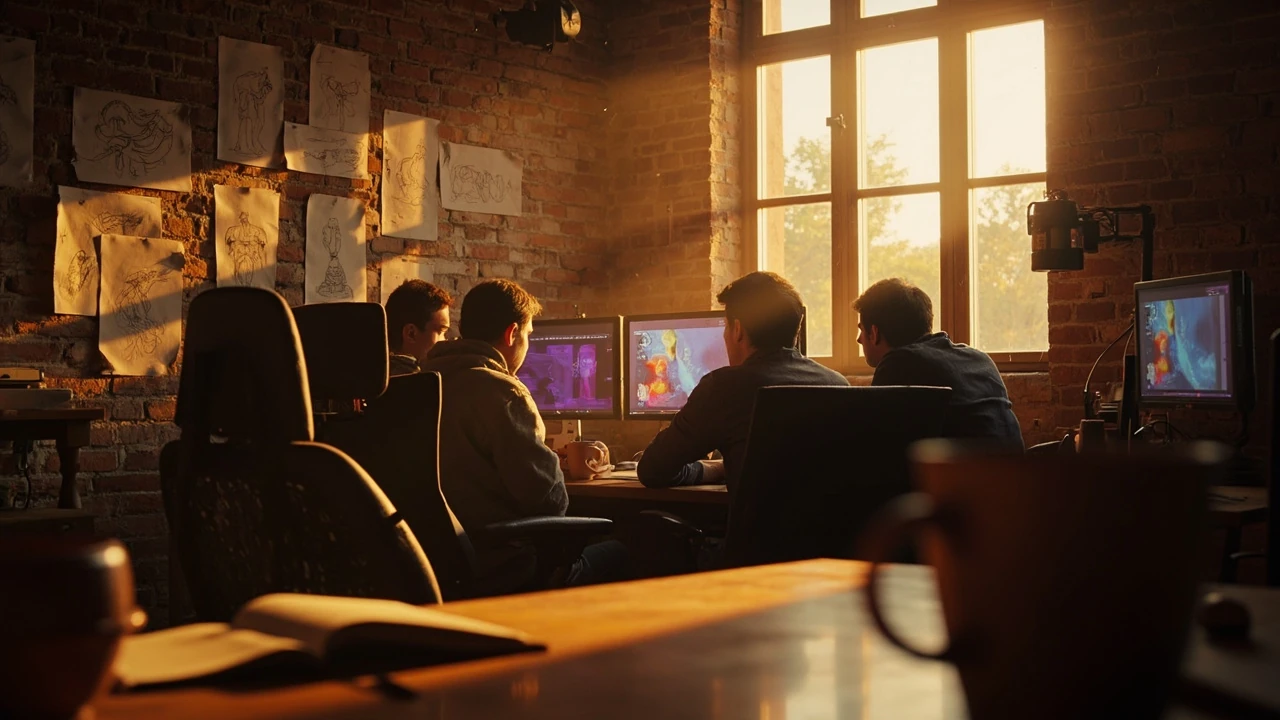
Sandfall Interactive and the slow build behind Clair Obscur: Expedition 33
Sandfall Interactive entered international attention when Clair Obscur: Expedition 33, its debut role-playing game, landed on year-end lists alongside releases from publishers with much longer track records. The studio is small, based in Montpellier, and has made a series of deliberate choices about scope, language of origin, and combat design. This article looks at how the studio is actually built, who runs it, and what the public record does and does not support.
The piece is written for readers who follow how European studios scale. It treats the studio as a working organization rather than a news item, and it links the studio’s choices to the wider pattern of small French and European teams turning single-project ambition into sustainable practice. Where the evidence is thin, the article says so.
What Sandfall Interactive actually is
Sandfall Interactive is an independent game studio founded in Montpellier, in southern France. The company was established in 2020 by a group of developers with prior experience at larger French and European studios, including Ubisoft and Dontnod. Its first released project is Clair Obscur: Expedition 33, developed under a publishing agreement with Kepler Interactive, an indie label co-founded in 2021 that also works with studios such as Sloclap and Awaceb.
The studio describes itself as a small, multi-disciplinary team built around long-form narrative and hand-crafted art direction. Its working model is project-led rather than franchise-led: the team is sized to one game, not to a permanent platform of sequels. That decision has real consequences. It means reputation, hiring, and tooling all ride on a single debut, which raises the stakes on release quality and limits how much of the studio’s process can be inferred from prior public output.
For most of its early life the studio was visible mainly through its website, recruiting posts, and a small set of trailers. Wider recognition came with the public reveal and the critical reception of its first game. That pattern, low public footprint during development followed by a single concentrated release, is common among European independents that prefer to ship finished work rather than maintain a year-round marketing cadence.
Founders, leadership, and the team behind the studio
Sandfall Interactive was co-founded by Guillaume Broche, who serves as creative director, alongside a core group of producers, designers, and engineers who previously worked on major French game productions. The leadership team is mid-career rather than first-time: the founders have shipped work at larger organizations and have chosen, deliberately, to build a smaller, more controlled studio.
Team composition has leaned on a mix of veterans and first-title developers, which is common for independents of this size. Public listings between 2022 and 2024 included roles for character artists, technical animators, gameplay engineers, combat designers, and writers. The studio has also been open about hiring from the local Montpellier and Occitanie talent pool, and about remote collaboration with specialists elsewhere in France and the European Union.
Three things stand out about the team’s structure. Creative direction is concentrated: public-facing materials are tightly aligned with a single voice, which suggests the art and writing pillars are set from the top and filtered through the team rather than assembled by committee. The studio has invested in narrative and world-building roles, including dedicated writers, which is consistent with a turn-based RPG that carries long scripted sequences. The technical side has emphasized combat systems, animation pipelines, and tooling, which is where the visible work on Expedition 33 has been most ambitious.
Clair Obscur: Expedition 33 as the studio’s reference point
Clair Obscur: Expedition 33 is the debut release and the main reason the studio has any public profile at all. It is a turn-based role-playing game set in a Belle Époque-inspired fantasy version of France, built around a numbered expedition into a hostile landscape. The title has drawn attention for its painterly art direction, its use of French-language voice acting as a default, and for defending turn-based combat in a market that has largely moved to real-time action systems.
For a reader trying to evaluate the studio, the game is the evidence base. Anyone writing about Sandfall Interactive is, in practice, writing about a single released title and a small amount of pre-release communication. That constraint shapes what can and cannot be claimed about the studio’s working process. The strongest statements are about visible results: art direction, combat design, narrative framing, and technical performance. Claims about the studio’s long-term identity should be treated with more caution, since one project is a thin base for predicting the next.
Design pillars that show up in the work
Looking across public materials, interviews, and the shipped game, a small set of design priorities keeps repeating. These are the pillars a reader can use to evaluate future Sandfall Interactive projects and to compare the studio against peers in the European indie scene.
Art direction and painterly visual identity
The studio has committed to a hand-painted aesthetic that draws on late nineteenth- and early twentieth-century French painting, fashion, and architecture. This is not a stylistic flourish applied on top of a standard fantasy template; it is a load-bearing choice that affects character design, level art, UI motifs, and the lighting language of the game. For a small team, that kind of commitment reduces decision-making later in production. When the visual language is locked early, the cost of every subsequent art task is lower because the reference is already shared.
Turn-based combat with real-time action layers
Expedition 33 uses a turn-based core with timing-based and free-aimed action elements layered on top of each turn. That hybrid is harder to balance than either pure system would be on its own, but it gives the studio a way to compete with action-RPG pacing without abandoning the strategic clarity that turn-based combat provides. It also means the studio has had to invest heavily in animation, input feel, and the connection between menu choices and on-screen motion, which is a technical investment as much as a design one.
French-language voice acting and original-language writing
Sandfall Interactive recorded its dialogue in French first, with other languages layered on top for localization. The choice to lead with the original language of the studio is unusual for a release of this scale, and it has a real effect on character performance, direction, and writing rhythm. It also signals that the studio is willing to take a localization risk in order to protect performance quality.
Narrative density over open-world surface area
Rather than competing on map size or systemic sandbox features, the studio has invested in a more curated world with dense scripted sequences, strong environmental storytelling, and a focused party of playable characters. This is a sensible choice for a small team because scripted density scales with writer and director hours, whereas open-world content scales with raw level-design labor, which is harder to staff at this size.
Publishing with Kepler Interactive
Sandfall Interactive shipped Expedition 33 through Kepler Interactive, a publisher that has specialized in working with small European and international studios. Kepler acts as a label and distribution partner rather than a development owner: the studio retains creative control, while the publisher handles funding milestones, platform relationships, marketing, and physical distribution. For a studio of Sandfall Interactive’s size, this kind of partnership is a practical way to reach console certification, marketing reach, and translation pipelines without growing an internal publishing arm.
The Kepler relationship is also a signal about how the studio is positioning itself. The publisher’s catalog includes Sifu, The Talos Principle 2, and other titles that share a craft emphasis rather than a live-service pitch. Choosing a publisher of that kind is a strategic decision: it tells the market what kind of studio Sandfall Interactive wants to be measured against.
What is known about the studio’s process
Because the studio is young and has only shipped one project, public information about how it works is limited. A few points can be said responsibly from interviews, job listings, and credited roles on the released game.
Small, cross-functional teams
The studio has described its structure in terms of small feature groups rather than rigid departments. Designers, engineers, and artists tend to work on the same combat encounter or the same location together, with shared reviews at the end of each iteration. This structure tends to produce coherent results because the cost of a misunderstanding is paid immediately by the people who would otherwise have to fix it.
Tooling investment in animation and combat
Public roles and credited work suggest the studio has invested in proprietary tooling for combat timing, animation blending, and cinematics. This is consistent with a hybrid turn-based system that depends on tight visual feedback.
Vertical-slice milestone planning
Like most independent studios working under a publisher, Sandfall Interactive has reported working in vertical slices, with playable milestones that include a slice of art, a slice of combat, and a slice of narrative at every checkpoint. That structure tends to surface risks early, which matters when working capital is limited.
Hiring in the Occitanie region
Public job listings and local press coverage show that the studio has hired primarily from the Montpellier and broader Occitanie region, with a smaller share of remote and European hires. This local concentration has practical effects on the studio’s culture, working hours, and access to graduating talent from regional game and animation programs.
How the studio fits the European indie landscape
Sandfall Interactive sits inside a wider pattern of small European studios that have built sustainable careers on a single, carefully designed release. The pattern is not new, but it has become more visible as digital distribution has flattened and as global storefronts have made it possible to reach an international audience from a single regional office.
| Studio | Headquarters | Debut title | Notable design priority | Publishing model |
|---|---|---|---|---|
| Sandfall Interactive | Montpellier, France | Clair Obscur: Expedition 33 | Turn-based combat with painterly art direction | Kepler Interactive |
| Sloclap | Paris, France | Absolver | Hand-to-hand combat systems | Devolver Digital, then Kepler Interactive |
| Awaceb | Montpellier, France | The Eternal Cylinder | Surreal creature design with ecological themes | Kepler Interactive |
| Spiders | Paris, France | Of Orcs and Men | Mid-budget action RPGs with deep lore | Focus Entertainment and others |
| Don’t Nod (formerly Dontnod) | Paris, France | Remember Me | Narrative-led action adventures | Self-published, later multi-project |
| Role group | Typical responsibilities | Why it matters for Expedition 33 |
|---|---|---|
| Creative direction and writing | World, characters, dialogue, tone | Holds the Belle Époque setting and the numbered expedition concept together |
| Art and animation | Character art, environments, cinematics | Carries the painterly style across the whole production |
| Combat and systems design | Turn-based rules, action layers, encounter pacing | Defines the hybrid combat feel that distinguishes the game |
| Engineering and tools | Engine work, animation pipeline, combat timing | Keeps the hybrid combat responsive and readable |
| Production and publishing liaison | Milestone planning, Kepler coordination, QA | Connects the team to console certification and release windows |
The tables are not a ranking. They are a way of showing that the Montpellier region has produced more than one notable studio in the same period, that the publishing path through Kepler is a real pattern rather than a one-off choice, and how the studio’s roles map onto a release of this scope. For background on the regional scene, the Wikipedia article on the French video game industry covers the longer history of studios based in the country.
Strengths that are visible in the work
Judging from the released game and the studio’s public materials, Sandfall Interactive shows several concrete strengths. None of these are unique to the studio, but the combination is what defines its current identity.
- Distinctive art direction that holds up at production scale. The painterly look of Expedition 33 is not a one-off trailer effect; it is consistent across environments, characters, and UI.
- Combat design that respects both turn-based tradition and action pacing. The hybrid system is a defensible answer to a market that often treats turn-based combat as obsolete.
- Writing and voice performance in the original language. Anchoring the cast in French is a quality decision that benefits the work directly.
- Disciplined scope. The studio has resisted the temptation to pad its first project with open-world systems, which is a strong signal of production maturity.
- Clear publishing alignment. Kepler Interactive’s catalog is a good match for the studio’s craft-led positioning.
Risks and open questions
A studio at this stage is also defined by the questions it has not yet answered. Being honest about those is more useful than overstating confidence.
- One-project track record. A single released game is a thin base for predicting long-term identity, hiring, and production stability.
- Turn-based market exposure. Defending turn-based combat is a principled choice, but it is also a market risk, since the studio will have to win players who have moved away from the format.
- Localization cost. Leading with French voice acting and layering other languages on top is more expensive than building a single-language production, and future budgets will have to absorb that.
- Successor project strategy. It is not yet known whether the studio will treat Expedition 33 as a one-off, a series, or an engine and team to carry forward into a new setting. Each option has very different organizational consequences.
- Team growth pressure. After a strong debut, hiring tends to accelerate, and small studios often struggle to preserve their production culture under that pressure.
How to read a young studio like this
Most writing about young studios falls into one of two traps. The first is hero worship, where every choice is treated as visionary. The second is reflex skepticism, where a single bad quarter of news is treated as proof of structural failure. A more useful approach is to read studios the way a careful reader reads any organization: weigh the evidence, hold conclusions lightly, and treat the team’s working output as the primary source of truth.
For Sandfall Interactive specifically, that means paying attention to what the studio actually ships, how it talks about the work in interviews, and how it treats the people on the team. Stated values matter less than working patterns, and working patterns matter less than the quality of the next thing the studio puts in front of players.
Frequently asked questions
What is Sandfall Interactive?
Sandfall Interactive is an independent game studio based in Montpellier, France, founded in 2020. The studio is best known for its debut role-playing game Clair Obscur: Expedition 33, developed in partnership with publisher Kepler Interactive.
Who founded Sandfall Interactive?
The studio was co-founded by Guillaume Broche, who serves as creative director, alongside a core group of developers with prior experience at larger French and European game studios. Public records and interviews name additional co-founders in production and design roles.
Where is Sandfall Interactive located?
The studio is based in Montpellier, in the Occitanie region of southern France. It has hired primarily from the local and regional talent pool, with additional remote and European hires.
What games has Sandfall Interactive released?
As of the most recent public information, the studio’s released title is Clair Obscur: Expedition 33, a turn-based role-playing game. The studio has not yet announced a second project in detail.
Who publishes Sandfall Interactive’s games?
Sandfall Interactive works with Kepler Interactive, a publisher that focuses on small, craft-led studios. Kepler provides funding, platform relationships, and marketing support, while the studio retains creative control.
Why does Sandfall Interactive use French voice acting?
The studio records dialogue in French first, with other languages layered on top. The choice protects the quality of performance and the rhythm of the original writing, and it reflects the studio’s identity as a French team working from its own language.
Is Sandfall Interactive working on a second game?
Public information about a second project is limited. Any specific claim about a future title should be treated with caution until the studio itself confirms the details.
How big is Sandfall Interactive?
The studio is small by industry standards, sized to the demands of a single role-playing project. Exact headcount is not consistently published, and any specific number should be treated as an estimate.
How does Sandfall Interactive compare to other French studios?
The studio shares traits with other small European independents: tight art direction, narrative focus, and a publisher-first model. It differs from larger French studios such as Ubisoft by scale, and from mid-budget studios such as Spiders by staying closer to a single-project rhythm.
Where can a reader follow Sandfall Interactive’s updates?
The most reliable sources are the studio’s official website, its verified social channels, and the publisher’s catalog pages. Third-party reports should be treated as secondary, especially during the early stages of a project.