August 7, 2026 / Studio Practice
Nail design ideas that actually work for real clients
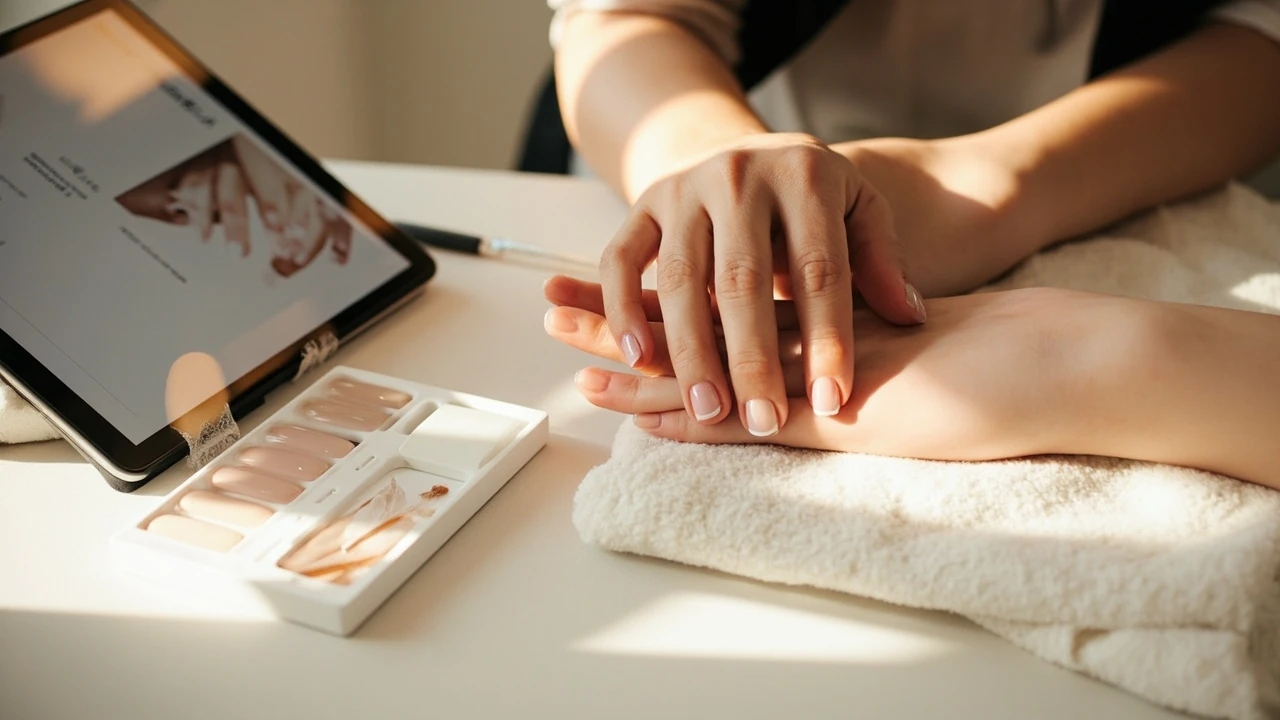
Nail design ideas worth offering in a working studio
A client sits down and says she wants “something different” but cannot describe what. The technician reaches for a swatch ring, the client points at three things that do not match, and the appointment quietly derails before the prep work has even started. The gap is rarely skill. It is the lack of a structured way to talk about nail design ideas before the lamp comes on.
This guide is written for working nail technicians, studio owners, and front desk staff who need a practical framework for choosing, presenting, and pricing nail design ideas that real people actually wear past the first photo. It covers shape and length decisions, color logic, art categories, the consultation conversation, and the small business choices that turn a Pinterest board into a bookable service.
Start with the client, not the inspiration board
The fastest way to waste a consultation is to lead with a trending image. A picture is a starting point, not a brief. Before you scroll through reference photos, get clear on four practical facts about the person in the chair.
- Daily hand use, including typing, lifting, washing dishes, or playing an instrument.
- Skin tone, undertone, and any tint preferences the client has reacted to before.
- Dress style, including the colors they actually wear to work or to events.
- Maintenance tolerance, meaning how often they will realistically return for infills or removals.
Those four answers quietly decide most nail design ideas. A client who washes hair professionally and types eight hours a day does not need the same length or art as a client who works in a studio environment and treats her appointment as a monthly ritual. The same is true for someone with a corporate dress code that bans visible nail art in certain colors.
Once the four facts are clear, the conversation moves from “show me everything” to “here are the three or four nail design ideas that match how you actually live.” That change alone tends to raise rebook rates because clients stop feeling sold to and start feeling understood.
Shape and length set the canvas for every design
Most disagreements about nail design ideas come from a mismatch between the art and the shape underneath. A long stiletto can carry dramatic line work that would look crowded on a short square. A short almond reads as soft and minimal, so heavy embellishment can feel out of place. The shape is the frame, and the art is the picture.
| Shape | Best length range | Design strengths | Watch out for |
|---|---|---|---|
| Square | Short to medium | Clean French, negative space, modern minimalism | Snag risk on sidewalls; corners need a true 90-degree file |
| Soft square or “squoval” | Short to medium | Office-friendly neutrals, micro art near the cuticle | Can read as plain if art is too small for the width |
| Round | Short | Low-maintenance naturals, glossy nudes, milky pink | Limited surface for detailed art |
| Oval | Short to long | Elongating nude gradients, soft florals, ombre | Needs careful apex building to avoid a flat look |
| Almond | Medium to long | Feminine French variants, soft chrome, dainty line work | Sidewalls can weaken on longer lengths |
| Stiletto | Long | Dramatic art, sharp French tips, statement color | Daily function is limited; expect more breaks |
| Coffin or ballerina | Long | Bold solid color, chunky glitter, geometric blocks | Requires strong structure to keep corners intact |
Length matters as much as shape. A useful rule inside the studio: if the client cannot type comfortably for thirty minutes during the appointment, the length is probably two steps too long for everyday wear. The best nail design ideas for a given client are the ones they can still live in next Wednesday, not just the ones that photograph well on Saturday.
Color logic that saves consultation time
Color is usually where conversations stall, because there are too many choices and not enough structure. A simple color framework removes the awkward “I don’t know, what do you think” moment without making the client feel pushed.
- Skin tone check. Cool undertones often read cleaner in blue, berry, mauve, and pink-leaning nudes. Warm undertones usually sit well in peach, caramel, terracotta, and warm beige. Neutral undertones can carry most of the spectrum.
- Lifestyle filter. Jobs with strict dress codes usually want nudes, milky pinks, soft greige, or a French variant. Creative or client-facing roles can take bolder color more easily.
- Seasonal anchor. A winter wardrobe pulls deeper shades, a summer wardrobe pulls brights and pastels. The anchor does not have to be obvious, but the art should not fight the season either.
- Finish layer. The same color can read very different in cream, chrome, velvet, sugar, or matte. Switching finish is often a smarter move than switching shade.
Two clients with the same skin tone can sit in the same chair and want very different things. One wants her hands to disappear into a wedding guest outfit, the other wants them to be the conversation. Both choices are valid. The job of the consultation is to find out which one walked in.
Art categories that translate into bookable services
Trendy names come and go, but the underlying categories of nail design ideas stay stable. Organizing your menu and your Pinterest boards by category is more useful than chasing every micro-trend, and it makes pricing easier to defend.
- Minimal and micro art. Tiny dots, single-line florals, negative space, micro French. Fast to apply, easy to maintain, works on short lengths.
- Classic French variants. Soft pink bases, milky bases, colored tips, double French, angled French, smile line variations.
- Solid and monochrome. One shade, no art. Often the most rebooked service because it is fast, looks expensive, and is forgiving on every hand shape.
- Chrome and cat eye. Magnetic pigments over a dark base. Popular for events, but needs careful top coat selection to keep the finish.
- Hand-painted detail. Florals, botanicals, abstract strokes, fine line work. Higher price point, longer appointment, often pre-booked.
- 3D and embellishment. Foil, dried flowers, crystals, charms, sculpted acrylic. Strong visual impact, higher maintenance expectation.
- Themed or character art. Seasonal, brand-led, fandom art. Best priced as a premium add-on with a clear time and skill premium.
Most studios find that around 60 to 70 percent of their weekly bookings come from the first three categories. That balance is useful: it tells you which services need to be fast, predictable, and easy for any technician on the team to deliver. The other categories fill the calendar around them.
Building a consultation that converts to bookings
A consultation is not a sales pitch. It is a short, structured conversation that ends with a clear plan the client can repeat to a friend. A reliable consultation flow has four steps, and it does not need to take more than five minutes.
- Open with a question, not a portfolio. Ask about the last set the client loved, the last set she did not, and what she is hoping for this time.
- Summarize back. “So you want something short, office-friendly, but more interesting than your last nude.” That line builds trust and reduces miscommunication.
- Offer two or three options, not twenty. Pick the strongest nail design ideas for her brief and present them as a small set, ideally with a swatch on a tip or on one finger.
- Confirm time and price before you start. State the appointment length, the service, and the total. Surprises at the end of the chair are the fastest way to lose a client.
Technicians who follow this pattern usually find that the appointment itself is calmer, the client is happier with the result, and the front desk gets fewer messages about pricing after the fact. The structured conversation also makes upsells easier because the client already understands the value of an extra thirty minutes of art.
Pricing nail design ideas without undercharging
Many studios underprice detailed nail design ideas because the art took twenty minutes, but the consultation took ten, the prep took ten, and the photo for the portfolio took five. Time alone is a weak pricing model because it ignores skill, materials, and the photo value of the work. A more useful model layers three things: base service, art time, and material premium.
| Pricing layer | What it covers | Typical example |
|---|---|---|
| Base service | Prep, shaping, base color, builder, top coat, finish file | Standard gel or BIAB price |
| Art time | Hand-painted detail, chrome, French variants, ombre, 3D | Time-banded or tiered art fee |
| Material premium | Special pigments, foils, crystals, custom mixes, structural work | Pass-through cost plus a handling margin |
Art time is usually best priced in bands rather than per minute, because per-minute pricing makes the client watch the clock and the technician rush. Three or four clear bands, each tied to a category like “minimal,” “classic variant,” “detailed hand-painted,” and “3D or character,” are easier for the front desk to quote over the phone and easier to defend in person.
Material premiums should be transparent. A small handling margin on a specific foil, pigment, or crystal pack is reasonable, but it should be a number the studio is comfortable saying out loud. Clients can usually accept a premium when it is tied to a visible material and a visible result.
A simple service menu that scales with the team
As a team grows, a menu full of one-off art options becomes a training problem. Every new technician ends up with a different interpretation of “detailed floral,” and the client experience drifts. A short, named service menu is easier to teach, easier to market, and easier to photograph.
- The Everyday. Short to medium length, neutral color, soft finish. The most rebooked service in most studios.
- The Classic. French variant, milky base, or subtle ombre. Slightly higher price, slightly longer appointment.
- The Statement. Bold color, chrome, or cat eye, finished with a refined top coat.
- The Art Set. Detailed hand-painted design on one or more nails, priced as an add-on to a base service.
- The Event Set. Wedding, holiday, or photo-led design, usually pre-booked with a consultation and a trial if needed.
Naming services like this makes it easier to talk about them on social media, on the booking page, and across the team. A client who books “The Art Set” knows roughly what she is paying for, and the technician knows roughly how long to allow. The same logic works for internal training, because new team members can be taught each named service in turn rather than trying to absorb the full custom range on day one.
Photography and portfolio decisions that pay back
Most nail design ideas are chosen on a phone screen before they are chosen in a chair. That makes the studio’s photo library part of the consultation toolkit, not just a marketing asset. A good portfolio answers three questions: which shape, which color family, and which level of detail, all in one image.
- Use a consistent hand position. A relaxed flat hand, a soft side curve, and a close-up of one or two nails cover most of the use cases.
- Keep backgrounds neutral. Marble, soft fabric, and pale wood photograph well and do not fight the art.
- Photograph the same design on more than one skin tone if possible. The same French variant looks different on a deep winter tone and a fair spring tone, and clients notice.
- Tag every photo. Save them by shape, color family, and art category, not just by date. That way the front desk can pull three images for a client in under a minute.
Behind the scenes, the studio’s visual identity also matters. The colors, type, and layout of the booking page quietly signal whether the studio is a luxury destination, a neighborhood regular, or a quick walk-in. The portfolio should look like the rest of the brand, or the price expectations on either side of the screen will not match.
Common mistakes when offering nail design ideas
Most of the problems that show up in client feedback are not about the art itself. They are about the conversation around it. A short list of the patterns that come up again and again is useful for training and for self-review.
- Skipping the consultation. The technician starts art before confirming shape, length, and color. The client feels rushed and the result is usually off in one of those three areas.
- Over-promising on detail. Saying yes to a complex design that needs an hour of freehand art inside a forty-five minute appointment. The art ends up rushed, and the client leaves disappointed.
- Copying a trend photo literally. The image was lit, posed, and edited. The real hand will not look identical, and the client will notice every gap.
- Ignoring aftercare advice. Beautiful art is undermined by the client not knowing how to protect it, or what to do when a corner lifts in week two.
- Mixing too many ideas. Five techniques on one hand usually read as busy. A clear hero idea, with one supporting detail, photographs better and wears better.
A practical way to catch most of these is a two-question self-check at the start of the appointment: “Is the shape right for the design, and is the design right for her hand?” If either answer is no, the conversation is not finished yet.
Aftercare that protects the design and the rebook
Nail design ideas do not end at the lamp. The first forty-eight hours and the next two weeks decide whether the client posts a happy photo or a frustrated one. A short, consistent aftercare script is worth more than a fancy printed card.
- Avoid hot water, saunas, and heavy gloves for the first day, especially with chrome or pigment-heavy finishes.
- Use cuticle oil daily. Dry cuticles are the main reason gel lifts early and the design looks tired by week two.
- Wear gloves for cleaning and washing. Even mild household products dull the top coat and weaken the art.
- Book the next appointment before leaving the chair. A standing rebook reduces the chance of a long gap that forces a full removal and a fresh start.
These four lines are easy to say, easy to remember, and easy to send as a follow-up message a day later. Studios that follow up with a short text or a saved aftercare note usually see a small but real lift in their rebook rate, and fewer “my nails only lasted two weeks” messages.
How to keep the menu fresh without losing focus
Trends move fast, and chasing every micro-style is a quick path to burnout. A more sustainable approach is to refresh the menu on a clear rhythm, rather than reacting to every new image. A useful rhythm for a working studio is to review the menu once a season, decide on one or two new nail design ideas to add, and retire one or two that no longer book.
- Spring. Soft pastels, light French variants, micro florals, sheer pinks.
- Summer. Brighter solids, chrome, juicy fruit tones, ocean blues and greens.
- Autumn. Warm browns, terracotta, deep berry, matte or velvet finishes.
- Winter. Deep reds, metallic accents, holiday art, structured sets for events.
The same logic applies to pricing and to portfolio photography. A small, planned refresh every few months is more effective than a constant scramble, and it gives the marketing side of the studio something concrete to talk about on social. Clients like seeing a clear seasonal direction more than they like seeing a feed of unrelated one-off designs.
Working with a designer or a brand studio
Studios that want their nail design ideas to feel like a coherent brand rather than a collection of personal tastes usually work with a designer at some point. That can mean a one-off logo refresh, a full website strategy project, or a longer build of the visual identity around the service menu. The trick is to bring the same structured language to that conversation that you bring to a consultation in the chair.
When a studio can describe its three strongest services, its three strongest nail design ideas, and the kind of client it wants more of, a designer can translate that into a menu layout, a booking flow, and a photo style that pulls the right people in. Without that internal clarity, a brand project usually ends with a beautiful website that does not match the actual day-to-day work.
It also helps to be honest about the parts of the business that need help. A studio that books out four weeks in advance probably needs a different website than a studio that wants more bookings. A studio that serves a luxury client has a different tone than a neighborhood walk-in. Those decisions change the way the menu is written, the way the portfolio is laid out, and even the way pricing is displayed.
Frequently asked questions
How do I present nail design ideas without overwhelming the client?
Pick two or three options that match the client’s brief, show them on a tip or one finger, and confirm time and price before you start. A small, focused set usually books more confidently than a long, open scroll.
Which nail design ideas work best on short natural nails?
Soft square and oval shapes usually carry short nails best. Solid nudes, milky pinks, micro French, and minimal dot or line art are the most reliable nail design ideas for short lengths because they do not crowd the surface.
What is the most popular shape for detailed nail art?
Almond and coffin shapes give the most room for detailed art while staying wearable. Stiletto and long ballerina shapes also work for dramatic designs, but they need more maintenance and a stronger client commitment.
How should I price detailed nail design ideas?
Build the price in three layers: a base service, an art time band, and a material premium if needed. A small set of clear bands is easier to quote, easier to defend, and easier to teach across the team than per-minute pricing.
How long should a detailed nail art appointment take?
For most studios, a base gel or BIAB appointment is 60 to 90 minutes, and detailed hand-painted art adds 30 to 60 minutes on top. It is better to allow a realistic window than to promise a shorter time and rush the design.
How do I help a client choose between similar nail design ideas?
Ask which design she would still like in two weeks, and which one fits the next event on her calendar. Lifestyle questions usually break the tie more clearly than color questions do.
What should I do if a client brings in a reference image that is not realistic?
Explain the gap between the reference and what is achievable on her nail length and shape, then offer two or three realistic nail design ideas that keep the same feeling. Photograph the result so the next client can see the honest version.
How often should a studio update its nail design menu?
A seasonal review is usually enough. Add one or two new nail design ideas, retire one or two that no longer book, and refresh the portfolio with photos that match the current menu.
What aftercare advice should every client hear after a detailed set?
Daily cuticle oil, gloves for cleaning, no hot water for the first day, and a standing rebook before leaving the chair. Those four points cover most of the common reasons a design does not last.
How do I photograph nail design ideas well on a phone?
Use soft natural light, a neutral background, and one consistent hand position. Photograph the same design on more than one skin tone if possible, and tag every photo by shape, color family, and art category so the team can find it quickly.