September 6, 2026 / Brand Strategy
Moma Design Store: what it is, what it sells, and why it matters
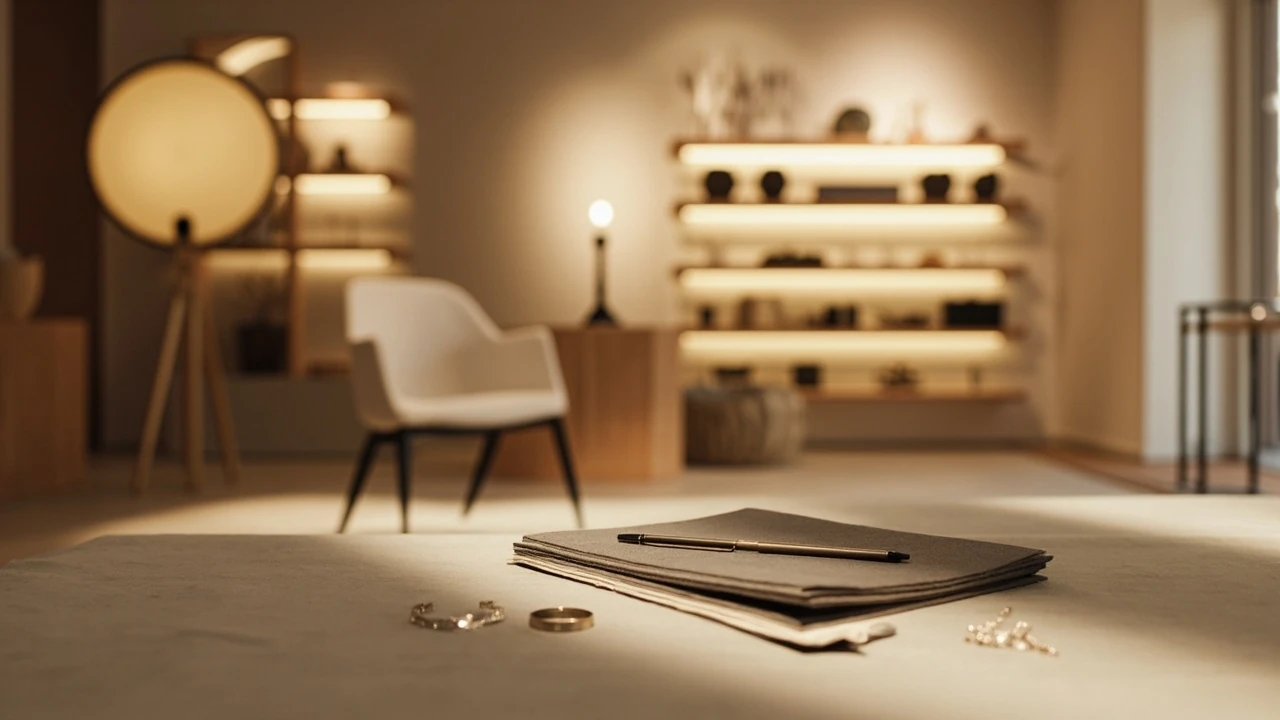
Moma Design Store: what it is and what it sells
The Moma Design Store is the museum shop of the Museum of Modern Art in New York, extended into a small chain of retail locations that sell objects inspired by the museum’s collection and by contemporary design practice. For visitors who walk out of a gallery of Bauhaus chairs, Helvetica posters, or a Cindy Sherman photograph, the store is the place where the ideas on the walls become objects that can be touched, used, and taken home. For designers, it is also a working example of how a cultural institution turns curatorial taste into a retail brand without diluting either.
This article explains what the Moma Design Store actually is, what kinds of products it carries, who designs for it, where the stores are located, and how the shopping experience works in practice. It is written for readers who are planning a visit, considering a gift purchase, researching design retail as a model, or simply trying to understand the difference between a museum gift shop and a design store in its own right.
What the Moma Design Store actually is
The Moma Design Store is operated by MoMA as a commercial extension of the museum. It is not a separate company and it is not a franchise in the traditional sense. The stores exist to extend the museum’s curatorial reach into everyday objects and to generate revenue that supports the museum’s non-profit mission. The flagship location sits inside the museum on 11 West 53rd Street in Manhattan, and additional stores operate in SoHo, in the Meatpacking District at 44 West 14th Street, and inside department stores in Tokyo and other international cities.
From a brand perspective, the store is one of the most studied examples of a museum-led retail concept. It sells furniture, lighting, tableware, kitchen tools, office supplies, jewelry, prints, books, and children’s products, with a strong emphasis on objects that have a clear design pedigree. Many items are produced in collaboration with established designers or emerging studios, and many are exclusive to MoMA, which means they cannot be bought through standard wholesale channels.
How the store differs from a typical museum gift shop
A standard museum gift shop tends to be organized around the museum’s own exhibitions: postcards, exhibition catalogues, branded apparel, and souvenirs that reference specific artworks. The Moma Design Store is organized around design as a category, with the museum’s exhibitions acting as one source of inspiration among several. The result feels closer to a design showroom than to a museum exit corridor.
Several practical differences follow from that positioning:
- Product depth: the store carries extended collections, not just exhibition merchandise. A single designer can have a dozen or more objects in the range.
- Price range: prices start under twenty dollars for small accessories and extend into four figures for furniture, which is unusual for a museum shop.
- Editorial framing: signage, packaging, and online descriptions explain the designer, the materials, and the production process rather than simply labeling an object.
- Exclusivity: a meaningful share of the assortment is produced exclusively for MoMA, so visitors cannot find the same object in a general design retailer.
These choices make the store useful as a case study in how a cultural brand can extend into commerce without losing credibility.
Product categories the store is known for
Although the assortment changes seasonally, the Moma Design Store has a recognizable core. The following categories are consistently present and are useful for visitors trying to plan a trip or build a wish list.
| Category | Typical price range (USD) | Examples of the kind of object carried |
|---|---|---|
| Furniture | 150 to 4,000+ | Reissued mid-century chairs, modern shelving, stools, side tables, and outdoor pieces |
| Lighting | 60 to 1,200 | Desk lamps, pendants, portable lamps, and architectural fixtures from contemporary designers |
| Tableware and kitchen | 10 to 300 | Mugs, carafes, cutting boards, utensils, kettles, and storage designed for daily use |
| Office and desk | 8 to 250 | Pens, notebooks, staplers, cable organizers, and desktop accessories |
| Jewelry and wearables | 30 to 800 | Geometric earrings, brooches, watches, scarves, and small leather goods |
| Prints and posters | 25 to 500 | Original silkscreens, lithographs, and reproductions of works from the collection |
| Books and media | 15 to 150 | Monographs, design theory, exhibition catalogues, and children’s titles |
| Kids and gifts | 10 to 200 | Toys, puzzles, building sets, and stationery aimed at design-aware families |
Price ranges are indicative and change as collections rotate. They are useful for budgeting a visit or gift purchase, not for precise quoting.
Who actually designs products for the store
The store’s design relationships fall into a small number of clear groups, and recognizing them helps visitors interpret the assortment.
- Established industrial designers. Names such as Naoto Fukasawa, Jasper Morrison, and the studio of the late Achille Castiglioni have recurring objects in the range, including cast-iron pans, plastic kitchen tools, and minimal desk accessories.
- Reissues of historical designers. Some pieces come from archives of mid-century figures whose work is in MoMA’s collection, including reissued furniture, textiles, and graphics that link the store to the museum’s holdings.
- Emerging studios. MoMA runs programs, including the annual MoMA Design Store collaboration cycle, that commission smaller studios and recent graduates to produce limited runs.
- Internal MoMA creative direction. The store’s team shapes the visual merchandising, the packaging, and the online presentation, which is part of why the brand reads consistently across locations.
Designers are paid through standard commercial agreements, and objects are produced under the same licensing and royalty structures used in normal design retail. The store does not produce objects in-house.
Where the stores are and what each location feels like
Each MoMA Design Store location is shaped by its host building, and visitors tend to notice this within the first minute of entering. Knowing the rough character of each location helps when planning a trip.
| Location | Setting | What to expect |
|---|---|---|
| MoMA, 11 West 53rd Street (flagship) | Inside the museum, ground and lower levels | Largest assortment, the most furniture on display, and a direct line of sight into the galleries above |
| SoHo, 81 Spring Street | Cast-iron commercial building in a shopping district | Dense product wall, strong fashion and gift selection, heavy foot traffic on weekends |
| 44 West 14th Street (Meatpacking) | Standalone corner building with large windows | More space, room to display larger furniture and lighting, generally calmer than SoHo |
| MoMA Design Store at department stores (Tokyo and other cities) | Inside partner department stores, such as the Tokyo store within Tokyu Plaza Shibuya | Curated subset of the assortment, oriented to local demand and to the host store’s customer base |
Hours, address details, and accessibility information change, so confirming the current schedule on MoMA’s own site before traveling is worth the few minutes it takes.
How a typical visit works
A first visit to the Moma Design Store can feel different from a typical museum shop because the assortment is denser and the price points are wider. The following sequence is how most visits tend to play out.
- Decide whether to combine the visit with a museum ticket. The flagship store is inside MoMA itself, so the most efficient option is to enter the museum, see the galleries, and exit through the store. The SoHo and 14th Street locations are free to enter.
- Start with the larger objects. Furniture and lighting are usually arranged near the perimeter or on plinths, and seeing them first helps the rest of the store read as a related system.
- Move to small accessories. Office, kitchen, and jewelry items are usually near the center, which is where most visitors spend the most time.
- Check for store-exclusive items. Signage and shelf tags make this clear, and these pieces are the main reason collectors and gift buyers travel to a specific location.
- Ask about online availability. Some pieces are only in physical stores, while others are stocked online at momastore.org. Staff can confirm whether a specific item can be shipped.
Staff are generally trained to explain the designer and production process behind an object, so a quick question is often more efficient than reading the small label.
Online store and shipping basics
The online store carries a wider selection than any single physical location because the warehouse is centralized. Shipping is available internationally, though costs and delivery times vary. A few practical details are worth knowing before placing an order:
- Member pricing. MoMA members receive a discount on most items, which is one of the more concrete benefits of membership for casual visitors.
- Store exclusives. Some products are marked online as available only at specific physical locations, which can save a wasted trip.
- Returns. Return windows and conditions differ between online orders and in-store purchases, so checking the policy at the point of sale is the safest approach.
For readers researching the store as a business model rather than as a shopper, the online catalog is also a useful archive of what the assortment looked like at a given moment, since the physical stores rotate stock more often than the website.
Why the store matters to the wider design world
The Moma Design Store has had an outsize influence on how design is sold to a general audience, and it is regularly cited in retail and design writing. Three reasons come up consistently.
First, it set a standard for how a museum can present designed objects as worthy of serious attention rather than as souvenirs. Treating a plastic spatula or a ballpoint pen as a designed artifact changed how customers read the price tag.
Second, it gave emerging designers a route to a paying audience. A small studio can sell into MoMA’s retail network on the strength of a single strong product, without needing a national wholesale deal. This has shaped which designers reach the public in the first place.
Third, it became a reference point for other institutions considering their own design stores, including museums, libraries, and design biennials. The model is not without critics, particularly around questions of commercialization, but the template is recognizable from Tokyo to Mexico City.
For a deeper overview of how an institution can translate its visual identity into a coherent retail and editorial presence, it helps to look at the broader question of visual identity as a working system rather than as a logo. The same logic that lets a museum extend into retail is the logic that lets any organization decide which parts of its identity should travel with it.
Practical decisions a visitor usually faces
Most first-time visitors arrive with a small set of decisions to make. The following list covers the ones that come up most often and is worth thinking through before traveling.
- Buy in the museum or online. In-store prices match online prices, so the only question is whether the specific item is in stock at the location you can reach.
- Membership versus single purchase. If a single visit is likely to include several items, the membership discount can cover the cost of the membership itself within one transaction.
- Gift versus personal use. Many objects are designed to be used, but some are fragile or heavy, which matters when shipping internationally.
- Reissue versus original. The store carries both reissues of historical designs and new work, and the two carry very different resale and care considerations.
These are not the only decisions, but they are the ones that consistently shape a first visit.
What the store does not do well
No retail concept is a perfect fit for every visitor, and the Moma Design Store has a few predictable limits worth knowing in advance.
- Customization is limited. Most objects are produced in standard colorways and sizes, and bespoke orders are not the store’s focus.
- Heavy furniture is awkward to ship. International freight costs can approach the price of the object for larger items, which pushes many buyers toward smaller objects.
- The aesthetic is consistent. The store is a strong fit for a minimalist, modernist, or design-historical taste. Visitors looking for highly decorative or craft-led objects may find the range narrower than expected.
- Online browsing is dense. The catalog is large, and finding a specific object can take longer than expected without using filters or search terms.
These limits are part of why the store has a clear identity rather than a problem to fix. A wider assortment would dilute the editorial point of view that makes the brand worth studying in the first place.
How the store compares with other design retailers
Comparing the Moma Design Store with other design retailers clarifies what makes it distinct, and it is useful background for visitors deciding where to shop.
| Retailer | Editorial framing | Typical price band | Relationship to the design world |
|---|---|---|---|
| MoMA Design Store | Curatorial, museum-led, design history | 10 to 4,000+ USD | Tied to MoMA’s collection and programs |
| Independent design boutiques | Owner-led, often regional | 20 to 2,000 USD | Personal roster of designers, no institutional backing |
| Large online design marketplaces | Algorithmic, broad assortment | 5 to 5,000 USD | Open to many producers, less editorial filtering |
| Department store design floors | Mass-market, seasonal | 10 to 3,000 USD | Mix of licensed designs and exclusive collections |
The editorial framing column is the most useful difference. The other retailers sell similar objects, but MoMA’s store is the only one that explicitly anchors the assortment to a curatorial institution.
For designers considering selling to the store
Designers sometimes ask how the store’s buying process works, and a few general points are worth knowing even though specific terms change.
- The assortment is curated. The store does not act as a generic retailer, so a portfolio pitch needs to fit the existing range rather than compete with it.
- Production capacity matters. The store expects reliable production at scale, not just a strong prototype, which is a constraint that filters out very small studios.
- Exclusivity is common. Many agreements include some form of exclusivity, either by product, colorway, or territory, so the wider sales plan needs to account for that.
- Lead times are long. The cycle from initial conversation to a stocked shelf is measured in years rather than months, which is normal for institutional retail.
For studios still building their production setup, the broader question of how a brand presents itself consistently across touchpoints is often more urgent than landing a single retail account. A practical look at website strategy tends to surface the same issues a buyer would raise in person.
Frequently asked questions
Is the Moma Design Store the same as the MoMA gift shop?
No. The store is the museum’s design retail concept, with a curated assortment of furniture, lighting, tableware, and accessories. The MoMA gift shop is a smaller offering focused on exhibition merchandise. Most visitors encounter the store, not the gift shop, when they leave the galleries.
Do I need a MoMA ticket to shop at the flagship store?
Yes. The flagship store is inside the museum building at 11 West 53rd Street, and access requires a museum ticket. The SoHo and 14th Street locations are free to enter.
Are Moma Design Store products exclusive?
Many of them are, but not all. Signage and online product pages mark exclusive items, and the range of exclusive products is one of the store’s main draws for collectors and gift buyers.
Can I order online and ship internationally?
Yes. The online store at momastore.org ships internationally, with costs and delivery times that depend on the destination and the size of the object. Large furniture pieces can be expensive to ship, so it is worth checking before checkout.
Do MoMA members get a discount?
Yes. Members receive a discount on most items in the store, which is one of the more concrete benefits of membership for visitors who plan to buy more than one object.
Are the products in the store originals or reissues?
Both. The store carries reissues of historical designs that link to MoMA’s collection and new designs commissioned from contemporary studios. The label on each object and the online description explain which is which.
Can I return a product bought in the store?
Yes, within the posted return window and subject to the standard conditions. Online orders and in-store purchases are handled separately, so it is worth keeping the receipt and checking the policy at the point of sale.
Does the store carry children’s products?
Yes. The kids and gifts category includes toys, puzzles, building sets, and stationery that follow the same design-led approach as the rest of the store, and it is one of the more popular sections for visitors buying gifts.
Are the products in the store made in the United States?
Some are, and many are produced internationally. MoMA does not publish a country-of-origin breakdown for the full assortment, so the most reliable way to check is to read the product description for a specific item.
Is the Moma Design Store worth visiting if I am not shopping?
Yes. The store reads as a small design museum in its own right, with strong visual merchandising and clear signage. Visitors interested in design history, retail design, or material culture often spend as much time in the store as in the galleries above.