October 12, 2026 / Studio Practice
HP Pavilion Gaming Backpack 500: a practical review for daily use
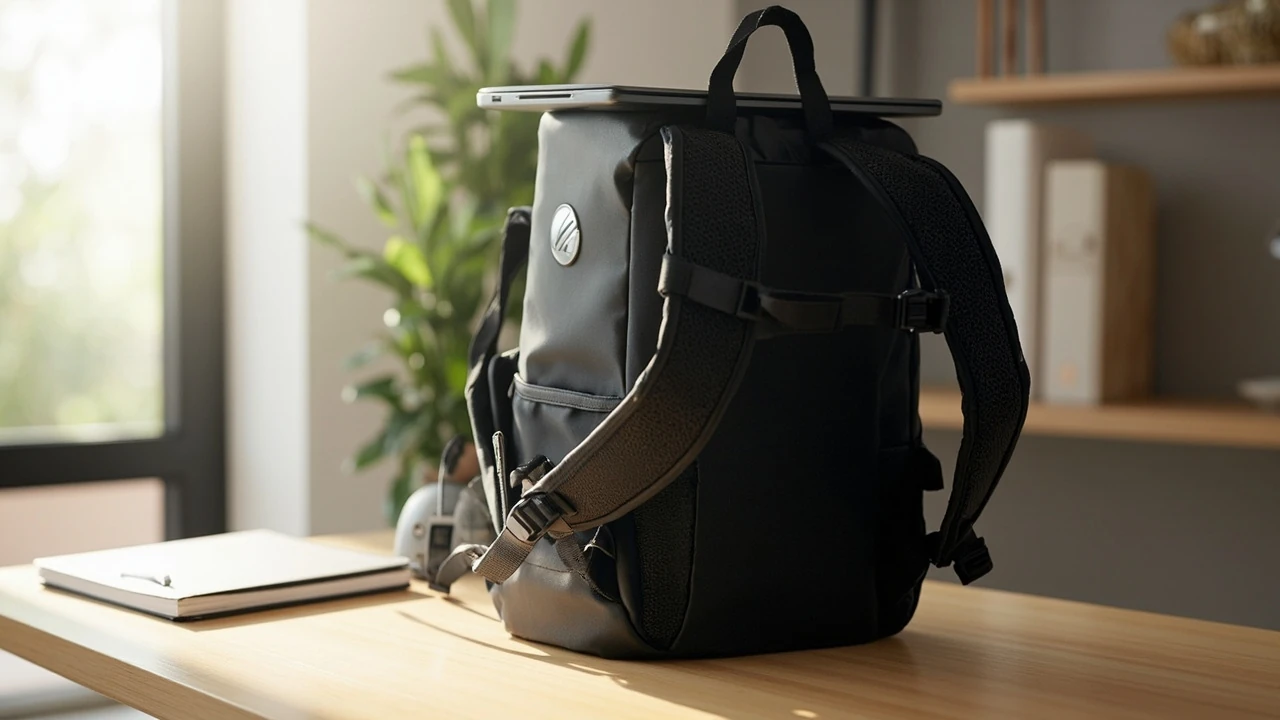
Most people who search for the HP Pavilion Gaming Backpack 500 are not looking for a spec sheet. They already know it is a 15.6-inch commuter bag with a gaming label, and they want a clear answer to a simpler question: is this the bag to actually buy, or is it a compromise that looks right on paper but falls apart in daily use? That is the question this review tries to answer honestly, with attention to the details that matter on a commute, a class day, or a train ride with a laptop, a charger, a mouse, and a pair of headphones.
To keep the evaluation grounded, the focus is on five things you can feel within the first week of carrying it: build quality, laptop protection, storage layout, comfort on a long shoulder, and how well the gaming identity holds up in a non-gaming setting. Where a claim depends on the manufacturer’s own listing rather than independent evidence, that distinction is made explicit.
HP Pavilion Gaming Backpack 500 overview
The HP Pavilion Gaming Backpack 500 is a mid-size daypack designed around 15.6-inch laptops, sold as part of HP’s gaming-accessory range rather than its professional OMEN line. In practice that means it borrows some visual cues from gaming gear without crossing into aggressive styling, and it is positioned as a single bag for a student or hybrid worker who plays a few hours in the evening.
The design language is restrained: a charcoal or near-black shell, a stitched front panel, a small reflective strip, and the understated HP wordmark rather than a large illuminated logo. The bag is meant to disappear into a lecture hall or an open-plan office, and the gaming reference is mainly in the silhouette and the internal organization, not in loud graphics.
Two practical facts frame the rest of the review. First, the listed capacity is around 16 liters, which puts it in commuter territory rather than travel-pack territory. Second, the listed empty weight is close to 0.7 kg, which is light enough for a long day but heavy enough that a thin strap would dig into a shoulder. Those two numbers quietly decide most of the trade-offs discussed below.
Build quality and materials
On first handling, the shell of the HP Pavilion Gaming Backpack 500 feels stiffer than a typical fabric backpack. The outer material is a polyester with a denser weave than a school-style daypack, and the panels are padded with a thin foam layer that gives the bag a slightly structured shape even when it is empty. That structure is useful: it stops the bag from collapsing onto a laptop when you set it down on a chair or a lecture desk.
Stitching along the stress points at the top handle, the strap anchors, and the base panel is double-stitched on the units visible in product photography. The zippers are molded-tooth rather than the cheap coil zippers found on entry-level bags, and the pulls are large enough to grab with gloves or with cold hands on a winter commute.
The base of the bag is the part that wears out first on any backpack, and here HP uses a PU-coated panel rather than bare fabric. That is a sensible choice for a commuter bag that will sit on wet pavement, café floors, and train seat fabric. It is not a rubberized hardshell, so it will not survive being dragged across concrete, but it will resist a wet seat better than a soft fabric base.
Where the build is less ambitious is in the hardware. The buckles, adjusters, and strap sliders are functional rather than premium. They do the job, but if you have used a higher-end commuter pack, you will notice the difference in hand feel. For a bag in this price tier, that is a reasonable compromise.
What the build does well
- Structured shell that protects contents when the bag is set down on a flat surface.
- PU-coated base that resists short contact with wet floors.
- Molded-tooth zippers with large, glove-friendly pulls.
- Clean stitching at the obvious stress points.
Where the build shows its tier
- Strap adjusters and buckles feel lighter than the rest of the bag.
- No hard protective frame, so a very heavy load can sag against the back panel.
- Outer fabric is durable but not weatherproof; a sudden downpour will soak through.
Laptop protection and the padded compartment
The most important job of any laptop backpack is the one you do not see: how it treats the laptop between the front door and the desk. The HP Pavilion Gaming Backpack 500 has a dedicated padded sleeve against the back panel, sized for up to 15.6-inch laptops. The sleeve is suspended slightly away from the base of the bag, which reduces the shock of a flat drop and keeps the laptop from sitting on a wet floor if the outer shell is breached.
The padding itself is a closed-cell foam rather than open-cell foam, which is the right choice for impact absorption. Open-cell foam feels softer but compresses permanently; closed-cell foam bounces back. For a laptop that you carry daily, that resilience matters more than a plush first impression.
The sleeve opens with a long side zipper that runs most of the height of the bag. That makes it easy to pull a 15.6-inch laptop out at a security check without having to empty the main compartment. A small internal strap with a hook-and-loop closure holds the laptop against the back of the sleeve, which stops it from sliding up if the bag is carried one-shouldered down a flight of stairs.
For tablets and e-readers, a secondary slip pocket sits in front of the laptop sleeve. It is sized for a 10 to 12-inch device and is useful for a digital notebook or a Kindle without adding a second padded slot.
Realistic laptop fit
Most 15.6-inch gaming laptops are between 24 and 27 mm thick, and the sleeve is generous enough to accept that range without forcing the zip. Thinner ultrabooks in the same screen size slide in with room to spare. Larger 16-inch machines will not fit the sleeve, and trying to seat one in the main compartment instead removes the suspension benefit and is not recommended.
Storage layout and capacity
Capacity on paper is around 16 liters, which translates to a single main compartment, the laptop sleeve, and a smaller front organizer. The intent is clearly a one-day carry rather than a weekend pack. For a laptop, a charger, a mouse, a slim headset, a notebook, a water bottle, and a light layer, the bag is comfortable. For a weekend away, it is not the right tool.
The front organizer is the part of the layout that decides whether the bag feels considered or cramped. On the HP Pavilion Gaming Backpack 500, the front panel splits into a small zip mesh pocket for cables, two pen slots, a key clip, and a flat slip pocket sized for a passport or a small tablet. It is not deep enough for a thick power bank, so a high-capacity brick usually ends up in the main compartment.
The main compartment opens with a U-shaped zipper rather than a full clamshell, which is a deliberate trade-off. A clamshell is better for travel because you can lay the bag flat and pack it like a suitcase. A U-shaped opening is better for daily carry because you can stand the bag upright, unzip the top, and reach a notebook or a jacket without the whole bag flopping open. For a commuter bag, the U-shape is the right call.
External storage is limited to two side pockets, sized for a slim water bottle or a folded umbrella. They are not deep enough for a full 1-liter bottle, and they do not have a drawstring or a cinch, so a heavy bottle can lean the bag sideways on a bike.
| Compartment | Intended use | Realistic capacity |
|---|---|---|
| Laptop sleeve (back panel) | 15.6-inch laptop with suspension | 1 laptop, up to about 27 mm thick |
| Secondary sleeve | 10–12 inch tablet or e-reader | 1 device |
| Main compartment | Charger, mouse, headset, notebook, light layer | About 10 liters of usable space |
| Front organizer | Cables, pens, passport, phone | Small accessories only |
| Side pockets | Water bottle or folded umbrella | Up to about 600 ml bottles |
Comfort, straps, and back panel
Comfort is where the HP Pavilion Gaming Backpack 500 is most clearly a mid-tier bag rather than a premium one. The shoulder straps are S-curved and padded with a single layer of foam, which is enough for a 4 to 6 kg load on a 20-minute walk. For longer carries above 6 kg, the strap edges can press into the trapezius, and a sternum strap would help distribute the load. There is no sternum strap on the standard model, and no hip belt, so a heavy load is held entirely by the shoulders.
The back panel uses a thin padded mesh rather than a sculpted foam channel. On a short carry, the difference is invisible. On a long carry in warm weather, the back panel does not ventilate as well as a deeper channel system, and the bag sits a little flatter against the spine. For a commuter in a temperate climate, that is acceptable; for a student walking across a hot campus, it is a noticeable limitation.
The top handle is reinforced and sits flat when not in use, which makes the bag easier to hang on a hook in a café or a lecture hall. There is no pass-through strap for rolling luggage, which is a small miss for anyone who travels for work and uses a roller as their main bag.
Load ranges and what they feel like
- Under 4 kg (laptop, charger, notebook): comfortable, almost unnoticeable on a 30-minute walk.
- 4–6 kg (adding a jacket and a book): fine for a commute, can press on the shoulders after about 90 minutes.
- Above 6 kg (adding textbooks or a tablet and accessories): the thin back panel and the single-layer strap padding start to feel underbuilt, and a second bag is worth considering.
Style and how it reads in a non-gaming setting
One of the reasons the HP Pavilion Gaming Backpack 500 is a sensible purchase for a student or a hybrid worker is that the styling is restrained. The silhouette is straight rather than aggressively contoured, the colorways are dark, and the only visible gaming reference is a small reflective strip and a discreet HP mark. In a meeting room, a classroom, or a client visit, the bag reads as a generic tech backpack rather than a piece of gaming hardware.
That is a deliberate design decision, and it is the right one for the audience. A bag with a large illuminated logo or bold color blocking looks out of place in a professional setting, and a commuter ends up leaving it at home. The HP Pavilion Gaming Backpack 500 avoids that problem, which is part of why it shows up in so many “best of” lists for gaming backpacks that cross over into daily life.
The trade-off is that the bag does not stand out on a co-working space shelf next to a sea of black daypacks. If you want a bag that is recognizable, this is not it. If you want a bag that you can carry for five years without it dating visually, it is a quiet win.
Weather resistance and everyday durability
The outer fabric is water-resistant rather than waterproof. A light drizzle will bead on the surface and roll off, but a sustained rain will soak through the seams and the zipper teeth within a few minutes. There is no integrated rain cover, and the zippers are not sealed, so for a wet climate, an aftermarket rain cover or a packing strategy that keeps the laptop in a sleeve inside the bag is worth thinking about.
For everyday durability, the stress points that matter are the top handle, the strap anchors, the base, and the main zipper. The top handle is reinforced with a bar-tack stitch and uses a wraparound webbing rather than a thin loop, which is the right detail for a handle that gets pulled every day. The main zipper is the most likely failure point over years of use, and it is a YKK-style molded-tooth zipper, which is serviceable but not the heaviest option in this category.
Color durability is reasonable. Dark colorways will fade slightly on the shoulder panel from UV exposure over a couple of years, but the overall look does not degrade the way lighter fabrics can pick up dirt along the seam lines.
How it compares to typical alternatives
The honest way to evaluate a mid-tier commuter bag is to compare it to the alternatives a shopper is probably weighing. The table below uses only the categories of bags that a buyer of the HP Pavilion Gaming Backpack 500 is likely to consider, with attributes that matter for a daily commute with a 15.6-inch laptop.
| Attribute | HP Pavilion Gaming Backpack 500 | Generic 15.6-inch office backpack | Premium commuter pack (e.g., higher-end brand) | Hard-shell gaming backpack |
|---|---|---|---|---|
| Listed capacity | About 16 L | 18–22 L | 18–24 L | 20–28 L |
| Empty weight | About 0.7 kg | 0.5–0.8 kg | 0.9–1.2 kg | 1.3–1.8 kg |
| Laptop sleeve | Suspended, closed-cell foam | Basic foam, often not suspended | Suspended, denser foam | Hard-shell slot |
| Weather handling | Water-resistant, no rain cover | Water-resistant, no rain cover | Often includes a rain cover | Usually water-resistant shell |
| Styling | Restrained, gaming cues are subtle | Neutral, office-focused | Minimalist, brand-led | Aggressive, brand-led |
| Comfort for a long carry | Good under 6 kg | Good under 5 kg | Better with sternum or hip support | Variable; some are heavy |
| Best fit | Daily commute, one-day carry | Office commute | Travel and longer commutes | Gaming events, LAN parties |
The reading from the table is straightforward. The HP Pavilion Gaming Backpack 500 sits between a basic office backpack and a premium commuter pack. It is more structured and more laptop-focused than a generic office bag, and it is lighter and less aggressive than a hard-shell gaming backpack. For the audience it is built for, that placement is sensible.
Who the HP Pavilion Gaming Backpack 500 is actually for
This is the section that usually decides whether the bag is worth buying. The HP Pavilion Gaming Backpack 500 fits a specific user well and a different user poorly, and being clear about which is which saves a return.
It is a good fit if you
- Carry a single 15.6-inch laptop, a charger, a mouse, and a notebook for a daily commute under about 45 minutes each way.
- Want a bag that looks neutral in a classroom or an open-plan office and is not obviously a gaming accessory.
- Appreciate a suspended laptop sleeve and care more about that than about a rain cover or a hip belt.
- Are buying a first serious backpack and want something that is better than a school bag without stepping up to a premium price.
It is not the right bag if you
- Carry a 16-inch or 17-inch laptop; the sleeve is sized for 15.6-inch machines.
- Commute more than an hour on foot or by bike and need a sternum strap or a hip belt for load distribution.
- Travel frequently and need a clamshell opening, a pass-through strap, or a dedicated rain cover.
- Want a hard-shell exterior for a gaming-event or LAN-party look; this is a fabric shell with restrained styling.
Practical checks before you commit
A short checklist is more useful than a long summary, so the practical checks that actually matter for a buyer of the HP Pavilion Gaming Backpack 500 are listed below. Running through them before checkout is faster than reading another paragraph of marketing copy.
- Measure your laptop along its longest edge and at its thickest point, and compare against the published sleeve dimensions rather than the marketing screen size.
- Add up the weight of the laptop, the charger, the mouse, and any accessories you actually carry daily, and be honest about whether it crosses 6 kg.
- Decide whether you need a U-shaped opening or a clamshell opening; for a daily commute, the U-shape is usually the better trade.
- Check that the strap adjusters and buckles feel solid in person, because they are the most likely point of long-term wear on a bag in this tier.
- Look at the zipper pulls in person if possible; if you carry the bag in winter with gloves, small pulls are awkward.
- Decide whether you need a rain cover for your climate; if you do, plan for an aftermarket cover or a dry sleeve for the laptop.
Long-term ownership notes
A backpack is one of the few pieces of gear that is used every day for years, and small details start to matter after the first month. The HP Pavilion Gaming Backpack 500 ages in three predictable ways.
First, the strap foams compress slightly over the first few weeks, which is normal and not a defect. After that initial break-in, the strap shape stabilizes and the comfort improves a little. If the straps feel flat after a month, the foam density was lower than it should have been and that is a quality-control issue rather than a design issue.
Second, the main compartment zipper is the part that will eventually fail if the bag is used daily. Treating the zipper gently, avoiding overpacking that forces the slider to fight the fabric, and not yanking it sideways will add a year or more of life. The zipper on this model is replaceable by a repair shop, which is a meaningful advantage over a bag with a sealed zipper line.
Third, the PU-coated base will scuff and lighten slightly where the bag is set down on rough surfaces. This is cosmetic, not structural, and does not affect water resistance. A wipe with a damp cloth every few weeks keeps the rest of the shell looking fresh.
Limitations worth naming
Any honest review has to be clear about what the bag is not. The HP Pavilion Gaming Backpack 500 is not weatherproof, has no sternum strap or hip belt, has no pass-through for a roller, has a U-shaped opening rather than a clamshell, has limited external storage, and uses mid-tier hardware on the buckles and adjusters. None of those limits are surprising for a mid-tier commuter bag, and they are part of why the price is where it is. Buyers who need any of those features should look at a different category rather than expecting this bag to do a job it was not designed for.
Independent evidence on long-term failure rates for this specific model is limited, so any claim about how long the bag will last is necessarily a judgment based on the materials, the hardware, and the design, not on a published reliability study. That distinction matters for a purchase that is intended to last several years.
Final practical recommendation
The HP Pavilion Gaming Backpack 500 is a sensible commuter bag for a 15.6-inch laptop, with a restrained look, a well-designed laptop sleeve, and a layout that works for a one-day carry. It is not the right bag for heavy loads, long walks, frequent travel, or 16-inch laptops. Used within its intended range, it is a quiet, well-balanced choice that should outlast the laptop it carries.
For readers who are weighing a visual-identity, web-strategy, or accessibility question while they shop, the articles below cover the adjacent topics in the kind of practical depth this bag review tries to match.
Frequently asked questions
What size laptop fits the HP Pavilion Gaming Backpack 500?
The padded sleeve is sized for laptops up to 15.6 inches, and the suspension and padding are designed for machines up to about 27 mm thick. Most 14-inch and 15.6-inch ultrabooks and gaming laptops fit comfortably. A 16-inch or 17-inch machine will not seat properly in the sleeve and should be carried in a larger backpack instead.
Is the HP Pavilion Gaming Backpack 500 waterproof?
No, it is water-resistant, not waterproof. The outer fabric and the PU-coated base will handle a light drizzle and a wet seat, but a sustained downpour will soak through the seams and the zipper teeth. For a wet climate, an aftermarket rain cover or a separate dry sleeve for the laptop is a sensible addition.
How much does the HP Pavilion Gaming Backpack 500 weigh when empty?
The listed empty weight is close to 0.7 kg, which is light enough for a long day but heavy enough that a thin strap would dig into a shoulder. The actual weight on a scale varies by a small amount depending on the production batch, so treat the number as a guide rather than a specification.
Can it be used as a carry-on for a flight?
Yes, the dimensions are within the personal-item or small carry-on limits used by most airlines, and the U-shaped opening is convenient for a quick reach into the main compartment. It does not have a pass-through strap for a roller, a dedicated rain cover, or a clamshell opening, so it is better suited to a short flight than to a long trip with checked luggage.
Does the bag look like a gaming backpack in an office?
No, the styling is restrained. The shell is dark, the silhouette is straight, and the only visible gaming reference is a small reflective strip and a discreet HP mark. In a meeting room, a classroom, or an open-plan office, the bag reads as a generic tech backpack rather than as a piece of gaming hardware.
Is the laptop sleeve suspended from the base of the bag?
Yes, the sleeve is suspended slightly above the base panel, which reduces the shock of a flat drop and keeps the laptop from sitting directly on a wet floor if the outer shell is breached. That suspension is one of the most useful features of the bag and a reason to prefer it over a basic office backpack without a suspended sleeve.
How many liters is the HP Pavilion Gaming Backpack 500?
The listed capacity is around 16 liters, which puts it in commuter territory rather than travel territory. It is comfortable for a laptop, a charger, a mouse, a slim headset, a notebook, and a light layer, but it is not designed for a weekend away or a multi-day trip.
Does it have a chest strap or a hip belt?
No, the standard model has only shoulder straps with a single layer of foam padding. For a load under about 6 kg on a commute under 45 minutes, that is comfortable. For a heavier load or a longer carry, a bag with a sternum strap or a hip belt is worth considering.
What is the difference between the HP Pavilion Gaming Backpack 500 and the OMEN gaming backpacks?
The Pavilion Gaming line is positioned as a more restrained, lower-priced range, while the OMEN line sits above it with a more aggressive gaming identity and, on some models, more padding and more capacity. For a buyer who wants a bag that crosses over between a commute and an evening gaming session, the Pavilion Gaming Backpack 500 is the more discreet option. For a buyer who wants a hard-shell, brand-led gaming look, the OMEN range is the closer fit.
Is the HP Pavilion Gaming Backpack 500 a good choice for a student?
Yes, for a student carrying a 15.6-inch laptop, a charger, a notebook, and a light layer, the bag is a sensible match. The restrained styling fits a lecture hall, the suspended laptop sleeve protects the machine on a daily walk, and the price is below most premium commuter packs. A student who regularly carries textbooks above 6 kg should consider a bag with a sternum strap instead.