November 7, 2026 / Studio Practice
How long does it take to make a game?
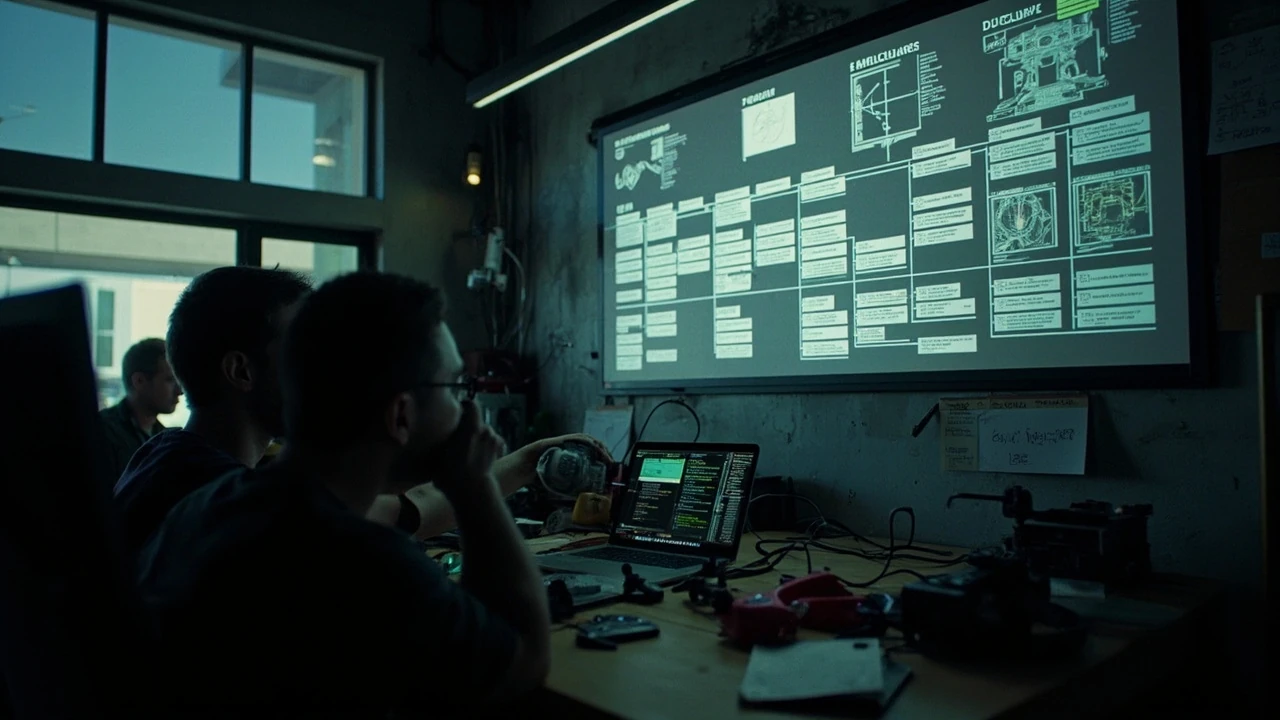
How long does it take to make a game?
A three-week release date can look reasonable on a first production estimate, then collapse as the team discovers that movement feels inconsistent, menus require real states, and every asset needs testing. The answer depends less on a universal number than on the game’s scope, the team’s experience, the technology, and how much polish players are expected to see.
For a small, focused game, a prototype can take days and a publishable release can take several months. A commercial 2D game may take a year or more. A large 3D production can take several years because content production, animation, testing, optimization, and platform work expand together. Learning how long does it take to make a game therefore requires a clearer definition of “finished” and a plan that exposes dependencies instead of hiding them inside a single deadline.
This guide is aimed at developers, designers, producers, and studio leads planning a project or assessing whether an estimate is credible. It focuses on practical production, rather than a mythical average.
Separate prototype, playable, release, and live service
The fastest useful answer depends on which of these milestones the project must reach. A prototype tests a risky assumption, a vertical slice demonstrates part of the final experience, an alpha contains most features, and a release candidate has reached its agreed quality threshold. A live service has no equivalent to a finished launch because the team must continue operating and supporting the game afterward.
| Target | What it proves | Typical risk | What it does not guarantee |
|---|---|---|---|
| Prototype | A mechanic or interaction can work | Playability and technical feasibility | Final art, balance, content volume, or release readiness |
| Vertical slice | Several systems can work together at near-final quality | Production pipeline and workload assumptions | Completion of every planned feature |
| Alpha | All major systems exist in a cohesive build | Feature integration and content completion | Stable performance, polished UX, or final balancing |
| Beta | The game is feature-complete and being refined | Quality, performance, compatibility, and player-facing polish | A universally bug-free experience |
| Release candidate | Release artifacts meet the agreed quality gate | Final checks, approvals, and deployment | No undiscovered issue in every possible environment |
Teams often lose time because they call an early playable build “almost done.” A useful milestone definition states what must be present, what quality it must reach, and what evidence will prove it. “The combat loop works” is too broad. “The loop supports three enemy types, communicates cooldown timing, and holds a stable frame rate on the minimum target device during a ten-minute test” creates a decision.
For a narrower example of controlling scope, a first-person horror prototype can be completed around one interaction, one room, and one complete encounter. Expanding that idea into multiple rooms, enemy types, branching objectives, and a narrative structure changes the production problem. The Prototype Poppy Playtime scope and design analysis shows how mechanical focus can keep a prototype from inheriting the full workload of a finished game.
Build an estimate from production work, not a single number
A credible estimate begins with a feature list and an asset list. It then assigns work to the people or capabilities that will perform it, adds integration and review time, and adds contingency for the most uncertain parts. The result should expose assumptions so that a producer can change them when evidence changes.
- Define the player experience. State the core action, intended session, platform, audience, visual target, and online or offline behavior. Ambiguity at this stage creates hidden work later.
- Inventory the playable features. Count systems such as movement, combat, inventory, dialogue, progression, save data, accessibility options, menus, achievements, and tutorial flows. Include state transitions, not only visible screens.
- Inventory the content. Include levels, characters, animations, effects, sound, music, dialogue, localization, and accessibility variants. Reusable systems reduce the volume, but their creation and validation still require time.
- Map dependencies. Note which tasks need working code, final art, voice, animation, platform access, or a build from another system.
- Estimate by discipline. Separate programming, design, art, animation, audio, narrative, QA, optimization, localization, and production tasks.
- Add integration passes. Schedules need time for combining work, fixing regressions, reviewing builds, and repeating changes after feedback.
- Apply uncertainty-based contingency. Reserve more schedule margin for tasks whose duration is least predictable rather than adding the same percentage to every line.
- Validate the plan with milestones. Compare actual results with estimates at fixed checkpoints and revise the remaining work from observed productivity.
This method is more useful than dividing a total budget by calendar months. It explains why a project is late and identifies which assumption changed. It also prevents a large art requirement from disappearing inside a general “development” line.
Use scope to explain the difference between short and long projects
The strongest predictor of development time is the amount and complexity of work, not the label attached to the genre. A small puzzle game can contain hundreds of carefully authored states, while a multiplayer title can reuse a limited arena. Production difficulty comes from what the project promises players.
| Project shape | Typical production profile | Main sources of delay |
|---|---|---|
| Small game-jam project | One core loop, limited assets, short evaluation path | Rigorous setup, unfamiliar tools, and a deadline with little integration time |
| Solo commercial 2D game | Reusable systems, focused content, direct ownership of most roles | Art iteration, code maintenance, testing, and wearing several production hats |
| Small-team 3D game | Characters, environments, animation, combat, and platform optimization | Asset pipelines, performance, animation quality, and content variation |
| Narrative or RPG game | Story, branching states, content, localization, and presentation | Writing revisions, systemic consequences, voice, and asset multiplication |
| Competitive multiplayer game | Network authority, matchmaking, security, progression, and live operations | Edge cases, latency, cheating mitigation, platform requirements, and retention work |
| Large open-world game | Large teams, interconnected systems, extensive content, and long-lived QA | Coordination cost, asset variants, performance, localization, certification, and schedule dependencies |
These profiles are not promises. A small project can take longer if the team lacks the required engine knowledge, the core mechanic is unproven, or the final quality target is raised after early testing. Conversely, a larger team can ship sooner when it has mature tools, reusable assets, clear ownership, and a stable production process.
Account for the time hidden in each discipline
Programming is visible in the plan, but it is rarely the only bottleneck. Art can multiply through characters, animation states, variants, and environments. Audio needs authoring, implementation, mixing, and iteration. QA expands as the number of interactions grows. Each discipline also needs handoff and review time.
- Design: feature specifications, tuning, economy, progression, encounter pacing, onboarding, and revision after playtests.
- Engineering: gameplay systems, tools, architecture, save data, networking, platform integration, performance, and bug fixes.
- Art and animation: concept work, asset creation, rigging, animation, VFX, lighting, UI, and visual consistency.
- Audio and narrative: music, sound effects, voice direction, dialogue, story integration, and localization-ready assets.
- Quality assurance: test planning, exploratory testing, compatibility, regression passes, issue triage, and release verification.
- Production: planning, dependency management, reviews, build coordination, scope control, platform requirements, and publishing preparation.
One external developer discussion of video game development time notes that feature implementation, asset volume, music, sound effects, and polish each affect the schedule. Its examples also show why highly experienced estimates are not transferable to a different team or a different technical foundation.
Measure the experience of learning required technology
Building on an established engine is usually faster than creating a new engine, but the team must still learn enough of the technology to make sound decisions. The time question changes from “How long will we write this system?” to “How long will it take to understand, implement, debug, and operate it safely?”
For example, a custom 2D engine can be narrowed to a small functional prototype quickly by an experienced developer, while a production engine needs rendering, input, resource management, scene organization, serialization, debugging tools, and platform support. Neither estimate transfers directly to the content made with the engine. The relevant learning curve is tied to the chosen feature set, the team’s experience, and the amount of engine customization.
Before committing to a schedule, run a narrow technical spike. The spike should use the same engine, platform, target hardware, input method, and representative assets as the real project. Its purpose is not to produce polished content. It is to answer specific questions:
- Can the movement and camera feel responsive on the target device?
- Can the team import, optimize, and light the intended asset style?
- Can animation, collision, save data, and UI work together without excessive rework?
- Can build times and iteration loops support the required number of fixes?
Why polish changes the final date
Polishing usually follows the point at which the game already works. That creates a misleading schedule because polishing is not one isolated asset task. It affects animation timing, interface clarity, audio mixing, camera behavior, onboarding, performance, and the transitions between systems. Each fix can expose another problem.
A practical polish budget works backward from the intended release state. Identify the player journey that must feel clear, then review each stage for comprehension, responsiveness, consistency, accessibility, and technical stability. Reserve time for correcting defects found during these reviews.
Teams can reduce the risk of endless refinement by defining a quality bar before polish begins:
- List the critical player actions and expected responses.
- Set measurable acceptance criteria for clarity, stability, performance, and accessibility.
- Review a fixed build against those criteria rather than reacting to isolated preferences.
- Classify remaining work as a release blocker, a known issue, or an optional improvement.
- Stop at the agreed bar unless a new defect or requirement justifies reopening it.
A polished game is not one with unlimited refinement. It is one whose agreed quality signals support the intended player experience and release promise.
Use milestones to make the estimate answerable
Milestones turn a broad deadline into a sequence of decisions. A good milestone has a deliverable, an acceptance test, and a consequence. The team should know what it will inspect and what decision follows from the result.
| Milestone | Evidence required | Decision enabled |
|---|---|---|
| Core mechanic prototype | Playtest build, technical measurements, issue list | Continue, redesign, narrow, or stop |
| Production pipeline spike | One representative asset moved from source to build | Adopt the pipeline or reduce visual ambition |
| Vertical slice | Coherent gameplay, presentation, and performance evidence | Approve scope and estimate the remaining content |
| Feature-complete alpha | All major systems and content connected | Enter focused testing, balancing, and polish |
| Release candidate | Build artifacts, quality checklist, known issues, platform status | Approve release or extend the correction window |
At each checkpoint, compare actual effort with the original estimate. A feature that took three times its estimate is more important to investigate than a stable task that merely cost a few extra hours. Was the original assumption wrong, or did the implementation reveal a deeper design problem? The answer changes the rest of the plan.
What changes the duration most?
Most schedule changes come from dependencies and changing quality expectations, not from one isolated task. The following factors deserve explicit attention in the plan:
- Undecided core design: implementing mechanics before their rules, limits, and player feedback are stable.
- Content multiplication: adding enemy types, levels, characters, abilities, or narrative branches to systems that require unique art and animation.
- Platform breadth: supporting several devices, input methods, storefronts, or certification programs.
- Late tools and pipelines: discovering that content cannot be imported, cooked, localized, or optimized efficiently.
- New player experience: requiring the player to learn, navigate, understand, and retain a growing set of systems.
- External dependencies: waiting for licensed assets, middleware, platform access, voice recording, certification, or partner deliverables.
- Quality revisions: changing visual, mechanical, or performance standards after large amounts of content exist.
A team should also distinguish a genuine change in scope from a discovered flaw. A new feature expands the project. Fixing a broken core loop is part of delivering the original promise. If the first three weeks were spent proving that the central movement system did not work, the schedule needs to absorb that discovery work rather than treating the prototype as a perfect predictor of final speed.
Plan for solo developers and small teams differently
A solo developer may create a focused game quickly because one person can make fast design decisions, but the same person must also handle code, art, audio, QA, marketing, and administration. The absence of handoff time does not mean the absence of workload. Some tasks that a larger team performs in parallel must be performed sequentially by one person.
For a solo or very small team, the practical approach is to reduce content breadth and reuse proven systems. Choose a small number of enemy types, short levels, limited animation states, and a clear visual identity. Build one complete player journey before adding broad customization. A limited game that reaches a defined quality gate is more achievable than a large concept partially assembled at the end.
Small teams also need explicit ownership. A shared task list without accountable owners often creates waiting rather than throughput. Keep a short decision log that records why scope changed and which milestone the change affects. This gives every contributor a stable basis for future work.
A practical timeline method
Use a three-layer estimate: a known core, a variable content layer, and a release-readiness layer. This prevents the schedule from depending entirely on optimistic assumptions while still leaving room for the project’s actual content.
- Known core: Estimate the systems, tools, and one representative content set needed to prove the game works. Include the spike and vertical slice rather than treating them as optional overhead.
- Variable content layer: Calculate production batches for levels, enemies, animation, audio, dialogue, and variants. Identify reusable assets separately from one-off work.
- Release-readiness layer: Estimate integration, QA, optimization, accessibility review, localization, store preparation, platform testing, and the final correction cycle.
- Uncertainty reserve: Keep a separate management buffer. Do not hide it inside every task, because that makes the line-item plan misleading.
- Recalculate after each milestone: Use observed throughput and the actual remaining list to produce the next forecast.
Keep the estimate in a version-controlled document or production tool. Record the date, assumptions, dependencies, and target. A single “months” label cannot be reviewed or corrected; a traceable plan can.
How to answer a stakeholder asking for a release date
Give a range only after stating what it includes. A useful response identifies the target platform, content, quality bar, team capacity, and known risks. It also explains which parts of the estimate are least certain.
For example: “The current forecast is a 26 to 34 week build to a feature-complete release candidate for the current scope on the specified platform. The lower end assumes the movement spike remains stable and the asset pipeline needs no rewrite. The upper end includes a two-week correction period for integration issues. Adding online progression, additional enemy families, or a second platform changes the estimate.”
This answer is more useful than a false-precision date. It gives the stakeholder a decision boundary, states the assumptions, and identifies the work that would trigger a change.
The Sands of Karak developer-level walkthrough and design breakdown is a useful adjacent example of how a game-specific feature set can be examined through its mechanics, systems, and design consequences rather than reduced to an unsupported total development time.
Common estimation mistakes
Most bad schedules make one of a small number of errors. They treat an uncertain task as fixed, estimate the ideal interaction rather than the real work, ignore review, or assume that content becomes cheaper as the team improves.
- Estimating only creation time: Excluding review, integration, fixes, and the time needed to prepare and verify a build.
- Counting features incorrectly: Treating ten small variations as one feature when each requires art, animation, sound, testing, and balancing.
- Ignoring team availability: Assuming a planned discipline is present every day even when that person is occupied elsewhere.
- Using average progress: Treating every task as equally predictable instead of separating proven work from unknown work.
- Freezing the scope in words only: Keeping the feature list unchanged while changing the desired quality, accessibility, narrative, or platform support.
- Forgetting the final mile: Underestimating store materials, platform checks, saves, distribution, support preparation, and the last correction cycle.
A healthy estimate changes when evidence changes. That is not a failure of planning. It is an estimate doing its job.
Before committing to the schedule, ask these checks
Use the following questions as a final review with the design, engineering, art, and production leads. A yes answer is not automatically required, but an unresolved no should appear in the risk plan.
- Can the team state the target player, core loop, platform, content limit, and release quality bar in one paragraph?
- Has the riskiest mechanic been tested on representative hardware?
- Does the estimate include a complete path through the intended player journey?
- Are art, animation, audio, narrative, QA, and localization represented rather than hidden under “development”?
- Can the team explain how an asset moves from creation to the final build?
- Are dependencies and approval owners named?
- Does the plan include time for feedback, regression, and fixing problems found after integration?
- Is the release definition specific enough that two reviewers would usually agree whether it has been met?
If the answer to “how long does it take to make a game?” must remain one number, the number is hiding more important information. Give the team a milestone-based range, name its assumptions, and make the next decision point visible. That is a schedule the team can act on and a deadline it can evaluate.
Frequently asked questions
How long does it take to make a small indie game?
A small, focused indie game can move from prototype to a publishable release in several months with a capable team and limited content. A solo developer may take longer because programming, art, audio, testing, and production occur sequentially. The final estimate depends on the quality bar, number of levels or characters, engine familiarity, and whether online or platform-specific work is included.
How long does it take to make a game from scratch?
From scratch can mean either making a new game or building a new engine. A new game on an established engine can be prototyped in days and completed in months. Developing a capable engine is a separate engineering project that can take much longer because it requires rendering, input, resources, debugging, tools, and platform support. The engine also needs ongoing work as the game depends on it.
Can I make a game in one month?
Yes, if the scope is small enough and the team has suitable skills and tools. A month is more realistic for a focused prototype or a limited release than for a content-heavy 3D game. Reduce the number of systems, levels, character types, narrative branches, and platform requirements. Reserve time for integration and testing rather than treating them as the remaining days in the schedule.
How long does it take to make a 3D game?
There is no fixed 3D-game duration. A small arena or compact single-player experience may be feasible in a year, while larger games commonly require multiple years. The major factors are character and environment count, animation quality, gameplay complexity, target hardware, multiplayer requirements, and the size of the team. A small team can lower scope or extend time to preserve quality.
How long does it take to make a mobile game?
The platform does not determine a single duration. Development depends on the game’s complexity, touch controls, performance targets, device coverage, monetization, backend requirements, and store submission. A simple offline game may fit a short schedule. A live mobile service with accounts, progression, events, payments, analytics, and ongoing operations requires a much larger plan, including support and maintenance after release.
How long does it take to make a multiplayer game?
Multiplayer usually takes longer because the team must design server authority, networking, matchmaking, persistence, failure handling, and security in addition to the gameplay itself. Testing also covers latency, packet loss, reconnects, platform differences, and cheating cases. A working prototype may be quick, but a stable public release requires substantially more validation.
What is the longest part of game development?
There is no universally longest phase. Programming may dominate an early prototype, while art production, integration, QA, or polish may dominate later. The most reliable answer is that the longest phase is often the one with the greatest content volume and unresolved dependencies. Track effort by discipline instead of assuming a fixed phase sequence.
Should I create a game design document before development?
Create a document proportionate to the project, but keep it useful. A small game may need only a concise concept, core-loop description, content list, and technical constraints. A larger game needs more detail because more people and systems depend on shared rules. Update the document when playtests or production constraints change, and avoid spending more time documenting than validating the core design.
How do I know if my game estimate is realistic?
Compare the estimate with observed milestones. A vertical slice can reveal the true cost of art, code, and content much better than a spreadsheet. Review actual throughput, compare the remaining list with completed work, and identify assumptions that have failed. If the team cannot produce a representative vertical slice, the schedule should retain more uncertainty and the project should have an earlier deadline review.
How can I finish my game faster?
Reduce scope, remove low-value variations, reuse proven systems, and prioritize one complete player journey. Delay secondary modes, extra platforms, elaborate narrative, and broad content until the core is proven. Improve the pipeline and shorten approval times, but do not remove testing or accessibility work needed for a safe release. The fastest route is usually a smaller, coherent game rather than a larger unfinished one.