September 2, 2026 / Web Development
GeForce RTX 3080 DLSS 5 compatibility on desktop
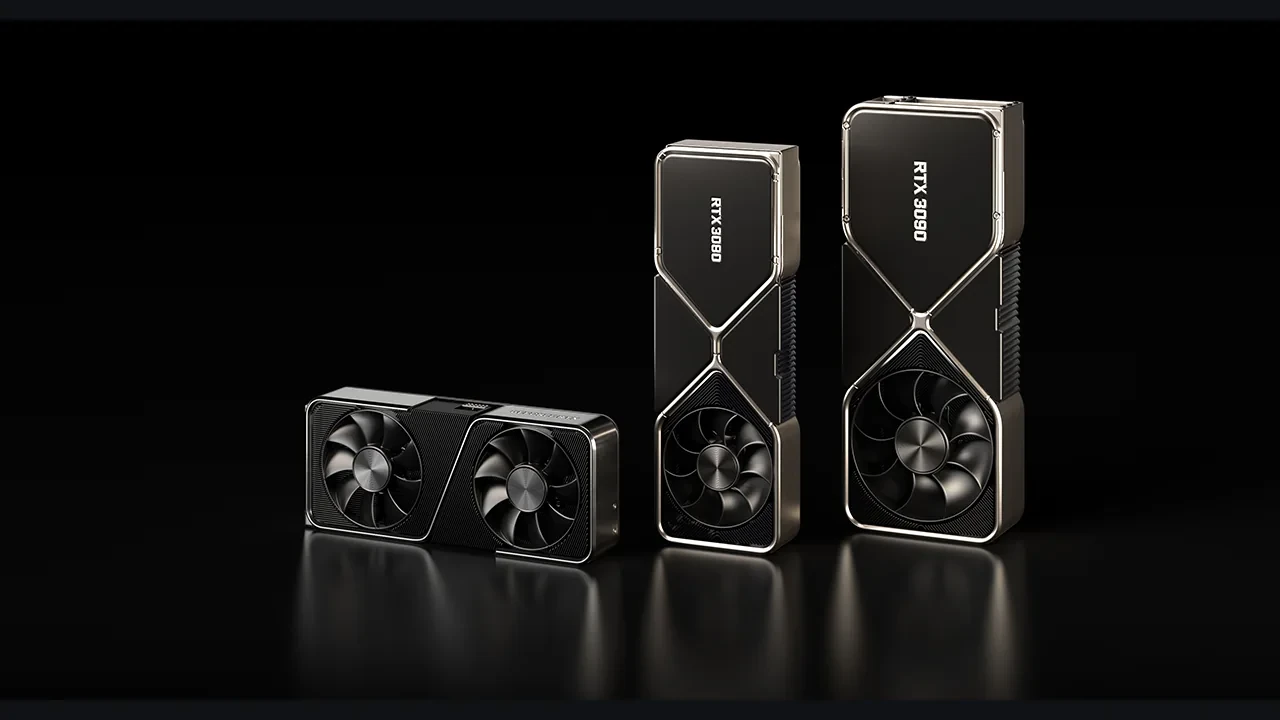
GeForce RTX 3080 DLSS 5 compatibility on desktop: where the card sits today
No official DLSS 5 launch support has been announced for the desktop GeForce RTX 3080, and support for this SKU in a later release remains unknown. That is the shortest answer NVIDIA’s published research material supports. Studios can keep using the DLSS 4.5 features already available on the card, but they shouldn’t treat a future driver update as a commitment.
DLSS is a stack rather than one switch. Super Resolution, Ray Reconstruction, Frame Generation, the model files, and the SDK components all have their own hardware and driver requirements. The RTX 3080 is an Ampere card, so its available path depends on the requested capability, the driver branch, and the route the engine selects at runtime. NVIDIA’s handling of Ampere during the RTX 40 and RTX 50 rollouts is the closest precedent available until the company publishes a definitive list.
A compatibility check, not a card review
The question here is whether this exact desktop configuration is supported. GPU reviews, market comparisons, and buying guides answer something else. No frame rates are invented or borrowed from another model, and the desktop result isn’t extended to laptops, Max-Q parts, or other mobile SKUs. Vendor documentation defines confirmed points; anything the vendor hasn’t documented stays unknown.
NVIDIA’s published position on DLSS 5
NVIDIA’s research material describes DLSS 5 as a forward-looking capability with its own compatibility profile. It does not put the desktop GeForce RTX 3080 on the launch support list. The careful wording is simple: launch support hasn’t been announced, while later support for this particular card remains unknown. That leaves NVIDIA room to extend or restrict support without contradicting an earlier promise.
Three separate claims often get mixed together. NVIDIA confirms that DLSS 5 exists. It does not confirm RTX 3080 support at launch, and it does not say the card will never receive it. Only the middle point has a firm answer today. Public patch notes should use the same boundary instead of turning an unanswered question into either a promise or a permanent rejection.
That has two immediate consequences. A studio advertising DLSS 5 should leave the RTX 3080 out of its supported-configurations block unless it has verified the feature with a specific driver and engine build. A player on a current driver will probably see the option missing or greyed out because the SDK offers the runtime no valid path. Once a known DLSS 5 title is available, a test bench can confirm the result by checking the in-game overlay and driver log for the loaded model version and capability. A missing DLSS 5 path matches the published position and isn’t automatically a bug.
DLSS 4.5 remains the supported path
DLSS 4.5 is the newest feature set NVIDIA has documented for the broader RTX family and the current supported limit for the RTX 3080. It includes Super Resolution for upscaling and Ray Reconstruction as a denoiser replacement in ray-traced lighting. Both ship through the SDK exposed by the driver, and both have been validated on Ampere hardware in released games. Developers and technical artists can use them in production after the usual per-title integration and QA work.
Frame Generation has moved across a less consistent support matrix. On Ampere it runs as an optional path that sends motion-vector analysis to a separate optical-flow accelerator. The RTX 30 series Wikipedia entry documents that accelerator on the GeForce RTX 3080, so the runtime can call the path, although its quality and latency differ from newer GPUs. A studio using Frame Generation on Ampere is shipping the older optical-flow route exposed by the DLSS 4.5 SDK, not DLSS 5. Marketing copy should keep those names separate.
The matrix below records what can be checked today, not a permanent forecast. NVIDIA hasn’t published an older-card roadmap and treats support as a per-SKU decision. Teams should revisit the matrix with every stable driver and save the driver build, SDK build, and model version beside each result.
| DLSS capability | Status on desktop RTX 3080 | Where it lives in the pipeline | What to verify on a test bench |
|---|---|---|---|
| DLSS Super Resolution (DLSS 4.5) | Officially supported in the current SDK | Post-process upscale, before final composite | Model version string in the driver log, scaling factor list in the in-game menu |
| DLSS Ray Reconstruction (DLSS 4.5) | Officially supported in the current SDK | Replaces hand-authored denoisers in ray-traced passes | Presence of the ray-reconstruction toggle, denoiser cost in a GPU capture |
| DLSS Frame Generation (DLSS 4.5) | Available via the optical-flow path | Generates an intermediate frame between rendered frames | Frame-pacing metrics, latency overlay, optical-flow utilization in NSight |
| DLSS 5 features | No official launch support has been announced | Not exposed by the current runtime for this SKU | Absence of the toggle, model version not present in the driver log |
Why Ampere lands in this support tier
The RTX 3080 arrived in 2020 as an Ampere card, using the GA102 die at the top of a family with smaller dies below it. Compared with the RTX 20 series, Ampere brought second-generation RT cores, third-generation Tensor cores, and a redesigned memory system with GDDR6X on higher-tier parts. Those blocks let the RTX 3080 launch with a working Super Resolution path and still run DLSS 4.5: the tensor accelerators and optical-flow engine are present, and the driver can schedule work on them.
DLSS 5 isn’t a straight port of the existing code. Its model family, inference path, and place in the rendering pipeline differ, while newer features have leaned on Tensor Core throughput that rose with each GPU generation. Model sizes have also grown. Backporting a new model means balancing inference cost, memory bandwidth, and VRAM against its footprint. The standard RTX 3080 has 10 GB of GDDR6X, so any new runtime model must fit alongside the game. The launch omission reflects model size, Tensor Core throughput, and a cautious rollout policy rather than one isolated switch.
Ampere’s launch path and the DLSS 5 rollout
Ampere launched around Super Resolution 2.x and the first Ray Reconstruction generation. Those models fit comfortably within a 10 GB memory system and the third-generation Tensor Core budget. As DLSS evolved, model size and inference cost rose with the hardware. NVIDIA has generally kept older GPUs on older models while placing the newest model on current silicon, with a period when both paths remain supported. The RTX 3080 is in that older-model window as DLSS 5 launches on the other side of the transition.
That makes the card a valid target for projects shipping DLSS 4.5 and retaining Ampere users. It isn’t a valid launch target for a project that requires DLSS 5. This follows the published launch position; it doesn’t predict what a later driver might do.
Read the driver, SDK, and model versions
An RTX 3080 bench can verify the active path from three version numbers. The NVIDIA control panel and GeForce Experience overlay report the driver. The game menu or a developer console usually reports the bundled DLSS SDK. The runtime log identifies the neural model loaded from the driver. Save all three, since a behavior change between driver branches often comes from a model revision rather than a visible control-panel setting.
- Install the latest stable Game Ready or Studio driver, then reboot so its kernel-mode and user-mode components match.
- Run a known DLSS 4.5 title in windowed or borderless mode so you can reach the overlay.
- Check that the graphics menu offers Quality, Balanced, Performance, and Ultra Performance modes.
- Enable the developer HUD if available and record the model string shown with Super Resolution active.
- Capture the workload in NSight Graphics or a comparable tool and verify optical-flow accelerator activity when Frame Generation is on.
- Repeat the probe with a DLSS 5 title when one becomes available, recording whether its option is present, absent, or greyed out.
QA can preserve those strings and screenshots as a regression artifact. A producer can then decide whether the tested card belongs in the supported list. This is a feature-path check, not a benchmark, so it doesn’t need an FPS result.
Write only tested configurations into the spec
A support list is a promise to players. The RTX 3080 belongs there when the studio has tested the title build, driver, and SDK combination and obtained the intended visual and performance result. It does not belong in a DLSS 5 block based on a guess, a neighboring Ampere SKU, or hardware potential alone. A studio grounding its reference in the NVIDIA DLSS 5 launch and compatibility research must keep this card out until NVIDIA publishes a different position.
Minimum and recommended configurations serve different purposes. The RTX 3080 can be a minimum card for the DLSS 4.5 path without qualifying for a DLSS 5 minimum, since those paths belong to different SDK generations. If both ship, publish two configuration blocks and attach the exact tested driver and SDK versions to each.
The engine plugin is part of the support check
Unreal Engine, Unity, and proprietary engines usually reach DLSS through a plugin between the vendor SDK and the renderer. That plugin controls which options appear, which scale factors the menu offers, and which models it can load. An older plugin won’t surface DLSS 5 just because the player installed a new driver. A current plugin on an unsupported GPU should hide the feature or fall back to a compatible model.
The matrix below is a guide, not a substitute for each plugin’s documentation. It shows why teams must update both the project and plugin when adopting a new feature. A custom RTX 3080 integration removes the plugin from the test, letting an engineer inspect the SDK headers and model-load call directly. Apart from plugin overrides, that baseline should match plugin behavior.
| Engine | DLSS 4.5 path on RTX 3080 | DLSS 5 path on RTX 3080 | What to confirm in the project |
|---|---|---|---|
| Unreal Engine 5.x with the NVIDIA plugin | Supported via Super Resolution and Ray Reconstruction | Not exposed by the current plugin for this SKU | Plugin version, model version in the post-process volume |
| Unity 6 with the NVIDIA package | Supported via the upscaling component | Not exposed by the current package for this SKU | Package version, override DLL in the player settings |
| Proprietary engine with the Streamline integration | Supported where the integration targets the DLSS 4.5 path | Not exposed by the current integration for this SKU | SL-Plugin version, the override file in the engine config |
| Custom integration using the DLSS SDK directly | Supported when the project links the right SDK | Requires the DLSS 5 SDK and a supported GPU | SDK header version, the model load call in the rendering code |
Driver branches need separate records
NVIDIA maintains several branches at once. Game Ready drivers tie features closely to shipping games. Studio drivers are common on developer benches and receive SDK validation. New Feature and Beta branches preview work that may change before stable release. The published RTX 3080 position concerns the stable branch, so any different beta behavior needs a recorded branch name and build number rather than a broad compatibility claim.
Every matrix entry should therefore name the branch and build it covers. Players using a beta should not expect that behavior to survive the next stable release, and studios choosing to support beta users need a separate caveat.
What the launch material leaves unanswered
NVIDIA’s research page confirms a DLSS 5 product, launch window, and compatibility profile, but it omits the desktop RTX 3080 from launch support. It neither rules out a later addition nor promises one. Because it is a research page rather than a driver release note, its forward-looking language isn’t a contractual statement about a particular build. Public copy should attribute the source directly and avoid paraphrasing it into a stronger claim.
Frequently asked questions
Does the GeForce RTX 3080 support DLSS 5 at launch?
No official DLSS 5 launch support has been announced for the desktop GeForce RTX 3080, and later support for this SKU remains unknown. Don’t include it in a DLSS 5 support block unless NVIDIA publishes a different statement.
What is the most recent DLSS feature set the GeForce RTX 3080 can run?
NVIDIA documents DLSS 4.5 as the latest set available on the RTX 3080. It includes Super Resolution, Ray Reconstruction, and the optical-flow-based Frame Generation path. Those features are usable in production after title-specific integration and QA.
Will a future driver add DLSS 5 to the GeForce RTX 3080?
NVIDIA hasn’t published a roadmap extending DLSS 5 to this card or committed to such a driver. Plan long-term support around DLSS 4.5 and treat any DLSS 5 route as a separate configuration maintained on the studio’s schedule.
How can I confirm the compatibility story on my own test bench?
Install the latest stable Game Ready or Studio driver and record the driver, SDK, and loaded model versions in a known DLSS 4.5 title. When a DLSS 5 title is available, record whether its option appears, is absent, or is greyed out. Those three versions plus the option state give a producer enough evidence to approve a matrix entry.
Does Frame Generation on the RTX 3080 count as DLSS 5?
No. It is the optical-flow path exposed by the DLSS 4.5 SDK. Its image quality, latency, and VRAM behavior differ from the DLSS 5 feature set, so public copy shouldn’t merge the two.
Can a laptop version of the RTX 3080 be treated the same way as the desktop card?
No. Laptop, Max-Q, and other mobile variants have different power and memory configurations. This status applies only to the desktop SKU; each mobile part needs its own test.
What is the role of the engine plugin in this decision?
The plugin determines which DLSS features appear in project settings and which model versions it can load. An older SDK build won’t expose DLSS 5, while a current build on unsupported hardware should hide the option or choose a compatible model. Update the plugin first when adding a new DLSS feature.
Is the GeForce RTX 3080 still a valid target for new projects?
Yes, when a project ships DLSS 4.5 and wants to retain Ampere users. It isn’t a valid launch target for a game that requires DLSS 5. Projects carrying both paths should publish separate configuration blocks based on their own test data.
What should a producer write in the public patch notes?
State that DLSS 5 isn’t officially supported on the RTX 3080 for that patch, then list the tested driver and SDK versions. Don’t promise later support that NVIDIA hasn’t promised.
Where can a developer read the vendor’s own wording?
NVIDIA’s DLSS 5 research page is the primary launch and compatibility source. The RTX 30 series Wikipedia entry provides historical context for the product family. Quote either carefully without strengthening its wording.