October 6, 2026 / Studio Practice
Creative planning for design projects: a practical workflow
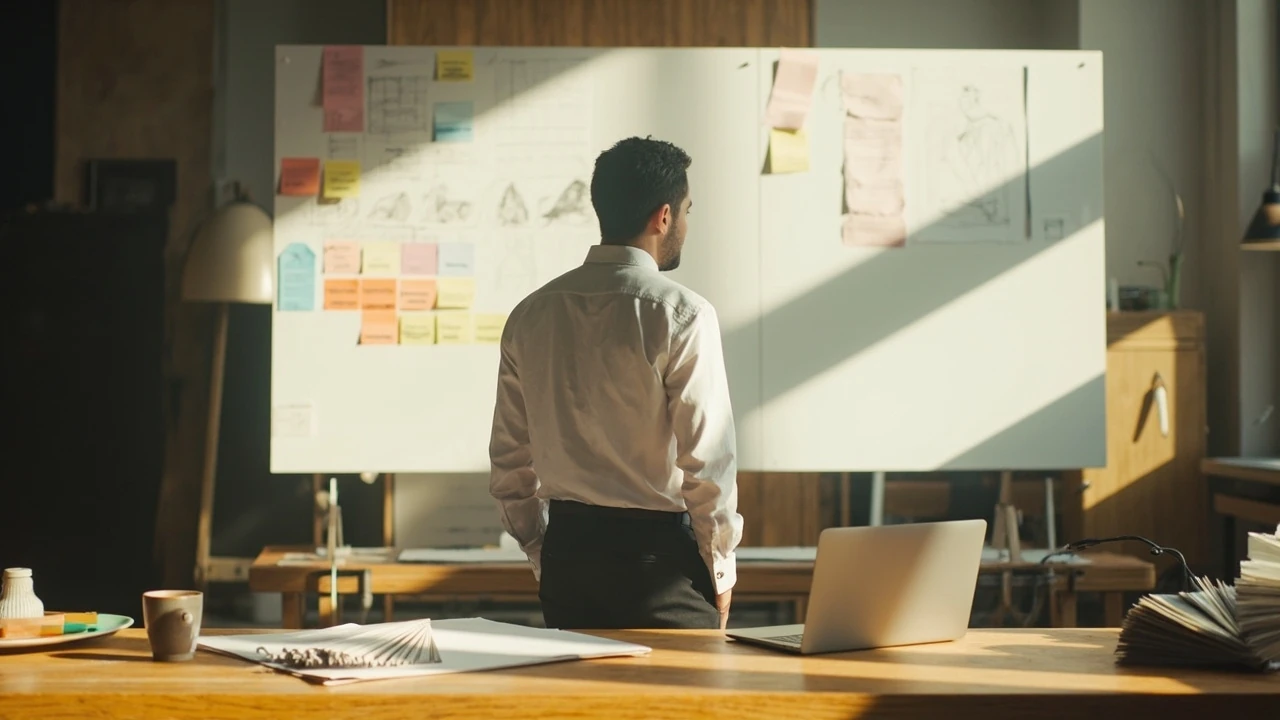
Creative planning: how designers turn a brief into a workable project
A client calls on a Thursday afternoon with a vague brief, a tight deadline, and a budget that does not quite cover the work. By Monday morning the team needs a clear direction, a short list of deliverables, and a rough idea of what success looks like. The difference between a chaotic week and a productive one usually comes down to creative planning that was done before the first sketch was drawn.
Creative planning is the structured thinking that runs in front of creative work. It is the step where a team turns a brief, a goal, or a problem into a brief, a direction, and a set of decisions that other people can execute against. In design studios, brand teams, and in-house product groups, the quality of that planning is often more important than the quality of the final pixel push. A clear plan lets a junior designer pick up the work, lets a client understand what they are buying, and lets a producer protect the schedule.
This article walks through a practical workflow for creative planning that fits small studios, freelance designers, and in-house creative teams. It covers the questions worth asking before a project starts, the artefacts worth producing, the methods that are useful in real projects, and the mistakes that repeatedly waste time. The goal is a process you can apply on Monday, not a theory you read once and forget.
What creative planning actually means in a design context
Inside a design studio, the phrase “creative planning” gets used in three different ways, and it helps to separate them before building any process.
The first meaning is project planning for a creative output. A logo, a website, a brand identity, a campaign, or a product launch all need a plan that covers scope, sequence, dependencies, and decision rights. This is the project-management side of creative work, and it is where producers, account leads, and senior designers spend a lot of their week.
The second meaning is the planning of the creative direction itself. Before a designer can draw a logo, the team needs to agree on the brand attributes, the audience, the tone, and the constraints. This is closer to strategy than to project management, and it overlaps with brand strategy, content strategy, and information architecture. The output of this stage is a creative brief, a mood board, a set of references, or a written direction.
The third meaning is personal creative planning: how a designer plans their own time, energy, and learning so that they can do good work over months and years, not just inside a single project. Calendar blocking, idea capture, and skill investment all sit in this category.
This article focuses mainly on the first two meanings, because they are the ones that show up in client work. Personal creative planning matters, but it is a different problem with a different set of answers.
Why skipping creative planning usually costs more time than it saves
It is tempting to treat planning as overhead, especially when a brief feels simple or a client wants work “yesterday”. In practice, the projects that skip planning are the ones that go over budget, miss deadlines, or get reworked three times before they are approved.
The mechanism is straightforward. A design is a long chain of small decisions. If the early decisions are made without thinking, later decisions inherit those constraints. A logo concept that did not consider how the mark behaves on a dark background will need redrawing when the brand guidelines are written. A website wireframe that skipped content planning will be rebuilt when real copy arrives. Each of these fixes is cheap on its own and expensive in aggregate.
Planning also protects the people doing the work. A junior designer who starts a project without a written brief is being asked to make strategic decisions without authority. If the client rejects the work, the designer is blamed for a decision that should never have been theirs to make. A short planning step moves those decisions upstream, where they belong, and turns rejection into iteration instead of rework.
The four artefacts that anchor a creative plan
Most design projects only need a small number of planning documents to run well. Adding more artefacts usually creates more confusion, not more clarity, so it is worth keeping the set tight.
The project brief
The project brief is the source of truth for what the work is, who it is for, and what success looks like. A useful brief covers the background, the audience, the goals, the non-goals, the deliverables, the timeline, the budget, and the decision makers. It should be short enough to read in five minutes and specific enough to disagree with. If a sentence in the brief cannot be argued with, it is probably too vague to be useful.
For a brand identity project, the brief might also include the brand attributes the client wants the new identity to express and the competitors the new identity should be measured against. For a website project, the brief should describe the audience segments, the primary actions, and the content that already exists versus the content that needs to be created.
The creative direction
The creative direction is the answer to “what is this work going to feel like”. It is usually expressed as a short written statement, a set of references, and a mood board. The direction is not a finished design. It is a set of decisions about tone, visual style, narrative, and structure that will guide the design exploration that comes next.
A strong creative direction is specific. “Modern, clean, and approachable” is not a direction. “Restrained, editorial, set in a humanist serif with a warm neutral palette and a single accent colour used for action elements” is a direction. The first sentence could describe almost any project. The second sentence can be tested against actual work.
The scope and schedule
The scope and schedule translate the brief and the direction into a sequence of work. A useful scope names the deliverables in concrete terms, not in effort terms. “Three logo concepts” is concrete. “Logo design” is not, because nobody knows how many rounds it includes or how many concepts that allows.
The schedule should identify the dependencies between deliverables. A brand identity usually needs the strategy and the direction before the logo concepts can start. A website usually needs the sitemap and the content model before the visual design can start. Drawing these dependencies on a page prevents the common mistake of starting visual work before the underlying decisions are made.
The decision log
The decision log is a short record of the choices that have been made and why. In a typical project, the team will make dozens of small decisions, and many of those decisions will be questioned later by the client, by a stakeholder who joined late, or by a designer who inherited the work. A decision log answers those questions in one place instead of forcing the team to reconstruct the reasoning from memory.
The decision log does not need to be elaborate. A spreadsheet with the date, the decision, the person who made it, and a one-line rationale is usually enough. The value is not the format. The value is the habit of writing decisions down while they are still fresh.
A practical workflow for creative planning
The exact steps a team uses will depend on the project type, but the underlying structure is similar across most design work. The workflow below is a starting point, not a rule.
Step 1: confirm the brief with the client
The first step in any creative project is to make sure the brief is real. The client may have written the brief themselves, or the studio may have written it from a discovery call. Either way, the brief needs to be confirmed in writing before the project starts. “Confirmed” means the client has read it, has had a chance to correct it, and has agreed that the work described inside is the work they want to buy.
This step is often skipped in smaller projects because the relationship feels informal. That is a mistake. A five-minute confirmation email at the start of a project will save hours of confused work later. The confirmation should be specific. “Are the deliverables in section 2 the right ones? Are the timelines in section 4 still accurate? Are the decision makers in section 6 still the decision makers?” is a useful set of questions.
Step 2: write the creative direction
With the brief confirmed, the next step is to write the creative direction. For a brand project, this usually means a one-page document that names the brand attributes, the tone, the references, and the visual territory. For a website project, it can mean a short set of principles about navigation, content density, motion, and tone of voice.
The direction should be written in plain language, not in design jargon. A good test is to read the direction out loud to a non-designer and ask them to repeat it back. If they can, the direction is clear. If they cannot, the direction is probably more about the designer’s taste than about the project’s needs.
Step 3: build the scope and schedule
The scope and schedule turn the brief and the direction into a sequence of work. The schedule should be realistic about the time needed for review. A common planning mistake is to assume that the client will give feedback within a day. In practice, internal review at the client side can take a week, especially in larger organizations. Building that review time into the schedule prevents the project from drifting. Readers who want more background can use the Creative overview as a reference while reviewing this point.
The schedule should also identify the critical path. On a website project, the critical path is often content: if the copy is not ready, the design cannot be finalised, and the build cannot start. On a brand project, the critical path is often the naming or the brand attributes: if the strategy is not signed off, the visual direction is built on sand.
Step 4: align the team
Before any creative work starts, the team needs to know the brief, the direction, the scope, and the schedule. A short kickoff meeting is usually enough. The meeting should be run by the project lead, not the client, and it should focus on what the team needs to know to do the work. A useful kickoff covers the goals, the audience, the direction, the deliverables, the timeline, the decision rights, and the risks.
For projects that run across multiple teams, the kickoff is also the place to surface assumptions. Designers, developers, and copywriters often have different mental models of the same project, and the kickoff is the cheapest place to bring those models into alignment.
Step 5: hold a mid-project check
About halfway through a longer project, it is worth holding a structured check on the work so far. The check has two questions: “are we still solving the right problem?” and “are we on track to deliver on time and on budget?”
The first question is the more important one. Projects drift when the team is solving the problem they were briefed on instead of the problem the client actually has. A mid-project check is the moment to catch that drift before it costs a re-design. The second question is more mechanical, but it is worth asking explicitly. Surprises about time and budget are best surfaced early, when there is still room to adjust the scope.
Methods that make creative planning more useful
The workflow above describes what to produce. The methods below describe how to think. None of them are required, and none of them are silver bullets, but each one is useful in the right situation.
Audience mapping
Audience mapping is the practice of naming the people the work is for, describing what they care about, and identifying what they currently do. The output is usually a short set of audience profiles, each one a paragraph or two long. The profiles are used as a reference during design decisions. When the team is arguing about whether a feature should be on the homepage, the audience profile is the tiebreaker.
Audience mapping is most useful when the audience is not the client. In B2B work, the client is often a procurement team or a marketing director, but the audience is the end user. Conflating the two leads to designs that please the buyer and miss the user. A separate audience profile for the end user prevents that mistake.
Reference curation
Reference curation is the deliberate selection of examples that the team will measure the work against. References are useful because they give the team a shared vocabulary. A conversation about “the Stripe website” is faster and more precise than a conversation about “a clean, modern, minimal design with lots of white space and a single accent colour”.
The references should be chosen to challenge the team, not just to confirm what the team already wants to do. If the brief calls for a bold, energetic identity, the reference board should include some restrained, editorial work as well. The contrast is what makes the reference board useful. A board made entirely of work that looks like the team’s first instinct is a board that does no work.
Constraint setting
Constraints are the limits inside which the team has to design. Budget, timeline, technology, brand guidelines, accessibility requirements, and platform limits are all constraints. Constraints get a bad reputation because they feel like obstacles. In practice, constraints are usually what make the work interesting. A designer asked to design for any budget, any timeline, and any audience usually produces a vague, unsatisfying proposal. A designer asked to design for a small budget, a tight timeline, and a specific audience usually produces a sharper piece of work.
The planning step is the right moment to make the constraints explicit. If the constraints are hidden until the work is in progress, the team will treat them as surprises. If the constraints are listed at the start of the project, the team can design inside them.
Decision criteria
Decision criteria are the tests the team will use to choose between options. They are written before the options exist, not after. For a logo project, the criteria might include legibility at small sizes, behaviour on a dark background, and the ability to be drawn in one colour. For a website project, the criteria might include time to first action, accessibility score, and the ability to be maintained by the in-house team.
Writing the criteria in advance turns the eventual decision from a matter of taste into a matter of judgment. The team can still disagree, but the disagreement is about the criteria, not about the options. That is a much more productive kind of disagreement.
Common pitfalls in creative planning
Most planning problems in design projects are not exotic. They are a small set of mistakes that come up again and again. Knowing what they are makes them easier to catch.
Planning for the work you want, not the work you have
It is common to write a plan that describes the project as the team wishes it were. The brief is more interesting than the actual one. The audience is more sophisticated than the actual one. The timeline is shorter than the actual one. The plan is then used to justify work that does not match the real situation, and the project slides off course within a week.
The fix is unglamorous: write the plan for the project as it is, not as the team would like it to be. If the audience is broad and unfamiliar with the category, the plan should say so. If the timeline is short, the plan should say so. A plan that admits the constraints is more useful than a plan that hides them.
Letting the plan become a script
A plan is a guide, not a script. Once the team starts working, they will learn things that were not visible at the planning stage. The plan should be updated to reflect that learning, not defended because it was written down. The artefacts described earlier — the brief, the direction, the scope, the schedule, and the decision log — are all living documents. Treating them as fixed is a planning mistake of its own.
Skipping the writing
Many planning conversations happen in meetings and never get written down. The meeting ends, the team has a shared understanding, and the next person to join the project has to reconstruct that understanding from scratch. The fix is simple: every planning decision is written down within a day. The artefact does not need to be long. A few sentences in a shared document are enough.
Confusing motion with progress
It is easy to feel busy in the early stages of a project. The team is in meetings, the team is writing documents, the team is reviewing references. None of that is creative planning if it is not connected to a decision. A useful test for any planning activity is “what decision does this move forward?” If the activity does not have a clear answer, it is probably overhead.
How creative planning connects to the rest of a design project
Creative planning is not a separate phase that runs before the design work. It is woven through the project from start to finish. The brief is written at the start and revisited at each milestone. The direction is set early and refined as the team learns. The scope and schedule are confirmed at the start and updated as the work progresses. The decision log starts in the kickoff and is added to until the project closes.
This woven structure is what separates planning from paperwork. Planning that does not connect to the actual work is documentation. Planning that does connect to the work is a tool. Another relevant reference is the fastest growing ria creative, which adds context without changing the practical guidance here.
A short checklist for the next planning session
Before the next kickoff, the next project start, or the next internal review, run through this checklist. It is short on purpose.
- Is the brief confirmed in writing, with the deliverables, the timeline, and the decision makers named?
- Is the creative direction written in language a non-designer can repeat back?
- Does the scope name the deliverables in concrete terms, with the number of rounds and the number of options?
- Does the schedule include time for client review and for internal review?
- Are the constraints listed explicitly, including the ones the client did not mention?
- Are the decision criteria written down before the design options are produced?
- Is there a place where decisions are being logged as the project moves?
- Does the team know the brief, the direction, the scope, and the schedule before any design work starts?
Tools that support creative planning without getting in the way
Tools do not do creative planning. People do. But the right tools make the planning easier to do and easier to share. The list below is not a recommendation of any specific product; it is a description of the categories of tool that tend to help.
- Shared documents for the brief, the direction, the scope, and the decision log. Plain text, version controlled, and easy to comment on.
- A visual collaboration tool for the mood board, the reference board, and the early sketches. The tool should make it easy to pin, annotate, and discuss references in one place.
- A scheduling tool for the project timeline. The tool should make dependencies visible and should send reminders before review deadlines, not after them.
- A communication channel for the project, separate from the studio’s general chat. The channel should be searchable later, because decisions made in chat are still decisions.
The trap to avoid is the tool sprawl. A project that uses five different tools for five different planning artefacts is a project where nobody can find the latest version of anything. One tool for written artefacts, one tool for visual artefacts, and one tool for the schedule is usually enough.
How creative planning fits into a studio’s wider practice
Inside a studio, the value of creative planning shows up in three places: project margins, client retention, and team wellbeing.
Project margins improve because fewer hours are spent on rework. A project that goes through a clean planning stage is a project where the team spends most of its time moving forward, not going back to fix decisions that were made without thinking. The savings are not large on a single project. Across a year, they are significant.
Client retention improves because the client experiences the work as a partnership. A client who has been through a real planning stage is a client who understands what they bought and why. A client who skipped planning is a client who is more likely to be surprised by the outcome, and surprised clients tend to be unhappy clients.
Team wellbeing improves because the team knows what they are doing and why. A designer who has read the brief, understands the direction, and has access to the decision log is a designer who can make small decisions on their own without checking in. A designer who does not have those documents is a designer who has to interrupt the lead designer to ask every small question. The first kind of designer is more productive and less stressed than the second.
When to skip the planning
There are real cases where creative planning can be shortened or skipped. A very small piece of work with a clear brief and an experienced client often does not need a written direction. A bug fix on an existing design system does not need a kickoff. A repeat client with a known process and a known team can move straight into the work.
The signal that planning is not needed is not the size of the budget. The signal is the quality of the existing context. If the brief is already clear, if the team already shares a direction, and if the schedule is already known, planning is overhead. If any of those three is missing, planning is the cheapest way to add them back in.
How creative planning relates to brand and web work specifically
Two of the most common places creative planning shows up are brand identity projects and website projects. Both have well-understood patterns, and both reward a clean planning step.
Brand identity projects usually start with a brand strategy phase. The strategy produces the brand attributes, the audience, the positioning, and the narrative. The creative planning stage translates the strategy into a creative direction, a set of references, and a scope that includes the logo, the typography, the colour, the imagery, and the guidelines. A useful resource on the brand strategy side is the studio’s visual identity guide, which describes what an identity includes and how to think about building one.
Website projects usually start with a strategy and a content phase. The planning stage translates that work into a sitemap, a content model, a design direction, and a build plan. The planning also identifies the accessibility requirements, which are easier to design in from the start than to retrofit at the end. The studio’s web accessibility guide is a useful reference for the requirements a website project should plan around.
Putting the workflow into practice on a real project
To make the workflow less abstract, it is worth walking through it on a single project. The example below is a brand identity project for a small professional services firm, run over six weeks.
- Week one: discovery calls with the client, writing the brief, confirming it in writing, and starting the audience and competitor research.
- Week two: writing the creative direction, building the reference board, and confirming the scope and the schedule with the client.
- Week three: holding the internal kickoff, producing three logo directions, and presenting them to the client in a structured review.
- Week four: refining the chosen direction, developing the typography and the colour, and starting the brand guidelines document.
- Week five: presenting the system, gathering feedback, and finalising the guidelines, the logo files, and the asset library.
- Week six: delivering the final files, handing over the guidelines, and holding a closeout meeting to log the final decisions and the open questions for future work.
The creative planning stage covers weeks one and two, with the artefacts produced being the brief, the creative direction, the reference board, the scope, and the schedule. The remaining weeks are execution, informed by those artefacts.
What good creative planning feels like from the inside
A team that is doing creative planning well has a particular feel to it. Meetings are shorter because the team has read the brief before the meeting starts. Feedback is more specific because the team is comparing the work against the direction, not against personal taste. Decisions are faster because the criteria were agreed in advance. The team is calmer because the surprises have been pushed to the front of the project, where there is time to deal with them.
A team that is doing creative planning badly has the opposite feel. Meetings are long because the team is re-reading the brief for the first time. Feedback is vague because there is no shared direction to compare against. Decisions are slow because the criteria are being invented during the debate. The team is stressed because the surprises are showing up during execution, where they are expensive to fix.
The difference is not talent. The difference is process. A team that builds a habit of writing things down, confirming things in writing, and updating documents as the project evolves will plan better than a team that does not, even if the second team has more experienced designers.
Where creative planning meets the rest of the studio’s work
Creative planning is one of several practices that a studio runs at the same time. It overlaps with project management, with brand strategy, with content strategy, and with design operations. Each of those practices has its own literature and its own tools, and it is easy to spend time on the boundaries between them.
For most studios, the practical answer is to keep the overlap small. Creative planning owns the artefacts that translate a brief into a direction, a scope, and a schedule. Project management owns the schedule after it is set. Brand strategy owns the work that produces the brand attributes and the positioning. Content strategy owns the work that produces the content model and the messaging. Each practice has a clear boundary, and the artefacts are passed between them at the right moments.
That boundary is also where the studio’s website strategy practice fits in. A useful introduction to that practice is the studio’s website strategy guide, which describes how to plan a site so that it actually performs after launch. The guide is a useful complement to the planning workflow described in this article, because most of the artefacts described here have a counterpart in a website project.
A short comparison of planning methods
Different teams use different methods for creative planning. The table below compares the most common ones so that you can pick the method that matches the project and the team.
| Method | Best for | Output | Time required | Main risk |
|---|---|---|---|---|
| Written brief only | Small projects with experienced clients | A short document covering goals, audience, deliverables, and timeline | Low | Too vague for complex work |
| Brief plus creative direction | Brand and identity projects | Brief, direction document, reference board | Medium | Direction is written too early, before the strategy is set |
| Brief plus workshop | Projects with multiple internal stakeholders | Brief, workshop notes, signed direction | High | Workshop is treated as a meeting, not as a working session |
| Discovery sprint | New clients or new product areas | Research, brief, direction, scope, schedule | High | Schedule pressure reduces the depth of the research |
| Living planning document | Long projects with shifting scope | A shared document updated throughout the project | Medium | Document is not maintained, becomes stale |
How long creative planning should take
The right amount of time for creative planning depends on the size of the project, the experience of the team, and the clarity of the brief. A rough guide for a small studio is shown in the table below. The numbers are not rules; they are starting points that can be adjusted based on the project.
| Project type | Planning share of total time | Typical planning duration | Main planning artefacts |
|---|---|---|---|
| Logo or mark only | 15 to 20 percent | A few days | Brief, short direction, scope |
| Full brand identity | 20 to 30 percent | One to two weeks | Brief, direction, references, scope, schedule |
| Marketing website | 20 to 25 percent | One to three weeks | Brief, sitemap, content model, direction, scope, schedule |
| Product or service launch | 25 to 35 percent | Two to four weeks | Brief, strategy, direction, scope, schedule, decision log |
| Ongoing retainer | 5 to 10 percent per month | Continuous | Living brief, monthly direction update, decision log |
The most common mistake is to spend too little time on planning, not too much. A project that invests an extra week in planning usually saves two or three weeks in execution. A project that skips planning to save a week usually adds two or three weeks of rework later.
Building the planning habit inside a team
A team does not become good at creative planning by reading an article. It becomes good at planning by practising the same workflow on enough projects that the workflow becomes the default. The steps below are a useful starting point.
- Pick a workflow that is small enough to actually use. A ten-step workflow is harder to follow than a four-step workflow.
- Use the same artefacts across projects. Consistency makes the artefacts easier to write and easier to read.
- Write things down within a day of the decision. The memory of a decision fades faster than people expect.
- Review the workflow after each project. Note what worked, what did not, and what should change for the next project.
- Protect the planning time. A team that lets planning be cancelled under deadline pressure is a team that will not plan.
The last point is the most important. Planning is easy to cut because the cost of cutting it shows up later, not immediately. A team that protects the planning time is a team that will, over months, produce better work with less stress.
Frequently asked questions
What is the difference between creative planning and project management?
Creative planning focuses on the thinking that has to happen before the work can be done well: the brief, the direction, the scope, the decision criteria. Project management focuses on the execution of the work once the planning is done: the schedule, the dependencies, the resourcing, the delivery. The two practices overlap, but the centre of gravity is different. Creative planning is about making the right decisions; project management is about delivering on the decisions that have been made.
How long should creative planning take on a small project?
For a small project with a clear brief and an experienced client, a few days of planning is usually enough. The aim is not to produce a long document; it is to confirm the brief, set the direction, and agree the scope. If the brief is already clear and the direction is already understood, the planning can be compressed further. The signal to slow down is not the size of the project; it is the presence of unclear decisions.
Who should own creative planning inside a studio?
The owner depends on the size of the studio. In a small studio, the lead designer or the founder usually owns creative planning as part of the project lead role. In a larger studio, a creative director or a strategy lead owns the direction side, while a producer or project manager owns the schedule side. The important thing is that one person is accountable for the planning artefacts, even if several people contribute to them.
What is the difference between a creative brief and a creative direction?
A creative brief describes the project: the goals, the audience, the deliverables, the timeline, and the constraints. A creative direction describes the work: the tone, the visual style, the references, and the territory the design will explore. The brief is written first and rarely changes. The direction is written after the brief is confirmed and is updated as the work progresses.
When should the client be involved in creative planning?
The client should be involved at every decision point where their input is needed. That usually means the brief, the direction, and the major milestones. The client should not be involved in every small decision, because that turns planning into approval seeking. A useful rule is that the client is involved in setting the criteria and reviewing the work, while the team is involved in making the day-to-day decisions that meet those criteria.
How do you avoid creative planning turning into endless meetings?
The most common cause of planning meetings without end is the absence of a written artefact. A meeting that does not produce a written output is a meeting that will need to be repeated. A useful rule is that every planning meeting ends with a written note: what was decided, who owns the next step, and by when. The note can be short, but it must exist.
Is a mood board a planning artefact or a design artefact?
It depends on what the mood board is used for. A mood board that informs the creative direction is a planning artefact, because it shapes the work before the work starts. A mood board that is produced alongside finished design concepts is a design artefact, because it is part of the visual exploration. The same artefact can move between the two categories depending on when it is produced and how it is used.
What is the most common planning mistake in design projects?
The most common mistake is treating planning as a single event at the start of the project. A brief written in week one and never revisited is a brief that stops being true by week three. The fix is to make the planning artefacts living documents that the team updates as the project progresses. The updates do not need to be frequent; they need to be honest.
How does creative planning change for in-house teams versus agency work?
In-house teams usually have a deeper understanding of the audience and the brand, but they also face more internal stakeholders and more competing priorities. Agency teams usually have a more structured process but less institutional knowledge of the client. The planning artefacts are similar; the timing and the ownership shift. In-house planning tends to be continuous, while agency planning tends to be concentrated at the start of a project.
Can creative planning be done remotely?
Yes, and most planning is now done remotely as a matter of course. The artefacts are the same. The rituals are different. A remote planning process needs a written brief, a shared document for the direction, a visual tool for the reference board, and a video call for the kickoff. The lack of a physical room makes the written artefacts more important, not less, because the team cannot rely on a whiteboard to capture the thinking.