November 5, 2026 / Studio Practice
Browt: a developer’s guide to the Pokemon Winds and Waves starter
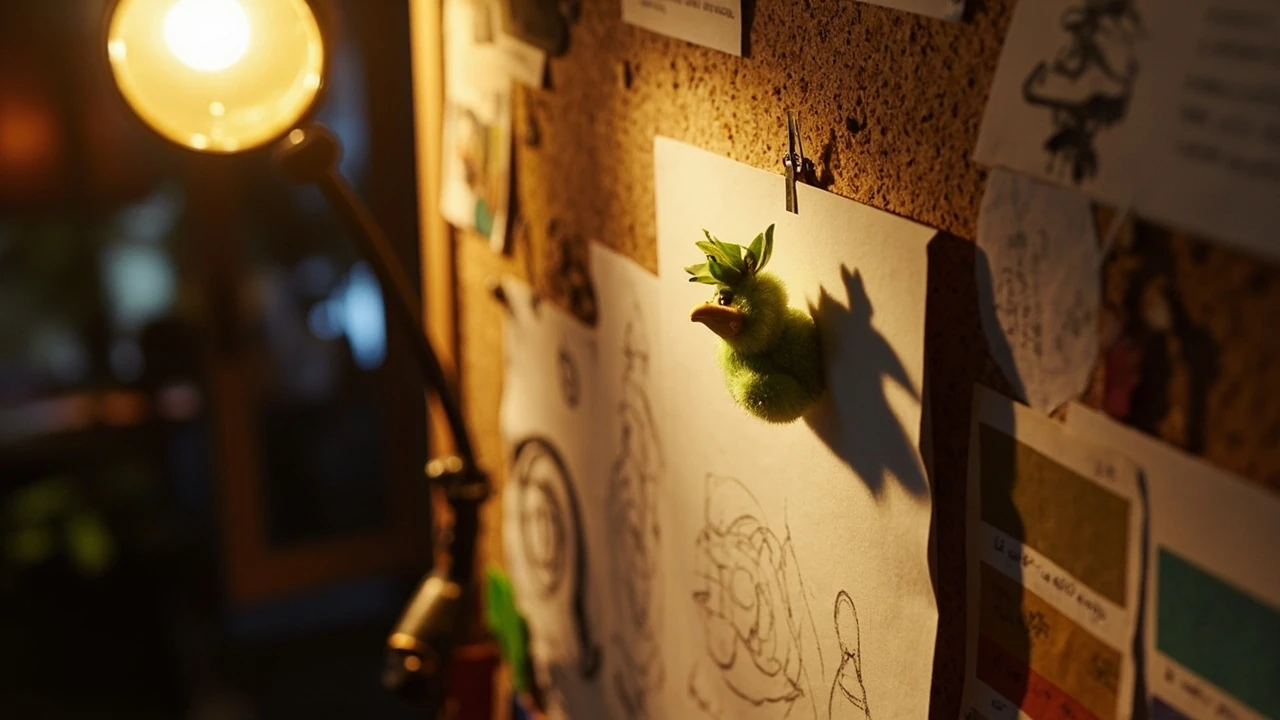
Browt: what we know about the Pokemon Winds and Waves Grass starter
The Grass-type starter for the next generation of the mainline Pokemon series has been officially introduced as browt, a small, energetic creature whose defining silhouette is a pair of broad leaves that grow directly above its eyes. The Pokemon Company’s official site describes it as a Pokemon that runs about energetically while photosynthesizing with the leaves on its brow, lively but a little clumsy. That single sentence already does design work: it tells players what the creature does, hints at its Grass typing, and signals a starter personality that contrasts with the more stoic or mischievous archetypes the series has used before.
For developers, designers, and producers tracking the announcement, browt is more than a cute reveal. A starter Pokemon sets the tone for a generation: its stat spread, ability, evolution line, and signature moves often drive the first ten hours of player decisions about team composition, and its visual identity is reused in marketing, UI icons, and merchandise templates. This guide walks through the confirmed design, the production decisions the reveal implies, and the questions a studio lead or technical artist would ask before committing a new generation’s starter to concept, animation, and balance work.
The analysis below leans on the official character copy and on the in-game evidence released alongside the generation announcement, and treats community speculation as speculation. Where a claim is unconfirmed by an official source, it is labeled as such. The intent is to give a working GameDev reader the same starting set of facts, constraints, and decision points a starter reveal produces inside a real production pipeline.
Confirmed design facts about browt
Before any production planning is useful, the fixed facts about a starter have to be isolated from the speculation that grows around every reveal. The table below summarizes what is currently confirmed about browt from official channels, separating those claims from the inferences developers and fans have started to draw.
| Attribute | Confirmed status | Source | Production implication |
|---|---|---|---|
| Name | Browt | Pokemon Company official site | Short, brandable, and easy to localize; no major translation risk indicated. |
| Type | Grass | Official generation reveal and starter triangle | Confirms the Grass slot of the new generation’s starter triangle. |
| Region inspiration | Southeast Asia and Oceania themes | Pokemon Winds and Pokemon Waves regional framing | Drives creature silhouette, palette, and culture cues across the full line. |
| Visual cue | Broad leaves above the eyes | Official description | Sets a strong read-at-a-distance silhouette for overworld and battle camera work. |
| Personality | Energetic, lively, a bit clumsy | Official description | Implies a faster, lower-defense stat archetype in line with prior Grass starters. |
| Signature behavior | Photosynthesizes while running | Official description | Points to a passive healing or weather interaction, not yet a confirmed ability. |
Two of those facts do most of the design work. The leaf brow is a silhouette element that works in battle, in the party UI, and on a keyring, which is the kind of constraint production art needs before concept lock. The photosynthesizing behavior suggests the ability slot will lean into recovery or weather, a long-standing Grass tradition that influences the broader metagame more than any single stat line.
It is worth flagging the boundary between what is confirmed and what is editorial. The creature’s name, typing, regional framing, and personality copy are all on the record. The “photosynthesizing while running” line is descriptive prose from the official site, not a labeled ability, and the broader community has already begun treating it as a hint toward a Chlorophyll-style passive. That is a reasonable read, but it is a read, not a fact, and any production plan that budgets for a specific ability before the official reveal will have to be re-cut once the actual ability is announced.
How a starter reveal fits a Pokemon generation production cycle
A mainline Pokemon generation runs on a long, multi-studio pipeline. Game Freak typically leads core development, with Creatures Inc. handling creature art and animation and The Pokemon Company owning the brand, marketing, and merchandising layer. The decision to name a starter browt, reveal it months ahead of release, and frame it in terms of behavior rather than numbers reflects three production habits the series has refined over multiple generations.
- Reveal the starter first because it carries the marketing window. Players decide early whether to engage, and merchandise planning needs the silhouette months ahead of launch.
- Frame the reveal in personality, not numbers, so the design language can survive a stat rebalance later. No official stats exist for browt yet on purpose.
- Anchor the starter to a regional theme so the rest of the Pokedex, the music team, and the world art can pull from the same reference set.
For a developer or producer outside the mainline team, this cycle is still a useful reference. A starter reveal is a brand event first and a gameplay reveal second. The screenshots, name, and short copy are designed to be reused in trailers, official site tiles, and partner marketing, which is why a single character description can survive translation into more than nine languages without losing its hook.
The other thing a multi-studio pipeline changes is the approval loop. A copy edit on the official starter text usually passes through brand, localization, and legal before the name is locked, and the silhouette goes through a similar process with the creature art team. That is the practical reason a reveal that looks like a single announcement is in fact a small stack of sign-offs, and why the studio’s “first” creature is rarely the “first” thing the team actually finished.
Reading the official description like a technical artist
The phrase “runs about energetically while photosynthesizing using the leaves on its brow” packs four constraints into one sentence. Each one maps to a different production discipline, and a team that has worked on creature reveals before will recognize the same set of asks in every generation. The table below spells out the four constraints, the team they fall to, and the kind of implementation choice a working studio usually makes.
| Constraint | What it asks of the team | Likely implementation choice |
|---|---|---|
| Continuous running motion | Animation needs a clean, looping idle and a run cycle that reads at small scale. | Reuse a base quadruped or low-biped rig shared with related concept art, with leafy ornamentation layered on top. |
| Energy level | Personality has to survive low-poly overworld and battle camera distances. | Exaggerated brow and tail silhouettes, a saturated palette, and short recovery animations. |
| Photosynthesis | Visual effect work for leaves that respond to light and weather states. | A simple vertex or material response to the global time-of-day or weather variable, kept cheap enough to run on the lowest target hardware. |
| Leaves on the brow | Silhouette readability under motion blur and small render scale. | A bold brow line that survives the party icon crop and the box thumbnail. |
None of those choices require inventing new technology, which is the real test of a well-designed starter. The browt design asks for a clean rig, a robust material response, and a silhouette that holds up at thumbnail size. Those are the same asks a technical artist would have for any creature that has to ship across mainline, spin-offs, and the mobile ecosystem.
One practical consequence: a creature whose signature behavior is a passive effect on its own foliage is also a creature whose foliage has to be rigged, skinned, and animated as its own sub-object. That is extra work in the DCC tool, in the export pipeline, and in the runtime skeleton, and it tends to be the kind of detail that is missed until the creature is dropped into the overworld for the first time and the leaves clip into the body mesh on every frame of the run cycle. A team that plans for the leaves as a separate asset from the start will save a week of cleanup later.
Grass typing and what it usually means for the evolution line
Grass starters in the mainline series have a recognizable pattern: the base form is small and fast, the middle form is usually awkward or quirky, and the final form tends to combine a defensive shell, a recovery tool, and one or two offensive coverage options. The pattern is not a rule, but it is consistent enough that production teams plan around it. The table below shows how that pattern has played out in recent generations to give a working baseline for what browt might evolve into.
| Generation | Grass starter base | Middle form | Final form | Final form archetype |
|---|---|---|---|---|
| Gen 3 | Treecko | Grovyle | Sceptile | Fast special attacker with utility speed tools. |
| Gen 4 | Turtwig | Grotle | Torterra | Slow, bulky, ground-typing pivot with a recovery move. |
| Gen 5 | Snivy | Servine | Serperior | Fast special attacker with a healing or speed-based ability. |
| Gen 6 | Chespin | Quilladin | Chesnaught | Bulky fighting-type hybrid with strong physical defense. |
| Gen 7 | Rowlet | Dartrix | Decidueye | Ranged physical attacker with a long-turn setup tool. |
| Gen 8 | Grookey | Thwackey | Rillaboom | Slow, high-attack physical attacker with terrain support. |
| Gen 9 | Sprigatito | Floragato | Meowscarada | Fast special attacker with a signature utility move. |
The pattern is not a guarantee. For additional context, Gen 3 and Gen 5 produced fast, fragile final forms, while Gen 4 and Gen 8 produced slow, bulky ones. The “lively but a bit clumsy” copy for browt is closer to the lively half of that range, but until the evolution line, base stats, and ability are officially confirmed, any projection is editorial inference, not a fact.
What the table does support is a planning baseline. If the final form follows the fast-attacker branch, the team can budget for a long-legged silhouette, a speed-leaning stat spread, and a signature move with a single-target damage profile. If the final form follows the bulky branch, the budget shifts toward a heavier silhouette, a defense-leaning stat spread, and a recovery or terrain-based move. Both directions are reasonable; neither is locked, and a team that plans for both will be able to absorb the official reveal without re-cutting the schedule.
What a producer or team lead should plan for next
Once a starter has been named and visually confirmed, the production checklist inside the development studio changes. The following list is the kind of working list a producer, lead artist, or technical director would keep in a shared document, ordered by the order in which those decisions usually have to be locked.
- Lock the final silhouette so the overworld, battle, and party icon renders are reading the same shape across distances.
- Decide the evolution line count and the camera framing for each form before animation starts, so the rigging team can plan joint counts.
- Write the ability, because ability choice drives the stat spread, the animation set, and the VFX that has to ship with the creature.
- Reserve budget for the recovery or weather effect that the Grass typing usually implies, including the cost of any global weather system changes.
- Coordinate the localized names early, because the starter name shows up in opening cutscenes, menus, and pre-rendered trailers.
- Plan the marketing asset reuse, including the official site tile, the trailer pose, and the partner key art that vendors and licensees will need months before launch.
Each of those items has a known cost in concept, animation, VFX, audio, and localization hours. A studio that treats the starter reveal as a single piece of news rather than the start of a year-long workstream is the kind of studio that ends up over-budget on the very first creature the players see.
There is also a less obvious item: the audio brief. A starter with a continuous running motion and a passive effect on its own leaves usually gets a layered audio treatment, with a baseline idle loop, a move-specific sting, and a weather-aware response on the foliage. None of that audio is recorded until the ability and the move list are closer to lock, but the sound designer needs the brief before the run cycle animation is finalized, because the timing of the footstep loop has to match the leg cycle. That handoff is easy to miss and expensive to fix after the fact.
Player-facing questions a developer guide has to answer
The same set of design facts answers a different set of questions for players. Producers who work on official channels often have to write for both audiences at once, so the list below mirrors the production checklist with the player task that each item affects.
- Is browt confirmed Grass-type? Yes, the official starter triangle places it in the Grass slot for Pokemon Winds and Waves.
- What region is the new generation set in? The official framing references Southeast Asia and Oceania, which is a regional choice, not just a name.
- Will browt have a passive healing or weather effect? The official description implies photosynthesizing, but the actual ability, stat spread, and moveset are not yet announced.
- How does the evolution line work? The full line has not been revealed, so any speculation about middle and final forms is editorial inference.
- Is there a confirmed release date? The official site copy does not yet include a release date, so any date a reader sees elsewhere is unverified until a Pokemon Company or Game Freak announcement says otherwise.
Keeping those two audiences in the same document is one of the harder parts of a starter reveal. The marketing copy has to be honest about what is and is not known, because the players who will pre-order the game are the same players who will notice if the studio overpromises a feature in the first trailer.
A second concern is the translation layer. A name like browt is short, but the surrounding ability text, the description copy, and the Pokedex entries are written in longer sentences that have to be re-read in every supported language. A studio that locks the English copy before the localization team is briefed will end up re-cutting the ability text once the localized versions land, and that re-cut tends to surface right when the trailer is meant to go to mastering.
Risks and decisions a real studio has to weigh
A starter reveal introduces a small number of well-understood risks. None of them are catastrophic, but they accumulate, and they tend to land in the same few meetings. The list below is a working catalog, not a checklist of things to fix.
- Stat spread risk: if the ability is too strong, the metagame skews before the first tournament. If it is too weak, players lose interest in the Grass slot of the triangle.
- Silhouette risk: if the brow leaves do not read in battle, the creature’s identity gets lost in the team shot, and the marketing art has to carry the recognition instead.
- Animation budget risk: a creature that has to perform a continuous motion plus a passive effect plus an evolution transition can overrun the rig budget if the team plans for the base form only.
- Localization risk: a name like browt is short, but the surrounding creature names, the ability text, and the menu strings all have to be tested across the supported languages before lock.
None of those risks are unique to this generation. The reason they are worth listing is that the same checklist reappears every time a new starter is named, and a studio that runs the checklist once cleanly is a studio that runs it faster the next time around.
One risk that is easy to underweight is the trailer-side risk. The first trailer for a new generation usually features the starter running through the overworld, and the footage is cut from a build that is months ahead of the shipping state. If the brow leaves on browt are still being re-skinned in the build the trailer team is using, the trailer will ship with the wrong shade of green, and that detail will be on screen in front of millions of viewers for years. A small internal handoff between the trailer team and the creature art team is usually enough to prevent the most visible version of that problem.
Where browt sits in the wider GameDev conversation
Outside the specific generation, browt is also a useful case study in how a brand reveals a creature. Most studios do not get to debut a new creature in front of a built-in audience of millions, and the patterns the Pokemon series uses have been adopted, sometimes by accident, by other long-running franchises. For a working reference on the starter details in one place, the IGN wiki entry for Browt collects the same descriptive copy and starter triangle framing the official site uses, and is the kind of secondary source producers often keep open in a tab while they draft their own internal briefs.
The wider production lesson is that creature design and creature marketing are the same job in the month a starter is revealed. The technical artist who locks the silhouette, the producer who locks the schedule, and the brand lead who locks the copy all have to agree on the same sentence, the same shape, and the same color palette, and they all have to do it months before the first trailer. That is what browt actually represents when the reveal is read as a production document rather than as a piece of news.
There is also a useful parallel to draw with smaller creature-led releases in the indie space. A studio launching a single creature IP does not have the same merchandising pipeline, but the same three constraints apply: a creature has to be readable at thumbnail size, the personality has to fit in a single sentence, and the regional or thematic anchor has to be obvious from the silhouette alone. The browt reveal is a cleaner version of the same exercise, and the discipline scales down.
What to watch between now and the next official update
Until the next official update lands, the working list for a developer or producer tracking browt stays short. The list below is the kind of list that belongs in a team wiki or a shared document, not in a press release, because the items are the things that change the production plan rather than the things that change the headline.
- Any official reveal of the middle and final evolution, because the line count and the camera framing decisions depend on it.
- Any official ability or signature move reveal, because the VFX and stat budget depend on the ability type.
- Any official release date or platform line-up, because that changes the milestone calendar and the trailer cadence.
- Any update to the official starter copy, because the personality sentence is what every localized script and accessibility note will be checked against.
- Any partner or merchandise announcement, because the silhouette lock has to be solid before the first licensee signs off on the asset pack.
When those updates arrive, the same production checklist above has to be re-run, because each new piece of confirmed information changes at least one downstream decision. That is the real value of a starter reveal as a working document: it is the first fixed point on a calendar that does not have many of them.
A useful habit is to keep a small delta log next to the working list. Every time the official copy changes, the delta log records the before-and-after of the sentence, the date of the change, and the production decision that has to be revisited. That log tends to be more useful than a wiki page over the long run, because the wiki page gets stale and the delta log keeps the conversation honest about what has actually moved.
Practical next steps for a developer or designer reading this
If you are reading this as a developer, technical artist, or producer, the most useful next step is to treat browt as a small case study and write down the decisions you would lock in the first two weeks after the official copy lands. That exercise tends to surface the parts of your own pipeline that depend on a creature having a confirmed name, a confirmed type, and a confirmed silhouette before the team can move.
For a designer, the exercise is to write the ability paragraph you would expect for a “lively but a bit clumsy” Grass starter, then check it against the official reveal when it lands. For a technical artist, the exercise is to draw a thumbnail of browt at party icon size, then at overworld size, and confirm that the brow leaves still read at both. For a producer, the exercise is to write the milestone list that has to clear before the silhouette is locked, and to check that the team has the time to do it without compressing the rest of the schedule. None of those steps require the next official update, and they all become useful the moment the next update lands.
For a player reading the same reveal, the equivalent exercise is simpler: hold off on hard predictions about the stat spread, the evolution line, and the ability until the official numbers and names are confirmed, because those details tend to change between the first reveal and the shipping game, and the first reveal is a brand event rather than a balance event. The browt copy that has been published is honest about the creature, and a player who treats the official copy as the only confirmed source will not be surprised when the numbers land later.
For a studio lead reading this, one more step is worth naming: share the working list with the localization lead, the audio lead, and the trailer producer on the same day you write it. The starter reveal is the first time those four disciplines have to be in the same document, and the earlier they read the same sentences, the less rework the project absorbs in the months that follow.
Frequently asked questions
What type is browt?
Browt is the Grass-type starter for the new generation, positioned in the Grass slot of the starter triangle for Pokemon Winds and Waves. The Grass typing is consistent with the official description, which places photosynthesizing leaves on the creature’s brow and frames its personality as energetic and a little clumsy.
Is browt’s name final?
The name has been published on the official Pokemon Company site and in the starter reveal copy, so it is treated as confirmed for the English-language release. Localized versions of the name may differ, and producers should expect the localization team to receive the name in the same announcement window as the English copy.
What region is the new Pokemon generation set in?
The official framing for Pokemon Winds and Pokemon Waves references Southeast Asia and Oceania as a regional inspiration. That is a thematic anchor for the creature line, the world art, the music team, and the broader Pokedex, and it is one of the reasons a chicken-like Grass starter fits the generation rather than feeling out of place.
Does browt have a confirmed ability or signature move?
No ability or signature move has been confirmed in the official starter copy. The phrase “photosynthesizes using the leaves on its brow” is descriptive of the creature’s behavior rather than a stated ability, so any claim about a specific ability, passive effect, or signature move is editorial inference at this stage.
Has the full evolution line for browt been revealed?
The middle and final evolutions have not been officially revealed in the starter copy that has been published. The base form is confirmed, and the production implication is that the evolution line will follow in later updates, with the silhouette, camera framing, and rig count decisions waiting for that reveal.
When is the new Pokemon generation releasing?
The official starter copy that has been published does not include a release date. Any release date a reader sees in third-party coverage should be treated as unconfirmed until an official Pokemon Company or Game Freak announcement states otherwise.
What platforms will Pokemon Winds and Waves ship on?
The official starter copy that has been published does not include a confirmed platform list. Platform announcements tend to follow the starter reveal, and a developer or producer should wait for that announcement before locking any platform-specific art or performance budget.
How does browt compare to past Grass starters in design tone?
The “lively but a bit clumsy” framing is closer in tone to energetic Grass starters like Sprigatito or Treecko than to slow, bulky ones like Turtwig or Chespin. That tonal read is editorial inference from the official copy, and the actual stat spread and archetype will only become clear when the official numbers are released.
Why is the brow shape so important to the design?
The leaves on the brow are the silhouette element that has to read at party icon size, in the overworld camera, in the box thumbnail, and on a keyring. A strong brow shape is what lets a starter survive the wide reuse the Pokemon series puts a starter through, and it is the kind of design decision the technical art team usually wants locked before the rig work begins.
Where can a developer find reliable production updates about browt?
The official Pokemon Company site is the primary source for the starter copy and the regional framing. Secondary sources collect the same starter details and can be useful as a working reference, but any change to the official copy on the Pokemon Company site is the version production teams should treat as canonical.