August 31, 2026 / Brand Strategy
Grand design in branding: what it is and how to use it
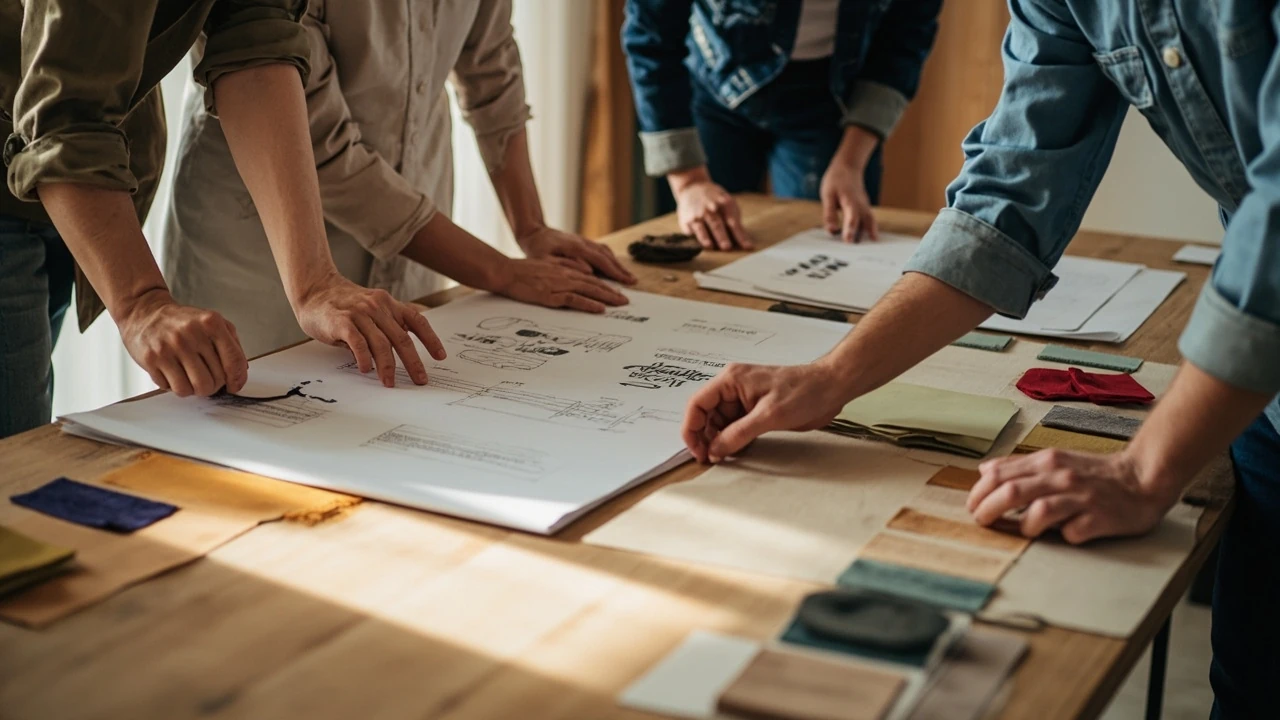
A grand design in branding is the single organizing idea that holds every brand decision together, from the logo and color palette to the way a company writes, speaks, and behaves in public. Without it, even a visually polished identity can feel like a collection of disconnected pieces. With it, a small studio, a growing product team, or a long-established company can present a coherent picture of who they are and why they exist.
This article unpacks what a grand design actually is in a branding context, how it differs from a visual style guide, what elements it usually contains, and the practical steps a team can follow to build one. It also answers the questions most readers ask when they first encounter the phrase in a brand strategy document, agency proposal, or creative brief.
Grand design in branding: defining the core idea
Outside of branding, the phrase “grand design” suggests a sweeping, ambitious plan. In branding, the same phrase describes a more focused idea: the central concept or thesis that unites every expression of a brand. It is the answer to a simple question. If a customer saw only one piece of the brand tomorrow, what consistent idea should that piece communicate?
That central idea is rarely the logo, the product, or the marketing tagline. Those are expressions of the idea. The grand design sits one level above them. It defines the brand’s point of view, the value it promises, the personality it projects, and the boundaries of how it should look, sound, and behave.
For a design studio, the grand design might be a commitment to clarity, restraint, and considered typography. For a software product, it might be a promise that complex workflows can feel calm and predictable. For a small bakery, it could be the idea that everyday rituals deserve a small moment of care. In each case, the grand design is the principle that lets the team make consistent decisions without checking a rulebook for every choice.
How a grand design differs from a style guide
Confusion between a grand design and a style guide is one of the most common pitfalls in branding projects. They serve different purposes and operate on different time horizons.
| Aspect | Grand design | Brand style guide |
|---|---|---|
| Purpose | Defines the central idea and strategic direction | Documents the rules for applying that idea |
| Scope | Concept, positioning, narrative, personality, and principles | Logo usage, color values, typography, layout grids, tone rules |
| Audience | Founders, strategists, and senior creatives | Designers, marketers, developers, and external partners |
| Format | Short strategy document, narrative, or strategic brief | Detailed reference manual with specifications |
| Lifespan | Stays stable across years, even decades | Updated as visual systems evolve |
| Question answered | Why does the brand exist and what does it stand for | How do we apply the brand correctly |
A useful test is to ask whether a rule would still make sense if the logo changed. Logo proportions, minimum sizes, and color codes belong in the style guide. A grand design explains why those choices were made in the first place.
Core elements of a grand design
While every brand’s grand design is unique, most share a similar structure. A complete version usually covers six elements. Smaller teams or early-stage projects can combine several of these into a single paragraph, but each one should still be addressed somewhere in the strategy.
- Brand thesis: one or two sentences that capture the brand’s reason to exist and the difference it aims to make.
- Audience definition: a clear description of the people the brand is built for, including their needs, frustrations, and aspirations.
- Point of view: the perspective the brand takes on its category, including the assumptions it challenges and the territory it claims.
- Personality and tone: the human characteristics the brand projects, and the kind of language it uses when speaking in its own voice.
- Visual direction: the broad aesthetic territory, including references, moods, and design principles, that all visual work should align with.
- Behavioral principles: the standards the team holds itself to, from how it treats customers to how it makes internal decisions.
These elements do not need to be long. A small studio’s grand design can be written on a single page if every sentence is sharp. What matters is that nothing important is left undecided.
Why a grand design matters in practice
Brands that operate without a clear grand design tend to develop visual inconsistencies, tonal contradictions, and a feeling that no one is steering. Brands that have a strong grand design, by contrast, look like the work of a single mind, even when many people contribute to them.
Three practical benefits stand out.
Faster decision making
When a team knows the central idea, most daily decisions become simpler. Should this new social media template use a bright accent color? Should the product page use playful language? Should the onboarding flow feel formal or conversational? The grand design provides a default answer, which means fewer long debates and less second-guessing.
Stronger recognition
Recognition comes from repetition with variation, not from repetition alone. A grand design ensures that the repeated elements across touchpoints share a deeper logic, so customers can sense the brand even when specific assets change. This is one of the reasons a thoughtful visual identity can outlive a logo redesign.
Better collaboration with partners
Agencies, freelancers, and internal teams can move faster when they understand the brand’s central idea. A photographer briefed on the grand design will select lighting, composition, and subjects differently than one briefed only on a color palette. A copywriter briefed on the brand thesis will write headlines that reinforce it.
How to build a grand design for your brand
Building a grand design is less about filling in a template and more about a sequence of honest conversations. The steps below work for a two-person studio as well as a multi-disciplinary brand team.
Step 1: Audit what already exists
Gather everything that already represents the brand, including the current logo, website, social media channels, product packaging, internal documents, and any past strategy decks. Note what feels consistent, what feels off, and what customers and colleagues tend to remember most.
Step 2: Revisit the brand’s reason to exist
Write a short answer to the question of why the brand exists in the first place. Resist the temptation to sound impressive. The goal is clarity, not poetry. If the answer sounds the same as three competitors, push further.
Step 3: Define the audience in human terms
Describe the people the brand serves in a way that goes beyond demographics. What are they trying to accomplish? What is getting in their way? What do they care about beyond the product or service? A useful audience definition gives the team someone specific to design for.
Step 4: Articulate the point of view
Write a short paragraph describing the brand’s perspective on its category. What does the brand believe that others overlook or dismiss? What kind of work or behavior does the brand want to be known for? This is the heart of the grand design.
Step 5: Translate the idea into design principles
Convert the strategic idea into three to five design principles that can guide visual and verbal work. Principles such as “favor calm over loud,” “lead with clarity, not cleverness,” or “treat every detail as part of the experience” give the team a shared language for everyday decisions.
Step 6: Test the idea against real situations
Apply the grand design to three or four upcoming decisions before locking it in. Does it give a clear answer? Does it rule out options that felt appealing but did not align with the central idea? A grand design that never gets used is just a document on a shared drive.
Common mistakes when defining a grand design
Most failed grand design projects fail for the same handful of reasons. Recognizing them early saves time and rework.
- Conflating the grand design with a tagline. A tagline is an expression, not the central idea. A grand design cannot be summed up in three to five words without losing the strategic depth that makes it useful.
- Writing for an ideal audience instead of a real one. A grand design built around an aspirational customer who does not yet exist will feel hollow when the team tries to use it.
- Copying a competitor’s positioning. If the grand design could be applied to a different brand with only a logo swap, it is not specific enough.
- Skipping the behavioral element. A grand design that defines only visuals and tone will not survive contact with customer service, hiring, or product decisions.
- Treating it as a one-time exercise. A grand design should be revisited every few years, especially after major changes such as a new market, a new product line, or a leadership transition.
Grand design in different brand contexts
The same idea takes different shapes depending on the type of organization. The table below shows how the central idea tends to be expressed in common scenarios.
| Context | Central idea often focuses on | Typical expressions |
|---|---|---|
| Design studio | A consistent point of view on craft, clarity, or process | Considered typography, restrained color, writing style, project case studies |
| SaaS product | How the product changes the user’s daily work | Product UI, onboarding tone, support voice, documentation |
| Independent retailer | A specific relationship to place, craft, or community | Store design, packaging, social presence, customer communication |
| Cultural institution | The mission and the audience relationship | Exhibition design, public writing, partnerships, programming |
| Personal brand | A recognizable expertise, perspective, or way of working | Portfolio, public speaking, writing voice, social presence |
Notice that the central idea is not the same as the visual style. Two studios can share a similar minimalist aesthetic and still have very different grand designs if their ideas, audiences, and points of view differ.
How a grand design connects to other brand work
A grand design sits at the top of a stack of brand decisions. Below it sit the visual identity, the messaging system, the product or service experience, and the day-to-day touchpoints. Each layer should be traceable back to the central idea.
- Visual identity translates the grand design into a recognizable form system. The visual identity guide explains how to apply that system across touchpoints.
- Messaging system turns the brand thesis and point of view into a hierarchy of headlines, taglines, and longer narrative content.
- Product and service experience expresses the brand’s behavioral principles in moments such as onboarding, support, packaging, and follow-up.
- Marketing campaigns draw from all of the above to create work that feels consistent without being repetitive.
When the stack is well built, a change in the grand design ripples through the rest of the system in a coherent way. When the stack is weak, even a strong grand design can be undermined by an off-key touchpoint, which is why the most successful brands treat the idea and the execution as a single project.
Working with a studio to develop a grand design
Outside partners can accelerate the work, but only if the engagement is structured around the strategic question, not just the visual output. A few practical guidelines help.
- Brief the studio on the business context, not only the visual preferences. The grand design is a strategic artifact, so the input needs to be strategic too.
- Ask to see the grand design as a separate deliverable. If it is buried inside a style guide, the team will treat it as decoration rather than direction.
- Make sure the studio’s version of the brand thesis is written in your team’s language, not only the studio’s. The document has to be usable internally.
- Treat the grand design as a starting point for ongoing decisions, not a final product. The best version is one the team can keep returning to.
Studios that are serious about this work usually treat a project as a collaboration rather than a service. They will ask hard questions, push back on assumptions, and challenge ideas that feel inherited rather than earned. That kind of pressure is usually a good sign.
How a grand design changes over time
Even the most carefully considered grand design will need to be revisited as the brand, the market, and the audience evolve. A useful approach is to set a recurring review every two to three years, with an out-of-cycle review whenever the brand enters a new category, merges with another organization, or repositions in response to a major shift.
When a review happens, the goal is not to start over. It is to ask whether the central idea still describes the brand’s most important work, and whether the design principles still produce the right answers in daily decisions. Often, only a paragraph or two need to change. Occasionally, a deeper rewrite is required. The audit and the audience definition rarely need to be replaced entirely; they tend to grow rather than be replaced.
A practical checklist for your own grand design
Before treating the work as complete, run the document through the following list. If any answer is unclear, the document still needs more work.
- The brand thesis can be explained in one sentence without losing the core idea.
- The audience description is specific enough that the team can picture a real person.
- The point of view includes something the brand disagrees with or wants to challenge.
- The personality and tone section would produce different writing from a competitor’s.
- The visual direction is more than a list of styles; it explains the underlying logic.
- The behavioral principles are specific enough to guide real situations, including difficult ones.
- Three upcoming decisions can be answered with a clear yes or no based on the document.
A grand design that passes this test is ready to be used. A grand design that fails it is still a draft, no matter how polished it looks.
Relationship between grand design and inclusive design
One area worth flagging is the relationship between a grand design and inclusive design. A grand design defines the idea; inclusive design defines the standards of who that idea is for. The two should not be in tension, but a grand design that does not explicitly consider accessibility, language, and cultural context will eventually produce work that excludes parts of the audience it claims to serve.
For brands whose central idea includes words such as “clear,” “considered,” or “for everyone,” inclusive design is not a separate initiative. It is part of the grand design itself. Teams that want a deeper treatment of how inclusive design works in practice can read the studio’s practical guide to web accessibility alongside this article.
Frequently asked questions
What is a grand design in branding?
A grand design in branding is the central idea that holds a brand together. It includes the brand’s reason to exist, its point of view, its personality, its audience definition, and the principles that guide visual and verbal decisions. It is more strategic than a style guide and more durable than a campaign.
Is a grand design the same as a brand strategy?
They overlap, but they are not identical. A brand strategy is the broader plan for how the brand will compete, grow, and connect with its audience. A grand design is the unifying idea inside that strategy. In some organizations, the grand design is one section of a longer strategy document. In others, it is a standalone artifact.
How long should a grand design document be?
Length matters less than clarity. A small studio can capture its grand design in a single page. A larger organization may need several pages to cover positioning, audience, personality, visual direction, and behavioral principles. If the document cannot be read in a single sitting by a busy team member, it is probably too long.
How is a grand design different from a vision statement?
A vision statement describes a future state the brand is working toward. A grand design describes the idea that should be present in every expression of the brand, today. The two should align, but the grand design is closer to daily decisions, while the vision statement is closer to long-term direction.
Who should be involved in creating a grand design?
At a minimum, the founder or brand owner, a strategist, and a senior creative. For larger organizations, adding a customer insight or research lead, a product lead, and a representative from the team that handles customer-facing communication will produce a more useful document.
How often should a grand design be updated?
Most brands benefit from a light review every two to three years and a deeper review every five years, with an out-of-cycle review when the brand enters a new market, launches a new product line, or undergoes a major organizational change.
Can a grand design change without a rebrand?
Yes. A grand design can evolve while the visual identity stays the same, because the underlying idea is separate from the visual system. Conversely, a rebrand can occur without changing the grand design, if the existing idea is still valid but needs a more effective expression.
Does a small business need a grand design?
Yes, though it may be brief. A small business with a clear central idea will make faster and more consistent decisions about hiring, marketing, partnerships, and product development. The cost of writing a one-page grand design is small compared with the cost of inconsistency over several years.
How does a grand design relate to a tagline?
A tagline is a short expression of the grand design. The grand design explains the full idea. The tagline translates it into a phrase customers can remember. A good tagline can be traced back to the grand design; a weak one usually cannot.
What is the biggest mistake when writing a grand design?
Trying to sound impressive instead of clear. A grand design that uses abstract language, broad claims, or industry jargon is harder to apply and easier to forget. The most useful versions are written in plain language, with concrete examples attached to every claim.
Final notes on using a grand design well
A grand design is most useful when it is treated as a working tool, not a finished artifact. The goal is to have a central idea that the team can return to whenever a decision feels unclear, and that external partners can read before contributing work to the brand. Once the document is written, the real work begins: making it visible, making it usable, and revisiting it whenever the brand faces a new chapter.
For teams that are still shaping their approach, the most practical first step is to write a one-page grand design and test it against three real upcoming decisions. If the document produces clear answers in those cases, it is ready to use. If it does not, it still needs more work before it can carry the weight the phrase implies.