September 15, 2026 / Studio Practice
AC Valhalla legendary animals: a developer’s guide to encounter design and player pacing
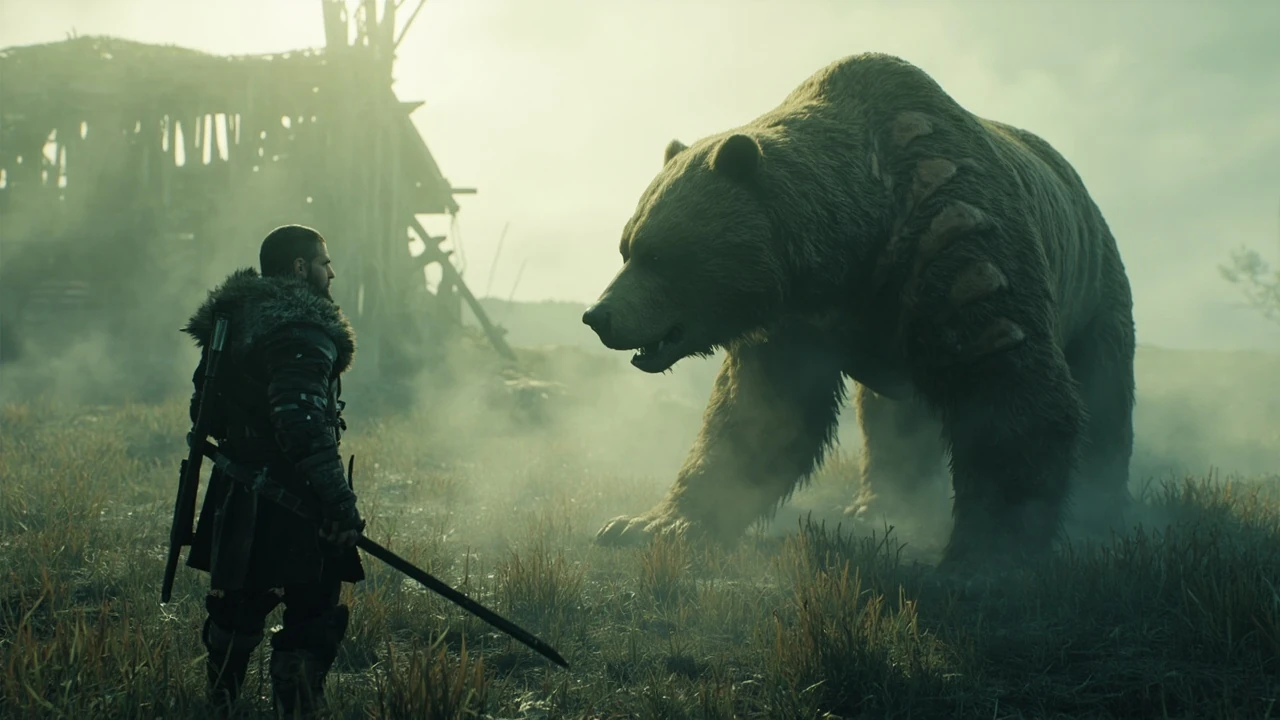
AC Valhalla legendary animals: encounter design, regional pacing, and what developers can learn from the hunt
Eivor’s journal is full of named enemies, but few of them shape the rhythm of Assassin’s Creed Valhalla the way the legendary animals do. Each beast is a hand-tuned encounter dropped into a specific region, and the surrounding scaffolding, including rumor notes, currency tokens, reward tier, and a giant trophy on the longhouse wall, turns a single combat into a multi-hour waypoint that pulls players across the map. For developers working on similar open-world systems, AC Valhalla legendary animals offer a compact case study in pacing, environmental storytelling, and reward design that fits inside a much larger production.
What counts as an AC Valhalla legendary animal
Legendary animals in Valhalla are a curated subset of the larger fauna simulation. They are not random spawns, and they are not the most numerous enemy type. They sit on top of an existing food chain that already includes zone-appropriate wolves, bears, lynxes, and large birds, and they mark a step up in challenge, story attention, and reward.
Players usually discover one of these animals by following a chain of rumor notes left in the world. The notes describe sightings, often pointing to a region the player has already visited for other content. When Eivor tracks the named beast and kills it, the encounter is recorded in the stable region overview and contributes to a mastery reward track. Each beast also drops specific crafting materials used in high-tier upgrades, which is what motivates a player to come back to hunts that the combat itself might already be finished with.
From a design standpoint, the category has three useful properties:
- They are hand-authored and hand-placed, not generated by a procedural system. A small team decided where each one lives, what environment surrounds it, and what triggers the encounter.
- They are exclusive. Once a named animal is killed, it does not respawn. This is a deliberate choice that turns the list into a finite checklist, similar to a trophy set in a sports game.
- They are tied to a higher reward curve than standard wildlife. A legendary animal provides materials that route into a parallel crafting system rather than the common leather and iron drops from normal fauna.
Those three properties, hand-authored, exclusive, and reward-tier-locked, are what separate a legendary animal from the rest of the world and what make the design worth studying.
How legendary animals are wired into the world
Each legendary animal is anchored to a specific region, usually Norway, England, Vinland, or Asgard, depending on the player’s progression. The placement is not arbitrary. Designers use a few repeatable patterns that map well to open-world pacing.
Region anchoring and pacing
The early legendary animals are placed in low-power regions and tuned to be killable with the gear the player has at the recommended power level for that area. By the time a player reaches a higher-power region, the animals there assume better stats, more aggressive movesets, and often a second phase that introduces a new attack type or environmental hazard. This is a standard open-world technique: the difficulty of optional content tracks the recommended gear, not the player’s current skill level.
For developers, the value is in the data structure. The animal is not just an enemy with a damage value. It is a data object that has a region tag, a power floor, a drop table, an entry in the codex, and a unique cinematic on death. Each field has a single owner in the database, which makes it possible to tune the encounter without touching the combat simulation that runs the wider fauna system.
Rumor notes as soft quest markers
Players do not find legendary animals on the compass. They find rumor notes, which are physical objects placed in the world. The notes usually describe the animal, give a rough region, and sometimes warn about the danger. They function as a soft quest marker that respects the player’s exploration. The encounter itself does not show a quest icon on the mini-map, so the player has to read the note, decide whether to track the animal, and use in-world navigation tools to find it.
This is one of the more interesting production choices. The system gives players a clear goal without telling them exactly where to go. For a developer working on similar optional content, the lesson is that rumor notes double as a form of indirect content gating: the player opts in to the hunt by picking up the note, and the encounter is then responsible for its own pacing.
Drop tables, currency, and reward loops
Each legendary animal contributes two distinct rewards. The first is a unique crafting material that feeds into a parallel upgrade track for the player’s settlement and for high-tier gear. The second is a tradable currency, sometimes called opals or tokens in community shorthand, that the player can use to buy cosmetic items or a small number of high-value resources from a specific vendor.
Splitting the reward into a fixed material and a flexible currency is a common live-service design trick. It allows the development team to keep the perceived value of each kill high while letting players with different goals use the reward in different ways. A player focused on settlement upgrades will use the materials; a player focused on cosmetics will use the currency. Both are valid paths and the system respects that.
Regional distribution and progression gates
The full list of legendary animals is split across the major regions, and the order in which a player is expected to encounter them matches the main story arc. The first few hunts are intentionally accessible. They teach the player the rumor-note workflow, the elite-creature combat loop, and the upgrade currency before the encounters become more complex.
The table below summarizes how the regional distribution maps to progression, using approximate power ranges as observed in player data. Power ranges in Valhalla are tied to the gear score curve, and the figures below reflect the typical range used by players rather than an official spec.
| Region | Approx. power range | Number of legendary animals | Notable design role |
|---|---|---|---|
| Norway prologue | Low | 2 | Teaches rumor note workflow and elite hunt loop |
| England (early) | Low to mid | 5-6 | Distributed across several low-power shires |
| England (mid) | Mid | 4-5 | Introduces second-phase attacks and environmental hazards |
| England (late) and DLC regions | High | 4-5 | Combines elite combat with story-gated access |
| Vinland and Asgard arcs | Story-gated | 2-3 | Used as cinematic or narrative beats rather than grind |
Two patterns stand out. First, the density of hunts in early England is high, which gives players a lot of optional content close to the recommended level. Second, the late-game hunts are fewer but more elaborate, which protects the time investment of players who have finished the bulk of the side content. The same shape shows up in the legendary animal systems in RDR2 legendary fish, where the early list is a teaching set and the later list requires story progress.
Encounter design patterns developers can reuse
The legendary animal system is small enough to read in a single sitting, and several of its design patterns show up in other open-world systems. The list below collects the ones that tend to be most useful when discussing this kind of content in production.
- One boss, one region, one reward. Each legendary animal is tied to a region, a drop table, and a single entry in the codex. This makes it easy to add, remove, or rebalance a hunt without touching adjacent systems.
- Soft quest markers through rumor notes. The player finds a physical note, not a quest icon. This keeps the world feeling authored while still providing a goal.
- Reward split between a fixed material and a flexible currency. This lets players route the reward toward their preferred progression path.
- Region-keyed power scaling. The encounter’s difficulty is tied to a power floor, not a global number. That keeps the optional content readable for both undergeared and overgeared players.
- Finite checklist. The animal does not respawn. The list is a closing activity, not a daily loop, which avoids the burnout pattern that some live-service systems run into.
For a producer, the same list also gives a clean checklist of risks. A team that copies this pattern needs a writer to author rumor notes, an environment team to hand-place the animals, a combat designer to balance the elite moveset, an economy designer to tune the drop tables, and a UI team to update the codex. The system is small in scope but touches almost every discipline in the studio.
How the hunt compares to standard open-world boss design
Most open-world games have at least two layers of combat content. The first is a wide field of low-cost enemies: bandits, wildlife, drones, and similar trash mobs. The second is a small set of named, hand-authored encounters. AC Valhalla legendary animals are a particularly clean example of the second layer because they are not part of the main story path, and they are not part of the standard fauna system either. They live in a dedicated layer above both.
This article looks at the system from a development perspective. It is not a boss guide. The goal is to read the encounter design, regional placement, and loot curve as a set of decisions a producer, designer, or technical artist can compare against their own open-world or live-service work. Where useful, the analysis also touches on comparable choices in other open-world games, including the legendary animal logic in Red Dead Redemption 2, which takes a different but related approach to the same problem.
This three-layer model is useful because each layer has its own production owner. Trash mobs are owned by encounter population tools and AI behavior trees. Named story bosses are owned by the narrative and level design teams. Legendary animals are owned by a small, focused content team that can iterate without blocking the main mission pipeline.
Compared to other open-world games, the system sits somewhere between a checklist activity and a hand-tuned boss. A checklist activity, like collectible hunts or simple score attacks, depends on volume. A hand-tuned boss depends on encounter craft. The legendary animal system in Valhalla leans on encounter craft but exposes the result as a checklist, which is a useful middle ground. Players who want the combat can fight the animal, and players who want the completion can track the list and skip the harder fights.
Combat and AI design choices for elite fauna
The AI behind a legendary animal is built on top of the standard fauna behavior tree, with several modifiers. The animal’s health pool is increased, its damage output is raised, and certain moves that are normally telegraphed become faster. Some animals also unlock a second phase: when their health drops below a threshold, the AI swaps to a more aggressive state, often with new attack patterns and brief invulnerability frames to give the player a clear beat to read the transition.
For technical artists and AI engineers, the interesting question is how the modifiers are attached. In most cases, the modifiers are not hard-coded into the animal. They are fields on a data object that the runtime reads when the encounter starts. The same bear class used for standard wildlife can become a legendary animal simply by setting a few flags, which keeps the asset count down and makes balance changes a one-line edit in the database.
The encounter also leans on environment design. The named animal is usually placed in a small arena, often a clearing, a ruin, or a section of a riverbank, with environmental cues that frame the fight. Snow and fog obscure the player’s view, tall grass hides the animal’s first approach, and rocks define where the player can stand safely. These are classic encounter design patterns, and they apply across genres, from boss rooms in action RPGs to skirmish maps in strategy games.
Loot, economy, and how the rewards feed the rest of the game
The reward system is the part of the legendary animal design that most directly affects pacing. Three reward types are worth thinking about.
- Crafting materials for high-tier gear. These materials are unique to a single animal and are required to unlock the best equipment upgrades. The player cannot bypass the hunts if they want the strongest gear.
- Currency tokens for a vendor. These are flexible and let the player route value toward cosmetics, settlement upgrades, or other resources depending on their priorities.
- Trophies and codex entries. These are zero-cost but high-perception rewards. The player sees their progress in the codex and on the longhouse wall, which is a soft motivator that does not affect balance.
The mix matters because each reward type targets a different kind of player. The material rewards target the optimizer who wants the strongest gear. The currency rewards target the player who wants choice and flexibility. The trophy and codex rewards target the completionist who values the visual record. The system supports all three at once without forcing a single playstyle, which is one of the reasons the legendary animal layer is well-received.
The table below summarizes how each reward type is intended to be used. It is a developer-side reading, not an official design document, and the columns describe common player behavior observed in the community.
| Reward type | Source | Primary use | Player profile it serves |
|---|---|---|---|
| Unique crafting material | Specific animal only | High-tier gear upgrade | Optimizer and progression player |
| Currency token | Each kill | Vendor purchases, cosmetics | Player who wants flexible choice |
| Trophy / codex entry | Each kill | Longhouse wall and bestiary | Completionist and visual collector |
| Standard wildlife drop | All fauna | Common crafting and selling | All players, low priority |
From a production standpoint, the interesting trick is that the unique crafting material is the only reward that is not duplicated by other content. Everything else can be earned through other activities, which means the legendary animal layer is not required for the player to make progress. It is required only for the very top end of the upgrade curve, which keeps the system optional while still feeling important.
Where the system strains and where it ages well
No system is without trade-offs. AC Valhalla legendary animals are good at being optional, region-locked, and reward-focused. They are less good at being surprise content. Once a player has read the first rumor note, the pattern is fully visible: a note leads to a fight, the fight drops a material, the material feeds a crafting tree, and the codex is updated. A player who enjoys the system once may not feel a second discovery in a new region.
There are also a few practical issues a developer reading the system should be aware of. The first is that some animals can be very hard to find, because the rumor notes give approximate locations and the actual spawn can be hundreds of meters away. A team thinking about copying the system should consider whether their navigation tools are robust enough to support that kind of soft quest marker. The second is that the combat moveset, while strong, is reused across multiple animals. The third is that the second-phase transition, which is a key dramatic moment, can be missed if the player is not paying attention to the health bar.
On the other hand, the system ages well for two reasons. The finite checklist means the player never runs out of new hunts within a single playthrough, and the reward split keeps the loot relevant even for players who skip the optional story arcs. A team that wants the same longevity in their own game should treat the checklist as a closing activity and avoid converting it into a daily or weekly loop, which is a common mistake in live-service design.
What this means for open-world production planning
For a producer or lead designer, the legendary animal system is a useful reference because it is small, well-scoped, and observable. It can be planned in a single milestone without affecting the main story, and it can be balanced independently from the rest of the fauna system. The risks are also small: a missed hunt is a small content gap, not a story blocker, and a balance error affects an optional fight rather than a critical mission.
There are a few practical production checks that follow naturally from the design.
- Make sure the data object for a legendary animal is owned by a single team, with a clear schema for region, power floor, drop table, codex entry, and second-phase flag.
- Author rumor notes early in the milestone, because they are the entry point for the player and they influence how the content is discovered.
- Reserve a small environmental art budget for the encounter arenas, since the framing of the fight is part of the value.
- Plan a codex and a longhouse wall as the visible completion surface, because the system needs a clear visual record of progress.
- Tune the reward split so that the unique material is the only path to the highest upgrade, and the currency is a parallel path for players who want choice.
A team working on a similar system should also be ready to support it with QA coverage. Legendary animals are not stress tests, but they are a common source of edge-case bugs: spawn failures, missing rumor notes, incorrect drop tables, and codex entries that do not update. A short QA pass on the full list of hunts before release is usually enough to catch most of these issues.
How the system compares to similar features in other open-world games
Other open-world games have similar optional fauna systems, and the comparison is useful for developers deciding how to design their own. The table below is a high-level read of a few related systems, focusing on structure rather than lore.
| Game | Optional fauna system | Discovery method | Reward structure | Respawn behavior |
|---|---|---|---|---|
| AC Valhalla | Legendary animals | Rumor notes in the world | Unique material plus currency and codex | Finite, does not respawn |
| Red Dead Redemption 2 | Legendary animals and fish | Stranger missions and in-world clues | Unique material plus crafting | Finite, tied to a single hunter |
| The Witcher 3 | Contract monsters | Notice boards and NPCs | Loot plus alchemy materials | Respawns based on game state |
| Horizon Zero Dawn | Cauldrons and machine sites | Map markers and quest icons | Override unlocks plus lore | One-time per save |
The shared structure is striking. All four systems use a hand-authored set of optional encounters, a soft discovery method, and a reward that is mostly unique to that encounter. The differences are in the discovery method and in the respawn behavior. Valhalla’s rumor notes are the most narrative-driven of the four, which fits the broader storytelling ambitions of the game. A studio should pick the discovery method that matches their tone: notice boards for a more systemic feel, rumor notes for a more authored feel, and map markers for a more action-driven feel.
Frequently asked questions
How many AC Valhalla legendary animals are there in total?
The base game includes a curated set of legendary animals spread across Norway, England, and a small number of story-gated arcs, with additional entries added by some DLC regions. The exact count varies slightly by edition, and the best practice is to treat the codex entry as the source of truth, since it is updated with patches. The list is finite: once an animal is killed, it does not respawn, so the system functions as a closing activity rather than a grind.
Do legendary animals scale to the player’s level?
They scale to a region-based power range rather than to the player’s exact level. The encounter uses a power floor tied to the region, so an undergeared player will find the fight difficult and an overgeared player will find it manageable but not trivial. The second-phase attack pattern is not affected by gear score, so the encounter keeps a consistent dramatic shape across power levels.
Where do players usually discover their first legendary animal?
Most players find the first rumor note during the early game, either in Norway or in the first region of England they visit. The note is placed close to a fast-travel point or a main road, which is a deliberate onboarding choice. Players who skip the early notes will still encounter the system later, but the first discovery is usually a player-driven event rather than a story-gated one.
Are the rewards worth tracking down every legendary animal?
For players who want the strongest gear, the unique crafting material from each animal is required for the highest upgrade tier, so the hunts are worth doing. For players who care less about gear, the currency and codex rewards still make the system worthwhile, especially if they enjoy the combat. Players who dislike the elite combat can usually skip the hardest animals without breaking the rest of the game.
How does the legendary animal system compare to similar systems in other open-world games?
It is structurally similar to the legendary animal and fish systems in Red Dead Redemption 2, the contract monster system in The Witcher 3, and the machine site system in the Horizon series. All four use a curated list, soft discovery, and unique rewards. The main difference is the discovery method: Valhalla leans on rumor notes, which feels more narrative-driven than a notice board or a map marker.
Can legendary animals be missed permanently?
It is possible to skip a legendary animal if the player ignores the rumor note and never returns to the area, and the codex entry will remain empty for that region. The fix is to revisit the region and look for the rumor note, since the animal does not move once the note is placed. Some animals in story-gated arcs are only available during specific missions, so a player who skips those missions will need a later playthrough or a save reload to pick up the hunt.
What should developers take from the legendary animal system?
The most reusable ideas are the soft quest markers, the reward split between a fixed material and a flexible currency, the region-keyed power scaling, and the finite checklist structure. A team that copies these patterns should also plan for the small set of risks: rumor notes that are too vague, reused movesets that feel samey, and second-phase transitions that players miss. None of these risks are showstoppers, but they are common in similar systems.
Is the legendary animal system accessible to players who avoid open-world combat?
It is not designed for players who avoid combat entirely. The fights are mandatory once the animal is found, and there is no stealth or pacifist option. Players who want the rewards without the combat will need to use a lower difficulty setting or accept that they will skip part of the optional content. The trophy and codex rewards are still visible, which keeps the completion loop intact even for players who do not finish every hunt.
How does the system affect the overall pacing of a Valhalla playthrough?
For most players, the legendary animal layer adds a few hours of optional content that is spread across the main regions. It does not interrupt the story arc, but it does add a reason to return to regions that are otherwise finished. The pacing effect is similar to a side activity in a live-service game, except the list is finite, so the system does not extend the playthrough indefinitely.
Does the system work the same way in DLC regions?
It works the same way at the structural level, but the placement and reward tuning are adjusted for the higher power range. The encounter design is also a little more elaborate, with more environmental hazard and a stronger second phase. Players who are familiar with the base game system will find the DLC version familiar, but the fights themselves are tuned to feel like a step up rather than a repeat.