October 28, 2026 / UX and Accessibility
The tech interactive: a working overview for designers and teams
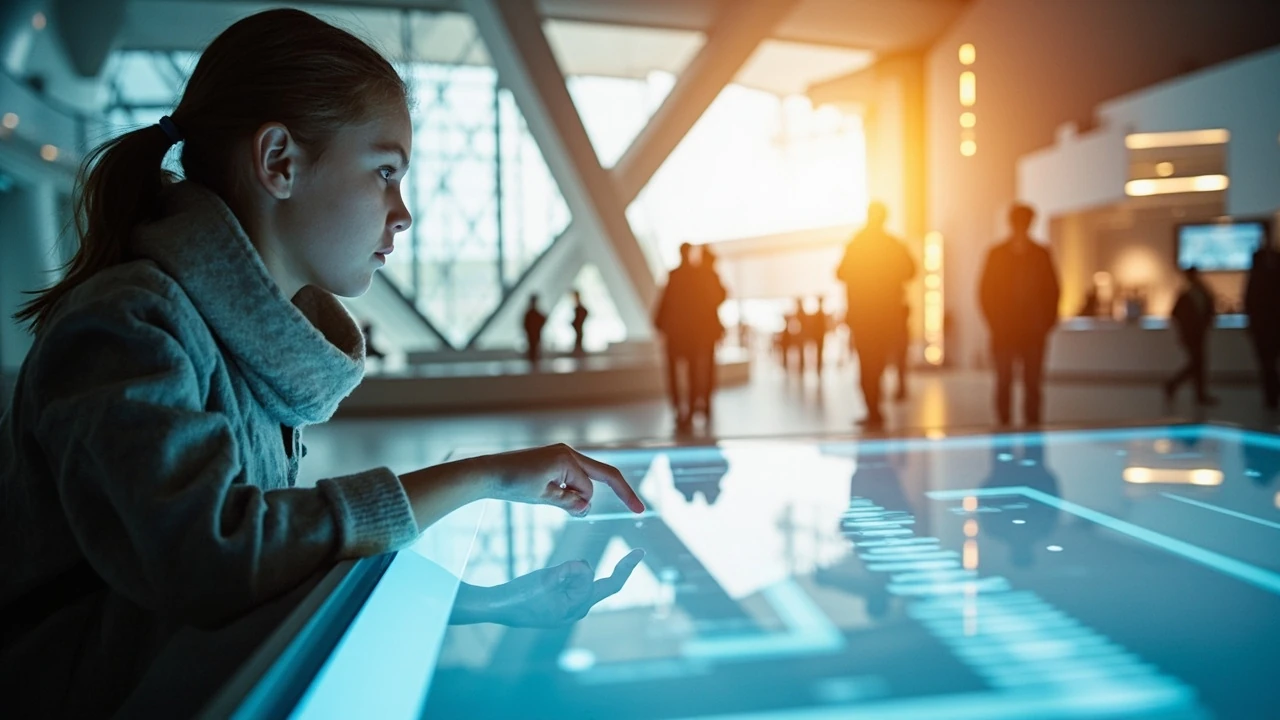
The tech interactive: what the San Jose museum actually offers visitors
Most visitors arrive at the tech interactive with a rough picture in mind: a big warehouse near downtown San Jose filled with buttons, screens, and excited children. The reality is a 132,000-square-foot working laboratory for science and technology learning, with more than 100 hands-on exhibits and a serious education team behind every display. Understanding the scope, the exhibit philosophy, and the practical logistics helps families, teachers, and first-time visitors get far more out of a day at the museum than a casual walkthrough.
This overview covers what the tech interactive actually is, how its exhibits are designed, what a typical visit looks like, how schools use the space, and what is worth knowing before you book a ticket. It also links out to the broader topics of visual identity, web strategy, and accessibility where they intersect with how a large public-facing institution communicates and designs its spaces.
What the tech interactive is, in plain terms
The tech interactive is a nonprofit science and technology center located at 201 South Market Street in San Jose, California, in the SoFA district just south of Plaza de César Chávez. The building is the former home of the San Jose Convention Center, which the city traded to the museum in a long-term lease arrangement that has shaped the institution’s scale and atmosphere ever since.
Two things set the tech interactive apart from a typical children’s museum. First, it is run as a hands-on laboratory rather than a gallery of finished exhibits. Many of the displays are prototypes, works-in-progress, or pieces built by the museum’s own design team. Second, the institution operates as a public benefit, with formal programs for school groups, a sizeable volunteer corps, and explicit learning goals tied to science, technology, engineering, and math. That framing shows up in the way exhibits are signed, the way docents are trained, and the way the building itself is used.
How the building is organized
The interior is loosely divided into themed zones, each anchored by a few signature exhibits. Most visitors pass through the same general sequence, but the museum is designed so that you can stay in one zone for an hour and still have a useful experience. Knowing the rough layout helps families with mixed ages avoid long walks and helps first-time visitors plan their day.
| Zone | Typical focus | Good for | Notes for visitors |
|---|---|---|---|
| Lower level: Social Robots and innovation lab | Human-robot interaction, AI demonstrations, and rotating prototypes | Older children, teens, and adults interested in current research | Some exhibits rotate every few months; check the day’s schedule at the front desk |
| Main floor: bio, genetics, and life sciences | DNA, anatomy, and biological engineering | Mixed-age families and school groups | Allow 45-90 minutes; some stations require assistance from a docent |
| Main floor: physics, motion, and engineering | Forces, simple machines, and engineering challenges | Younger children and hands-on learners | Often the noisiest area; ear protection can help sensitive kids |
| Upper level: earth, environment, and space | Earth systems, water, and space science | School groups and curious adults | Includes an outdoor observation area when weather allows |
| Hangar floor: the IMAX dome and event space | Large-format films, traveling exhibitions, and after-hours events | Families and adult programs | IMAX tickets are usually sold separately from general admission |
How the exhibits are actually designed
Most of the working exhibits at the tech interactive are built in-house, in a dedicated fabrication shop attached to the main floor. The design process is unusually open for a public museum. Designers, educators, and visiting researchers prototype an idea, observe how visitors use it, and then iterate. A finished piece you walk past in the morning may be rebuilt by the afternoon.
The design team uses a few consistent principles, and they are worth knowing about because they show up in everything from signage to the way the floor is laid out:
- Low labels, simple prompts. Text is written for a child to read alone, and the prompts describe an action rather than a fact. A sign reads “Try changing the weight” instead of “This exhibit demonstrates the relationship between mass and inertia.”
- Open-ended outcomes. Most exhibits have several valid responses. The goal is to keep the visitor trying things, not to push them toward a single right answer.
- Visible failure. Exhibits are designed so that an experiment can fail in obvious ways. A bridge breaks, a circuit goes dark, a robot misses its target. The failure is part of the lesson.
- Accessibility by default. Reach heights, contrast, and seating are considered from the first sketch, not added later. The same exhibit should work for a six-year-old, a grandparent with a cane, and a wheelchair user.
What a typical visit looks like
A reasonable first visit for a family with mixed ages runs about three hours. That is enough to engage with most of the major zones without the day feeling rushed. Visitors who want to attend a lab program, watch an IMAX film, or work through a school-style challenge can comfortably spend five hours on site. To place this section in context, the Tech overview offers a concise background reference.
| Length of visit | Realistic goal | What you will likely miss |
|---|---|---|
| 1.5 hours | Hit one or two zones in depth | IMAX, most labs, the outdoor area |
| 3 hours | Cover the main floor thoroughly, catch one lab demo | Upper level in depth, IMAX, special programs |
| 5 hours | See everything active, attend one film or lab | Most adult-only after-hours events |
| Full day | Deep exploration plus a workshop or special program | Nothing of note; pace yourself |
Families with very young children often find that the lower level and the main-floor physics zone hold attention longest. Teenagers tend to gravitate toward the social robots, the bio lab demonstrations, and any temporary exhibit on the hangar floor. Adults visiting without children usually spend the most time in the engineering and design zones, and at the maker-style workshops when one is running.
Practical planning before you go
A few decisions made the night before make a noticeable difference to a day at the tech interactive. The museum runs a paid admission model, but membership, school partnerships, and free or reduced entry days exist for local residents. Parking is in nearby garages and on the street, and the closest light rail stop is a short walk.
- Book timed-entry tickets online. Walk-up availability is not guaranteed on weekends or during school holidays.
- Check the daily schedule for lab demonstrations, IMAX showtimes, and any age-restricted workshops. Some programs require advance sign-up and a small fee.
- Bring a water bottle. The building is large, and refilling stations are clearly marked near each entrance.
- Wear layers. The hangar floor runs cool in the morning and warmer by midday.
- Plan food. The on-site café works, but the surrounding SoFA district has more options within a short walk.
How the tech interactive supports schools and groups
About a third of the museum’s annual attendance comes from school and youth groups, and that part of the operation is the reason the institution is structured the way it is. The tech interactive runs structured field trip programs aligned to California science standards, with pre-visit materials for teachers and post-visit activities that connect back to classroom work.
Groups typically move through the museum in two phases. The first phase is a guided lab experience led by a museum educator, usually 45-60 minutes, focused on a single topic such as genetics, simple machines, or coding. The second phase is open exhibit time, where students explore at their own pace and complete a worksheet or a design challenge.
| Program type | Typical length | Group size | Cost model |
|---|---|---|---|
| Self-guided field trip | 2-3 hours | 10-120 students | Reduced per-student admission; chaperone ratios required |
| Guided lab program | Half day | Up to 32 students per lab | Lab fee plus admission; books out months in advance |
| After-school and community program | 90 minutes weekly | 10-20 students | Sliding scale; many sessions free |
| Teacher professional development | 1-2 days | 20-40 educators | Often grant-funded; fees vary |
What the design choices tell you about a public science space
The way the tech interactive is built and signed carries over into a wider set of decisions about how a public-facing organization should present itself. Three design lessons are worth pulling out for anyone who works in branding, UX, or physical space design.
First, the museum treats its visual identity as part of the experience, not a separate layer. Wayfinding uses the same color system, typography, and icon style as the website, the printed materials, and the donor wall. There is no visible “marketing” voice. A useful reference for this kind of work is a guide to building a visual identity that holds up across channels and surfaces, since the same logic that keeps a museum’s signs consistent also keeps a brand consistent across print, web, and environment.
Second, the museum’s website is treated as a real planning tool rather than a brochure. Visitors can check exhibit availability, lab times, and crowd levels before they arrive. That kind of website strategy that plans a site to actually perform matters more for cultural institutions than for most commercial sites, because the cost of a bad first visit is much higher than the cost of a missed sale. Another relevant reference is the interactive offers free easy activities, which adds context without changing the practical guidance here.
Third, accessibility is built into the spatial design. Ramps, seating, and clear floor space are not added at the end. They shape the layout. That approach aligns with the broader practice of inclusive design for digital products, but the museum applies the same logic to a physical building, which is harder to retrofit than a website.
Comparing the tech interactive to similar institutions
Visitors who know other science museums often try to slot the tech interactive into a familiar category. It is closer to a working lab than to a finished museum, and that comparison is more useful than the standard “children’s museum” framing.
| Institution | Primary model | Build approach | Audience focus |
|---|---|---|---|
| The tech interactive, San Jose | Hands-on lab with rotating prototypes | In-house fabrication, public iteration | Family and school groups, with adult programs |
| Exploratorium, San Francisco | Perceptual and physical science exhibits | Mixed; many exhibits built in-house, some traveling | Family and adult visitors |
| California Academy of Sciences, San Francisco | Aquarium, planetarium, and natural history under one roof | Capital projects and traveling exhibitions | Family and tourist audiences |
| The Lawrence Hall of Science, Berkeley | University-affiliated public science center | Curriculum-driven exhibit design | School groups and families |
The pattern that emerges is that the tech interactive sits in a small group of science centers that build their own exhibits as a core practice, rather than renting or purchasing finished ones. That choice has consequences for visitors: you may see a work in progress, and the museum’s offerings can shift quickly as new prototypes are tested and retired.
What is worth doing on a first visit
A first visit to the tech interactive benefits from a small plan, not a packed schedule. Three or four anchor activities are usually enough to make the day feel complete without burning out younger visitors.
- Pick one signature exhibit and spend at least twenty minutes there. The social robots area and the bio lab demonstrations are good candidates.
- Attend at least one scheduled lab or demonstration. The daily schedule is posted at the entrance and on the website.
- Sit down for an IMAX film if time allows. The dome is a useful pause in the middle of a long visit, especially for families with younger children who need a break from the floor.
- Visit the maker space if one is running. The drop-in sessions let visitors take a small project home, which tends to anchor the experience after they leave.
Limits and trade-offs to be aware of
No overview of the tech interactive would be complete without a few honest limitations. The building is large and open, which means it can be loud at peak times, especially on weekends. Some exhibits require a minimum height or reading level that excludes the youngest visitors. The hangar floor’s temporary exhibitions are excellent, but they can change the layout of the day without warning, so a printed map from the entrance is worth picking up.
There is also a real access question. The museum is committed to inclusion, but the building is a converted convention center, and some areas of the upper level are reached only by stairs or a single elevator. Visitors with mobility concerns should call ahead to confirm the day’s accessibility setup, especially if a school group is occupying the elevator for a transition between floors.
A short list of related places and resources
Most visitors to the tech interactive pair the museum with one or two other stops in the SoFA district or downtown San Jose. A few combinations that work well for first-time visitors:
- Plaza de César Chávez for a short outdoor break between sessions.
- The San Jose Museum of Art, two blocks north, for a quieter experience that contrasts with the museum’s energy.
- Children’s Discovery Museum, across the highway, for families with very young children who need a slower pace.
- Local food options along South First Street, especially for groups who want a sit-down meal after a long visit.
Frequently asked questions
Where is the tech interactive located?
The tech interactive is at 201 South Market Street in San Jose, California, in the SoFA district just south of Plaza de César Chávez. The closest light rail station is a short walk, and several VTA bus lines stop within a block of the entrance.
How long does a visit to the tech interactive usually take?
Most first-time visitors spend about three hours on site. Families attending an IMAX film and a guided lab can easily spend five hours, and members or repeat visitors sometimes spend a full day working through the rotating exhibits and the maker space.
Do I need to buy tickets in advance for the tech interactive?
Timed-entry tickets are strongly recommended, especially for weekends, school holidays, and any day a special exhibition is running. Walk-up availability is not guaranteed, and the museum’s capacity is limited by the building’s fire code and by the size of the lab rooms.
Is the tech interactive good for very young children?
Many exhibits work for children as young as three, and the main-floor physics zone is a reliable choice for that age. The lower-level social robots and the upper-level environmental exhibits tend to land better for children aged seven and up, and the lab programs are usually aimed at school-age visitors.
What is the difference between the tech interactive and a traditional children’s museum?
A traditional children’s museum is typically a finished collection of exhibits built to last. The tech interactive operates more like a working lab, with many exhibits designed, prototyped, and rebuilt in-house. Visitors can expect to see works in progress and to encounter different exhibits on repeat visits.
Does the tech interactive offer programs for adults?
Yes. The museum runs evening programs, design workshops, and after-hours events aimed at adult visitors, including some that are paired with the IMAX film schedule. The program calendar is published on the museum’s website and tends to fill up a few weeks in advance.
Can the tech interactive accommodate large school groups?
Yes. The museum runs structured field trip programs for groups of up to about 120 students, with a mix of guided lab time and open exhibit time. Larger groups are usually split across the day or across floors, and reservations are required well in advance.
What should I bring to the tech interactive?
A water bottle, comfortable shoes, and a light layer are the three most useful items. Strollers are welcome, and a small backpack for personal items is enough for most visitors. Lockers are available near the entrance for larger bags.
Is the tech interactive accessible for visitors with disabilities?
The museum is designed for accessibility, with ramps, clear floor space, and seating throughout most of the building. Visitors with specific needs, especially around elevator access, mobility, or sensory considerations, are encouraged to call ahead so staff can confirm the day’s setup and any scheduled programs.
Are food and drinks available at the tech interactive?
There is an on-site café, and visitors may also bring small snacks and water bottles. The SoFA district has a wide range of restaurants within a short walk, which is useful for groups who want to leave the building for lunch and return in the afternoon.