September 10, 2026 / Studio Practice
GTRacing gaming chair: a buyer’s guide to fit, features, and value
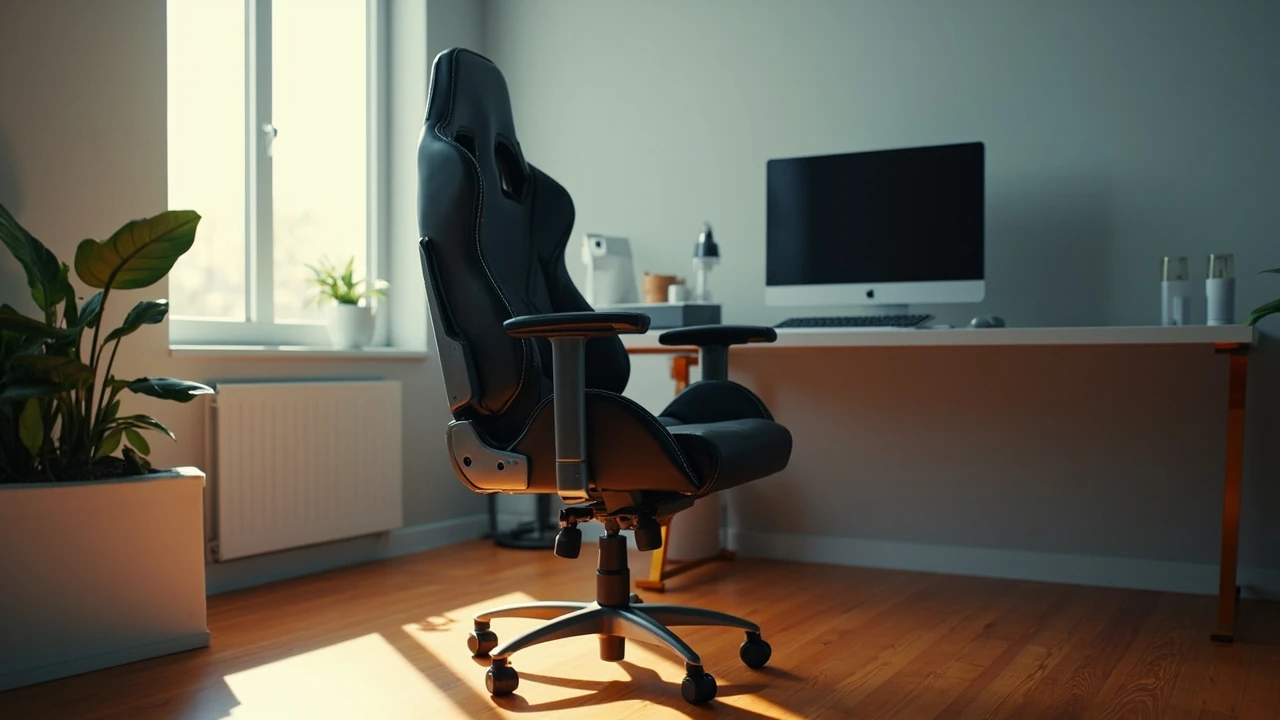
GTRacing gaming chair: a practical buyer’s guide for real working and gaming setups
A long streaming session, a six-hour edit, a back-to-back meeting day, and the chair is still the piece of hardware that decides whether the day ends well. The GTRacing gaming chair line has become a familiar sight in home offices and bedroom setups, partly because the price tags stay in reach for first-time buyers, and partly because the racing-style silhouette fits the visual language of a streaming channel or a content studio. The actual decision, though, is less about the look and more about fit, foam density, recline range, lumbar support, and whether the included accessories solve a real problem in the room it will sit in. This guide walks through those decisions in the order a careful buyer should make them, then compares GTRacing with the mainstream alternatives so the trade-offs are visible before the box arrives.
Because the brand covers several product tiers rather than a single model, the useful question is which GTRacing gaming chair to pick, not whether the brand is worth considering at all. The brand’s positioning sits below premium ergonomic office chairs such as the Herman Miller Aeron or Steelcase Leap on materials and adjustability, and well above generic unbranded bucket seats in build consistency. The sweet spot is a buyer who wants a recognizable racing-style chair with reasonable lumbar support, footrest, and Bluetooth audio on some models, without paying desk-chair money for a true task chair.
What the GTRacing line actually covers
GTRacing sells a family of chairs rather than one product. The common thread is a high-backed racing-style shell, a tilt-and-recline mechanism, a headrest pillow, and a lumbar pillow. Beyond that, the differences live in the model names and the feature bundle that ships with each one.
The base models focus on essentials: PU leather upholstery, a metal or reinforced nylon frame, a 150-170 kg load rating depending on variant, 360-degree swivel, and tilt lock. Mid-tier models add a footrest, wider seats, taller backrests, and sometimes 4D armrests. Top-tier SKUs, often labelled Pro or with suffixes like GT890, GT099, or GT909, add retractable footrests, Bluetooth speakers in the backrest, RGB underglow lighting, and sometimes a console-style control panel on the side.
The point for a buyer is to read the model number as a feature bundle, not as a quality grade in itself. Two SKUs at the same price can differ widely in included accessories, which is why a side-by-side comparison helps before paying.
Who the GTRacing gaming chair is for
The GTRacing gaming chair is a reasonable match for several specific reader situations, and a poor match for others. Being clear about the intended use avoids the common mistake of buying a racing-style chair for desk work that needs a true task chair, or buying a true task chair for a setup that wants a reclined, media-friendly posture.
- First-time chair buyers who want a recognizable look and a complete accessory bundle out of the box.
- Streamers and content creators who want a chair that reads well on camera, with optional footrest and audio features.
- Console and living-room gamers who sit further back from a screen and use a reclined posture for long sessions.
- Tall or broad users who have been priced out of premium brands but still need a wide seat, tall backrest, and a 150 kg+ weight rating.
- Studios and shared spaces that need a consistent, stackable chair silhouette across multiple workstations.
The chair is a weaker match for users who sit eight or more hours per day typing at a fixed workstation, who need fine-tuned lumbar adjustment rather than a pillow, or who want breathable mesh upholstery in a warm room. For those situations, an ergonomic task chair is the better tool, even if it costs more.
Fit and sizing: the decision that matters most
Fit is where most GTRacing returns and complaints come from, because the spec sheet is read as a single number and the chair arrives in a single size, while the buyer population ranges from 150 cm to 200 cm tall. Skipping the fit check is the single most expensive mistake in this category.
| User profile | Recommended seat width | Recommended backrest height | What to check before ordering |
|---|---|---|---|
| Petite user, 150-165 cm | Under 50 cm seat width | Around 80 cm backrest | Headrest position, armrest height, footrest clearance if included |
| Average user, 165-180 cm | 50-55 cm seat width | 82-86 cm backrest | Lumbar pillow placement, armrest width, recline lock range |
| Tall user, 180-195 cm | 55+ cm seat width | 88-92 cm backrest | Headrest support without overhang, head pillow height, footrest length |
| Broad user, 100+ kg | Wide seat with reinforced base | Full backrest with no flex | Class 4 gas lift certification, weight rating above user weight, 5-star base diameter |
The two measurements that catch buyers out are seat depth and headrest height. Seat depth that is too long pushes the user forward, so the lower back loses contact with the lumbar pillow. Headrest height that is too low leaves the head unsupported when the chair is reclined, which turns long sessions into neck strain. The fix is not a different chair, it is reading the dimensions rather than the photos.
Build quality: frame, foam, and upholstery
A racing-style chair is essentially a steel skeleton wrapped in foam, wrapped in upholstery, mounted on a five-star base. Each layer has a real choice behind it, and each one ages differently.
The frame in GTRacing chairs is typically a steel tube skeleton for the backrest, paired with a plywood or steel seat pan. Mid- and top-tier models use a thicker gauge steel that resists flex under recline pressure. Budget models use a lighter steel that can develop micro-flex over years, especially in tall backrests. The visible test is a side-load push on the backrest; a quality frame returns to neutral without a creak.
The foam is the most visible cost decision. Cold-cured, high-density foam keeps its shape across years of use. Lower-density foam feels plush on day one and visibly sags by month eighteen in heavy use. GTRacing tends to sit in the middle of the foam range, which is the realistic compromise at the price point. The honest expectation is a useful life of three to five years for a daily user, longer for occasional use.
Upholstery is usually PU leather, with some SKUs offering real leather or fabric. PU leather wipes clean and reads well on camera, but it does not breathe. In a warm room or a summer climate, the back and thighs sweat against PU. Mesh or fabric covers handle heat better, but cost more and read less obviously as a gaming chair on stream.
Ergonomics: lumbar, recline, and armrests
Ergonomics is where the racing-style chair design hits its natural ceiling. The category is built for an upright-to-reclined posture with a thick lumbar pillow, not for the fine forward-lean posture that a typist holds for eight hours. Knowing the trade-off ahead of time avoids blaming the chair for a posture it was not designed to support.
Lumbar support comes from a separate pillow rather than an adjustable mechanism. The pillow is held by straps, sits in the small of the back, and can be raised or lowered by a few centimetres. That range is enough for most users, but not enough for someone with a pronounced lumbar curve or a diagnosed back condition. For those users, an adjustable lumbar system, found in ergonomic task chairs, is the more honest solution.
Recline on GTRacing models typically ranges from roughly 90 to 155 degrees, with a tilt lock and a tension knob. The wide range is useful for leaning back during cutscenes, watching media, or short rests. The locking positions are usually two or three, not a continuous range, which means a user who wants a precise angle will need to test the feel rather than dial in an exact number.
Armrests vary by SKU. Base models use fixed or 1D armrests that only move up and down. Mid-tier models add 2D or 3D armrests that pivot, slide, and rotate. Top-tier SKUs add 4D armrests that move in every useful direction. The honest rule is that a user who types for a living should not accept anything less than 3D, because fixed armrests force the shoulders into a single height and that shows up as upper-back pain within a week.
Accessories that change the day-to-day feel
Several GTRacing accessories are not decorative. They change how the chair is used, and they are worth choosing deliberately.
- Retractable footrest: useful for reclined media watching and for taking pressure off the lower back during long sessions. Less useful for users who type upright, because the footrest pushes the seat into a recline that is hard to work in.
- Bluetooth speakers in the backrest: convenient for casual console gaming in a bedroom, redundant for users who already wear a headset or who have a separate speaker system at the desk.
- RGB underglow: a visual feature, not an ergonomic one. Worth choosing only if the chair will be on camera or if the buyer already has a matching RGB setup.
- Lumbar and headrest pillows: standard on most SKUs, and usually removable. Worth keeping for the first month, then adjusting or removing as the foam breaks in.
- 5-star base and casters: small choice, real consequence. Rubber casters protect a hardwood floor; PU casters are quieter on carpet. The wrong caster scratches a floor within weeks.
The right way to choose accessories is to ask what the chair will actually be used for. A reclined media posture rewards a footrest. A typing posture rewards better armrests. A streaming posture rewards a clean backrest silhouette and, optionally, audio. Trying to do all three with a single chair usually means compromising each one.
How the GTRacing gaming chair compares to its real alternatives
The racing-style chair market is crowded, and the differences between brands are smaller than the marketing suggests. A comparison that focuses on real buyer decisions is more useful than a feature checklist.
| Decision | GTRacing gaming chair | Premium ergonomic task chair | Generic racing-style chair | Mesh task chair |
|---|---|---|---|---|
| Typical price band | Entry to mid-range | High to premium | Budget to entry | Mid to high |
| Posture supported | Upright to reclined | Forward-leaning work | Upright to reclined | Upright to slightly reclined |
| Lumbar support | Pillow-based | Adjustable mechanism | Pillow, often thin | Contoured mesh |
| Camera-friendly silhouette | Yes | No | Yes, varied build | Rarely |
| Heat management | Limited (PU leather) | Good (mesh back) | Limited | Strong |
| Daily eight-hour use | Acceptable with breaks | Designed for it | Compromising | Designed for it |
The honest read of the table is that each option wins in a specific situation. For a setup that mixes gaming, streaming, and light work in a casual environment, a GTRacing gaming chair is a sensible middle ground. For a setup that is primarily an eight-hour desk job, the premium ergonomic category wins on posture support and lasts longer. For a setup that is mostly a bedroom console station, the generic racing-style category is often good enough, because the lower price covers the shorter expected life.
What to check before clicking order
A short pre-purchase checklist catches most of the regret cases. The list is short on purpose, because long checklists are ignored.
- Measure the user’s height and weight, then check the SKU’s weight rating and seat dimensions, not the model name.
- Confirm the lumbar pillow height is adjustable, and that the headrest pillow is detachable.
- Decide whether the footrest will be used. If not, a cheaper SKU without a footrest is the better buy.
- Decide whether Bluetooth audio and RGB matter. If the user wears a headset and has no RGB setup, both features are wasted budget.
- Check the caster type against the floor. A hardwood floor needs rubber casters; carpet accepts PU casters.
- Check the warranty terms. A 12-month warranty on moving parts is the realistic floor; longer is a positive signal about the build.
- Plan assembly time. Most GTRacing chairs ship in a single box, weigh 20-25 kg, and take 30-60 minutes to build with the included tools.
Doing the checklist in this order cuts through the marketing copy and forces the question that actually decides satisfaction: which posture will the chair support, and for how long each day.
Setup and break-in: the first two weeks
Most buyer complaints arrive in the first two weeks, and most of them are break-in issues rather than defects. A simple routine prevents the early-life frustration.
On day one, the foam is at its firmest, the recline lock is tight, and the lumbar pillow is sitting where the factory placed it. None of those positions are necessarily the right ones. The right first week is to adjust the lumbar pillow height to the small of the back, slide the armrests until the forearms are level with the desk, and recline the chair through its full range to find a comfortable lock position for both work and media.
In week two, the foam softens by a small amount, the casters settle into the floor, and the chair finds its working position. By the end of week two, the chair should feel neutral rather than novel. If it does not, the cause is usually a fit problem, not a quality problem, and that is the right time to return or exchange rather than to live with a bad fit.
Common mistakes when buying a GTRacing gaming chair
The same handful of mistakes show up in user reviews, and they are all avoidable.
- Choosing by looks rather than by dimensions, then discovering the seat is too deep or the backrest is too short.
- Paying for a footrest, RGB, and Bluetooth audio that will never be used, when a simpler SKU at a lower price would have been the better purchase.
- Skipping caster type and scratching a hardwood floor within weeks of delivery.
- Trusting a single photo rather than the spec sheet, then receiving a chair that looks similar but feels completely different in the room.
- Treating the chair as a long-term work chair when the actual use is two to three hours a day, which over-specs the budget without adding real benefit.
The pattern across these mistakes is the same: the marketing copy sells a lifestyle, but the decision belongs to the dimensions and the room.
When to choose a different chair entirely
There are situations where a GTRacing gaming chair is the wrong category, not the wrong model. Recognising those situations saves money and prevents a frustrating purchase.
If the daily use is eight or more hours of typing, an ergonomic task chair with adjustable lumbar and a forward-tilt range is the right tool. The racing-style silhouette, the PU leather, and the pillow-based lumbar are compromises that show up as fatigue in a long typing day. If the room runs hot, mesh upholstery is a better choice than PU leather, because the back and thighs will sweat against a non-breathable cover during a long session. If the user has a diagnosed back condition, the priority is an adjustable lumbar system and a forward-tilt range, both of which are ergonomic task chair features, not racing-style chair features. If the user shares the chair with several people of different heights, a mesh task chair with a wide height and depth range is more accommodating than a fixed racing-style shell.
None of this argues against GTRacing as a brand. It argues for matching the chair to the actual work, rather than matching the chair to the visual language of a setup.
A short buyer’s checklist you can keep
The simplest way to keep the decision clear is to keep a short, physical list next to the screen during the order. The list does not need to be long. It needs to be honest about the room, the user, and the day.
- User height and weight matched to the SKU spec sheet.
- Daily hours of use matched to the chair’s intended posture.
- Floor type matched to caster material.
- Accessories chosen by what will actually be used, not by what looks good on a product page.
- Warranty and return window confirmed before payment.
If the list passes, the chair is the right buy. If any of those points fail, the right move is a different SKU or a different category, not a discount code.
Where GTRacing fits in a studio or office
For a small studio, content space, or shared office, a GTRacing gaming chair is a practical fit when the room needs a chair that reads on camera, supports a reclined posture for review sessions, and does not push the equipment budget into ergonomic territory. For a daily desk job, the same studio is better served by an ergonomic task chair, because the posture profile of a work day is different from the posture profile of a review or stream.
The chair also matters when a studio is being designed for a specific audience, such as a content creation room or a shared editing bay. The visual language, the posture supported, and the way the chair frames the camera all feed into how the room reads. The chair is part of the studio practice, and the choice should be made on the same grounds as any other design decision.
For studios thinking about the wider room layout, the chair is one element in a system that includes the desk, the lighting, the camera, and the workflow. Reading the room as a system is the way to avoid over-specifying one element and under-specifying the rest. That kind of room-level thinking is what separates a useful studio from a collection of gear.
Internal links for further reading
Frequently asked questions
Is the GTRacing gaming chair good for long daily sessions?
It is acceptable for daily sessions of two to four hours, especially with the lumbar pillow correctly positioned. For daily sessions above six hours, an ergonomic task chair with adjustable lumbar support is the better long-term tool.
What is the weight limit on a GTRacing gaming chair?
Most GTRacing SKUs are rated between 150 and 170 kg, depending on the model. The exact number is on the product page and should be confirmed before ordering, because the rating varies by base and gas lift class.
How tall should I be for a GTRacing gaming chair?
The brand’s product range covers roughly 150 to 200 cm of user height, with different seat depths and backrest heights across SKUs. The right approach is to match the user’s height to the SKU’s seat depth and backrest height, not to a single number on the box.
Does the GTRacing gaming chair come with a footrest?
Only some SKUs include a footrest, usually the mid- and top-tier models. Buyers who want a footrest should confirm the feature on the specific product page, because the model number alone does not always indicate the accessory.
Is PU leather or fabric better for a GTRacing gaming chair?
PU leather is easier to wipe clean and reads well on camera, but it does not breathe. Fabric handles heat better in a warm room, but it is less common in the GTRacing line and shows wear faster. The right choice depends on room temperature and on whether the chair will be on camera.
Can I use a GTRacing gaming chair as a work chair?
Yes, for light work and mixed use. For eight-hour typing days, an ergonomic task chair with adjustable lumbar and a forward-tilt range is the better tool, because the racing-style shell is designed for an upright-to-reclined posture rather than a forward-leaning work posture.
How long does a GTRacing gaming chair last?
For a daily user, three to five years is a realistic expectation, with the foam and the gas lift being the first components to age. For occasional use, the same chair can last longer, because the wear on the foam and the mechanism is much lower.
Are GTRacing chairs easy to assemble?
Most SKUs ship in a single box, include the required tools, and take 30-60 minutes to assemble. The first build is the longest, because the steps are unfamiliar; subsequent builds of the same model are noticeably faster.
Do GTRacing chairs have adjustable lumbar support?
Lumbar support is provided by a pillow held by straps, which can be raised or lowered by a few centimetres. This is enough range for most users, but not enough for someone who needs a precise lumbar curve, in which case an ergonomic task chair with an adjustable lumbar mechanism is the better fit.
Is the GTRacing gaming chair worth the price?
It is worth the price when the user’s height, weight, and daily use all sit inside the chair’s intended range, and when the included accessories will actually be used. It is not worth the price when a simpler SKU would have done the job, or when the daily use is an eight-hour typing day that the chair was not designed to support.